By Rystad Energy - Jun 27, 2026, 10:00 AM CDT
AI data centers are increasingly bypassing congested electricity grids by installing on-site fuel cells for reliable power.
Rystad Energy expects fuel cell revenues to grow from roughly $2.8 billion in 2025 to around $30 billion by 2030 as demand surges.
While the market is expanding rapidly, manufacturing capacity and critical mineral supplies—particularly scandium—could become major constraints.
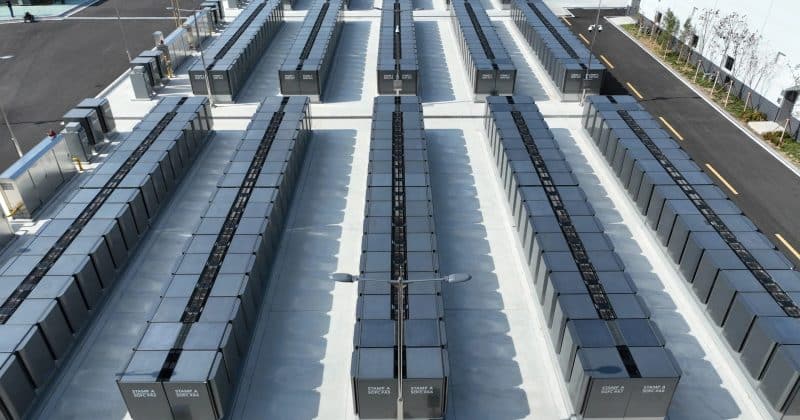
Data center developers are scrambling for reliable power, turning away from congested grids and toward on-site fuel cells. Rystad Energy research and analysis projects a tenfold increase in fuel cell market revenues by 2030, rising from around $2.8 billion in 2025 to roughly $30 billion, as AI computing demand drives unprecedented growth in data center construction. A contracted order book of approximately 9 gigawatts (GW), including framework agreements with Oracle, AEP, Equinix, and Brookfield, points to growing confidence among major operators in fuel cells as a viable long-term power source.US grid interconnection timelines have tripled since 2015, now stretching to three to six years for large loads. Rystad Energy’s research projects 10.4 GW of cumulative fuel cell demand from data centers between 2026 and 2030, with around 40% of projected 2030 US data center capacity modeled as likely to pursue dedicated on-site power generation rather than grid connection. Unlike conventional grid connections or large gas plants, fuel cells can be deployed quickly and run on natural gas today, transitioning to biogas, renewable natural gas or hydrogen as supply matures, while producing lower on-site emissions than combustion alternatives. North America is expected to account for 91% of installed global on-site power generation capacity, thanks to a combination of grid delays, federal tax incentives and an established domestic supply chain.Power availability has become one of the defining constraints on data center growth, and operators are increasingly looking beyond the grid for solutions. Fuel cells have moved from a niche application to a measurable part of the firm power mix. The question now is whether the supply chain can scale at the same pace as demand.Lein Mann Bergsmark, Vice President, Clean Tech Supply Chain ResearchFuel cell manufacturers are expanding capacity in response. Aggregate operational and planned manufacturing output is on track to reach 4 GW per year by 2030, up from 1.8 GW today. Solid oxide fuel cells (SOFC) have become the dominant technology for always-on data center power, accounting for around 53% of cumulative stationary deliveries to date. Bloom Energy holds virtually every primary-load SOFC contract in the visible order book, a concentration that presents supply chain risk if demand accelerates faster than one manufacturer’s production capacity.That concentration extends to materials. Bloom Energy’s SOFC technology depends on scandium, a critical metal used in its electrolyte chemistry. At full utilization of its planned 2 GW manufacturing expansion, Bloom’s theoretical scandium requirement would approach the size of the entire global market, currently estimated to be around 60 tonnes per year. This potential bottleneck is compounded by the fact that China heavily controls the global scandium supply chain. Competitors using alternative electrolyte chemistries do not share this exposure, and a sustained supply constraint could influence how market share develops as the sector scales. Rystad Energy projects SOFC system costs will fall 20 to 25% by 2030, though the pace will depend on manufacturers’ ability to reduce costs across the full delivered system, not the fuel cell stack aloneBy Rystad EnergyMore Top Reads From Oilprice.comChina’s Teapot Refineries Cut Operations to Their Lowest Level Since 2017Adani Targets 10 GW Nuclear Power Capacity in India by 2035VLCC Earnings Near $470,000 a Day as Hormuz Hopes Drive Tanker Frenzy