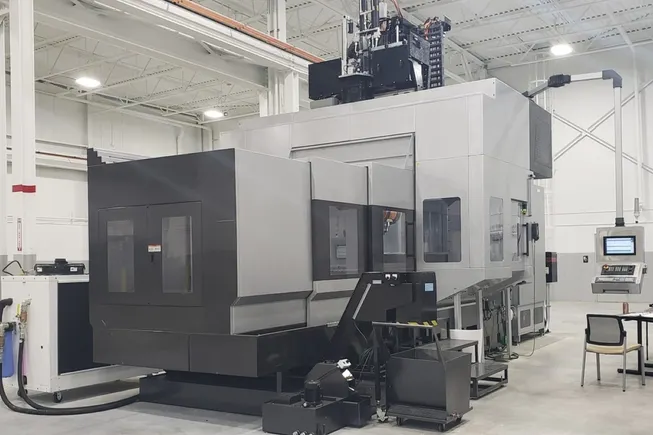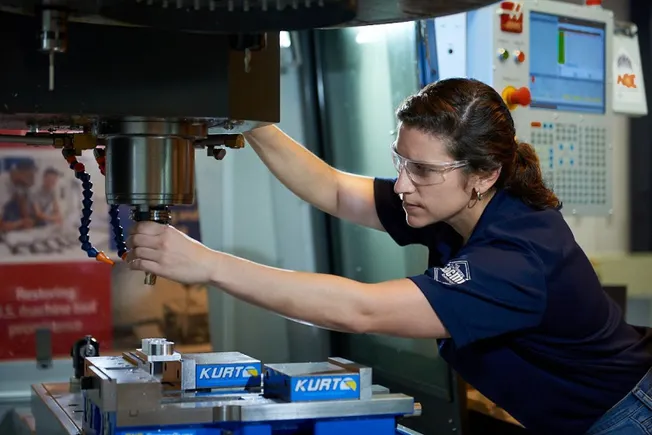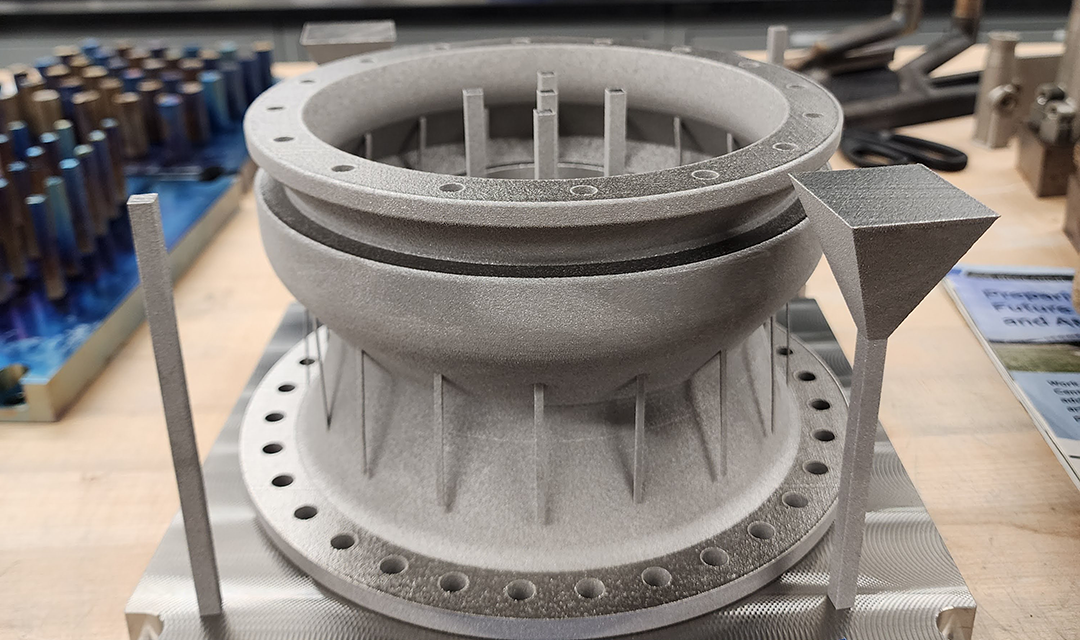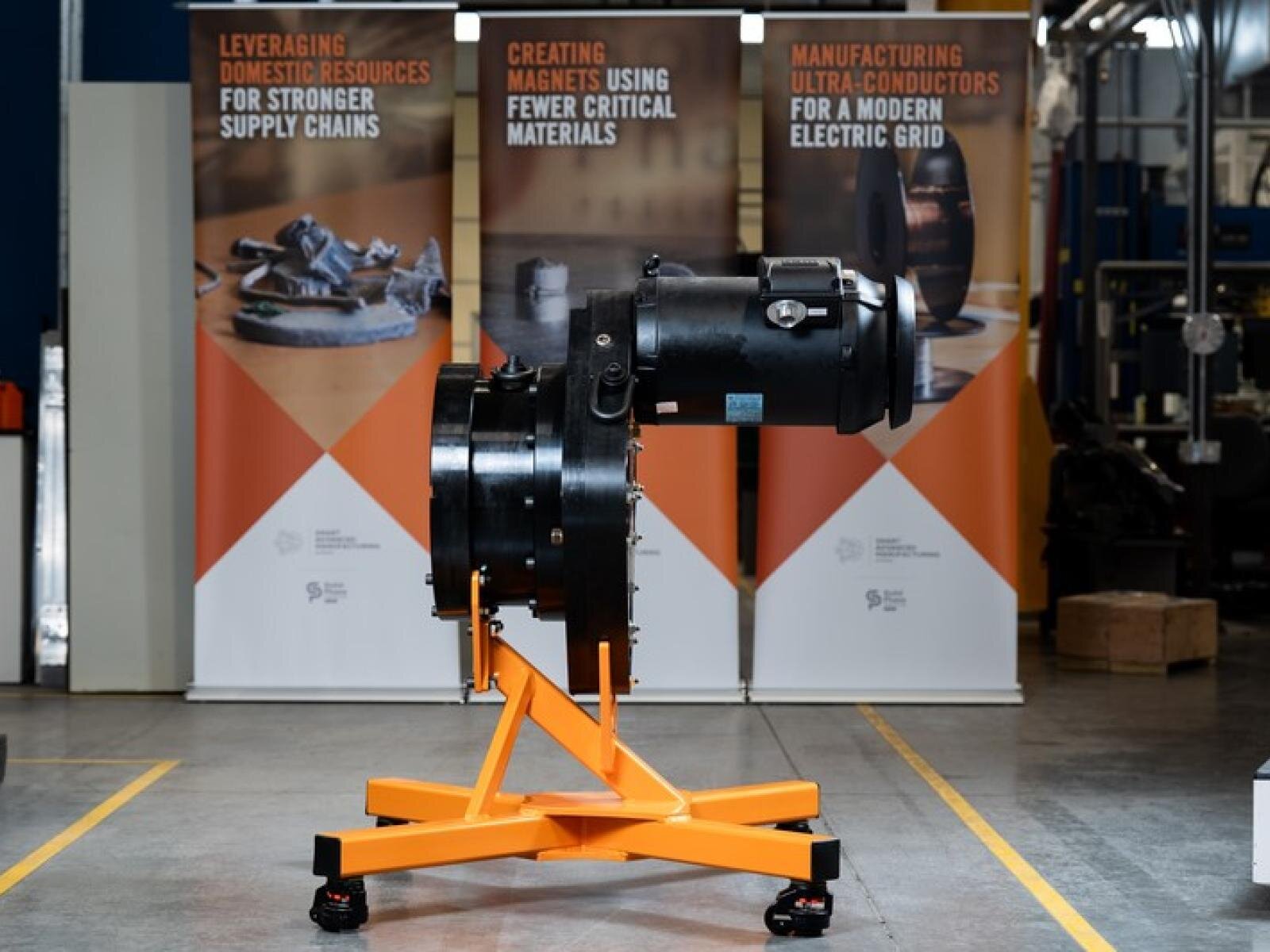
The ShAPEretro module, shown here on a display stand, can convert a conventional extrusion system into a ShAPE extrusion system. Credit: Andrea Starr | Pacific Northwest National Laboratory
A new invention from the Department of Energy's Pacific Northwest National Laboratory (PNNL) could soon help manufacturers more easily adopt the lab's patented Shear Assisted Processing and Extrusion (ShAPE) technology, enabling faster manufacturing of superior extrusion products.
Every day across the United States, conventional extrusion presses use a century-old process to soften and extrude metal to produce everything from aluminum tubing for sporting goods and automotive structures to zirconium tubing for the nuclear industry. Innovation in extrusion technology has stagnated for decades, leaving these manufacturers with inefficiencies that increase energy costs and limit product performance.
PNNL's streamlined ShAPE technology eschews many of these limitations and inefficiencies—most notably the indiscriminate heating of the metal—by using friction produced by shear to precisely soften the metal right at the point of extrusion. This straightforward yet more surgical approach allows ShAPE to extrude materials and components with superior properties while reducing costs and energy use. Over the course of developing ShAPE, researchers at PNNL have used the technique to produce automotive components, ultra-conductors and more.