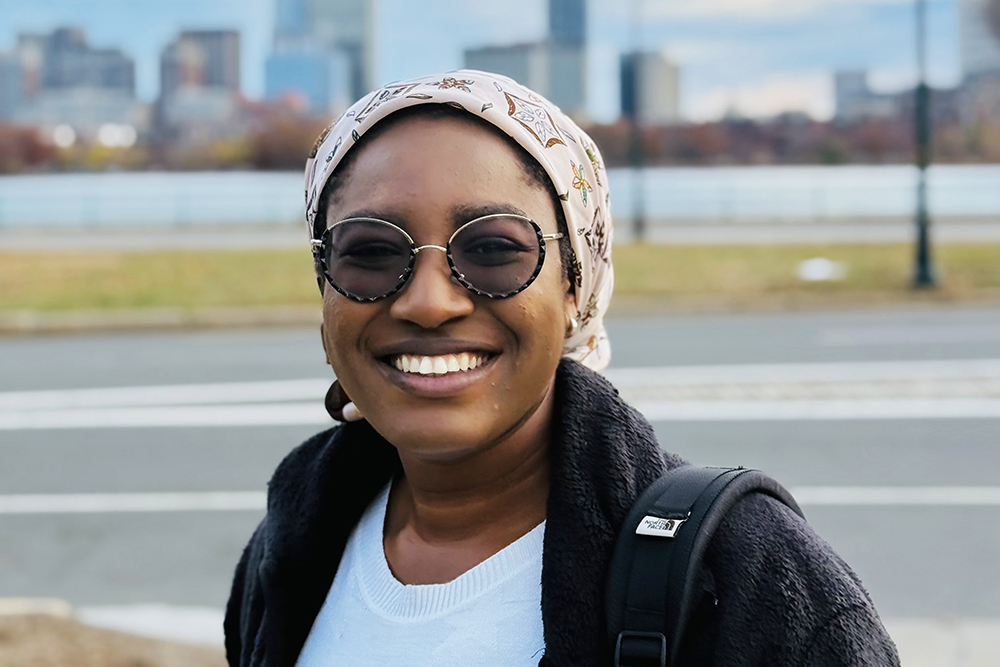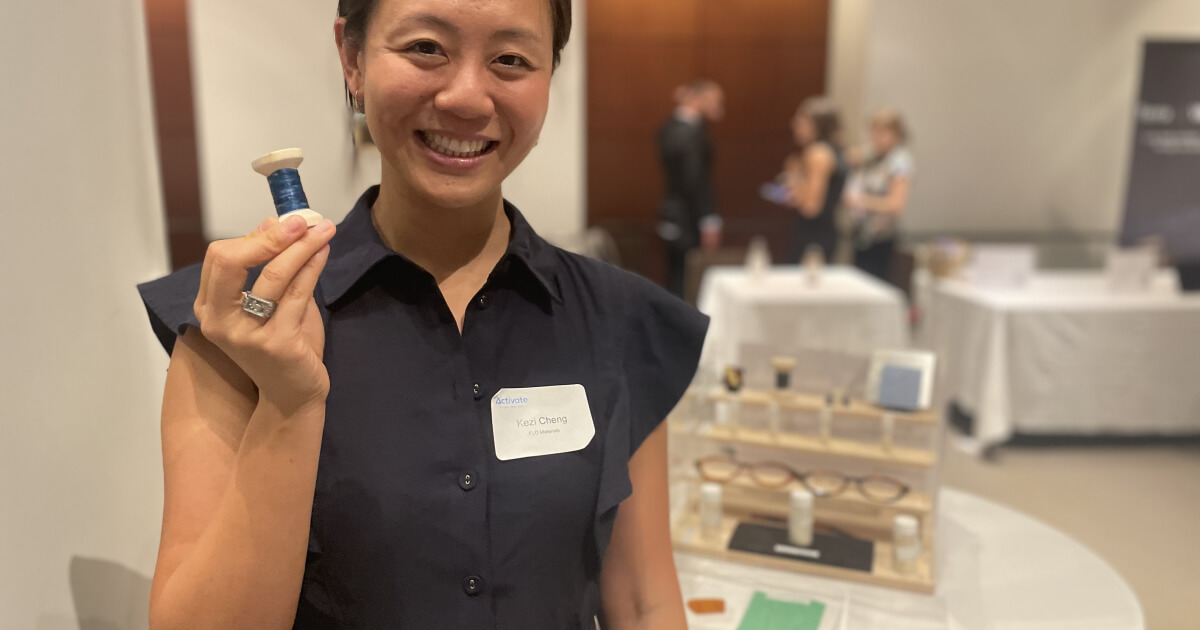
Kezi Cheng, Ph.D. '21
When it comes to recycling plastics, cost rules. One of the biggest hardships plastic recycling faces is that it’s considerably cheaper to produce new plastic products than it is to acquire, treat and re-use plastic waste. As a result, millions of tons of plastic are wasted every year.“At the end of the day, the hardest thing about recycling is the complexity, contamination and cost,” said Kezi Cheng, Ph.D. ‘21. “For recycling to really work, the material has to improve or at least maintain performance through cycles, recycled materials have to be cheaper than virgin plastics, and you need the recycling to be low-energy, low-cost and modular enough to handle the messy, contaminated waste streams we actually see.”Cheng, who earned her Ph.D. in materials science and mechanical engineering at the Harvard John A. Paulson School of Engineering and Applied Sciences (SEAS), co-founded FLO Materials in 2021. The Santa Barbara-based startup is producing an alternative plastic polymer that is far easier and cheaper to recycle back into a usable form. Her first target: the plastic used to make frames for eyeglasses, which are cut down from larger blocks of acetate, similar to removing chunks of marble from a block until only the statue remains.“The eyewear industry is very large, around $180 billion globally,” she said. “The sheet of the material to make one pair of glasses is about probably 100 grams in weight. Your frame, the final product, is about 15-20 grams in weight. So what that means is in cutting that down through CNC machining, you're losing almost 80% of that material. Premium eyewear frames are made of sheet materials that cost $10-20 per kilogram. These are not cheap plastics. These are expensive plastics that you can get back quickly from manufacturers."Cheng first became interested in materials entrepreneurship after finishing her bachelor’s degree in materials science and engineering at MIT. She spent time working at TIAX and CAMX Power, where the company took early-stage innovations in the areas of functional wearables, non-flourinated coatings and lithium ion batteries, and transformed them into technology-enabled products. “I saw that a lot of the project leads were people with PhDs, and they were able to lead and direct these projects and really push forward on the innovation side,” she said. “That definitely gave me a sense of what hard tech, deep tech materials entrepreneurship would look like.”The direction to work on recyclable plastics came midway through her Ph.D. research on plastics that can heal from damage on their own with David Clarke, Extended Tarr Family Professor of Materials. Her research eventually put her in touch with Alex Chortos, a postdoctoral researcher in Professor Jennifer Lewis’s lab and now principal investigator at Purdue University, who served as a mentor on synthesis and characterization of materials. Around that time, she came across publications on polydiketoenamines, a type of polymer developed at Lawrence Berkeley National Laboratory (LBNL) that can be easily broken down and cleaned of additives for much easier recycling. So intrigued by the research, she traveled to LBNL as a two-week exchange student and met Peter Christensen, the study’s first author and inventor, who co-founded FLO Materials with her.“I was thinking about the Venn diagram of what I was trained in, what I was passionate about, and what society needs,” she said. “As a material scientist, what struck me was the tradeoff I kept seeing: every time we pushed materials to higher performance or functionality, we made them more complex and harder to deal with at the end of their life. Plastics recycling today is inherently hard because they were never designed to be recycled; they were designed 100 years ago to be cheap and durable. And I knew I had a deep commitment to tackling plastic waste accumulation.”