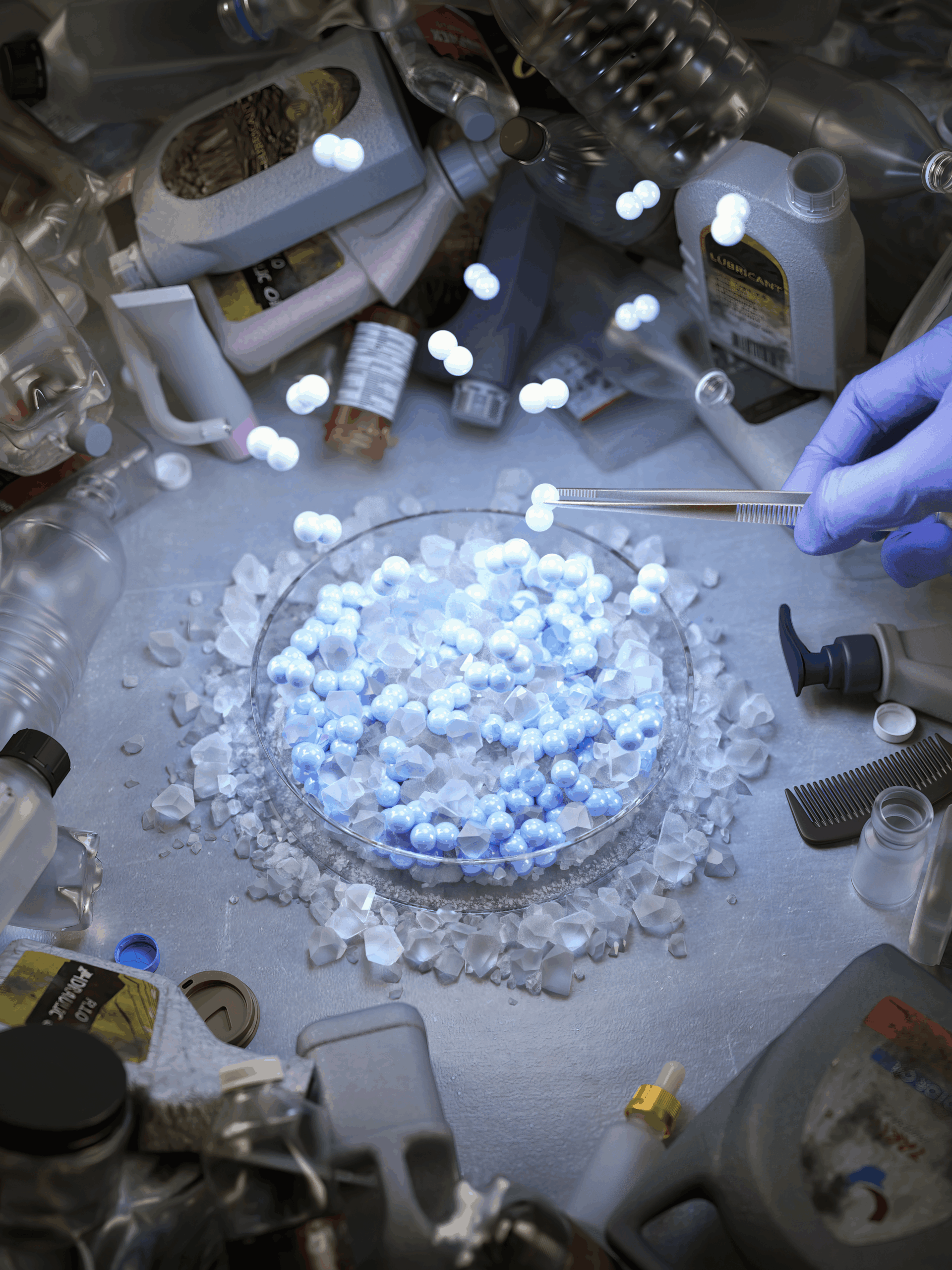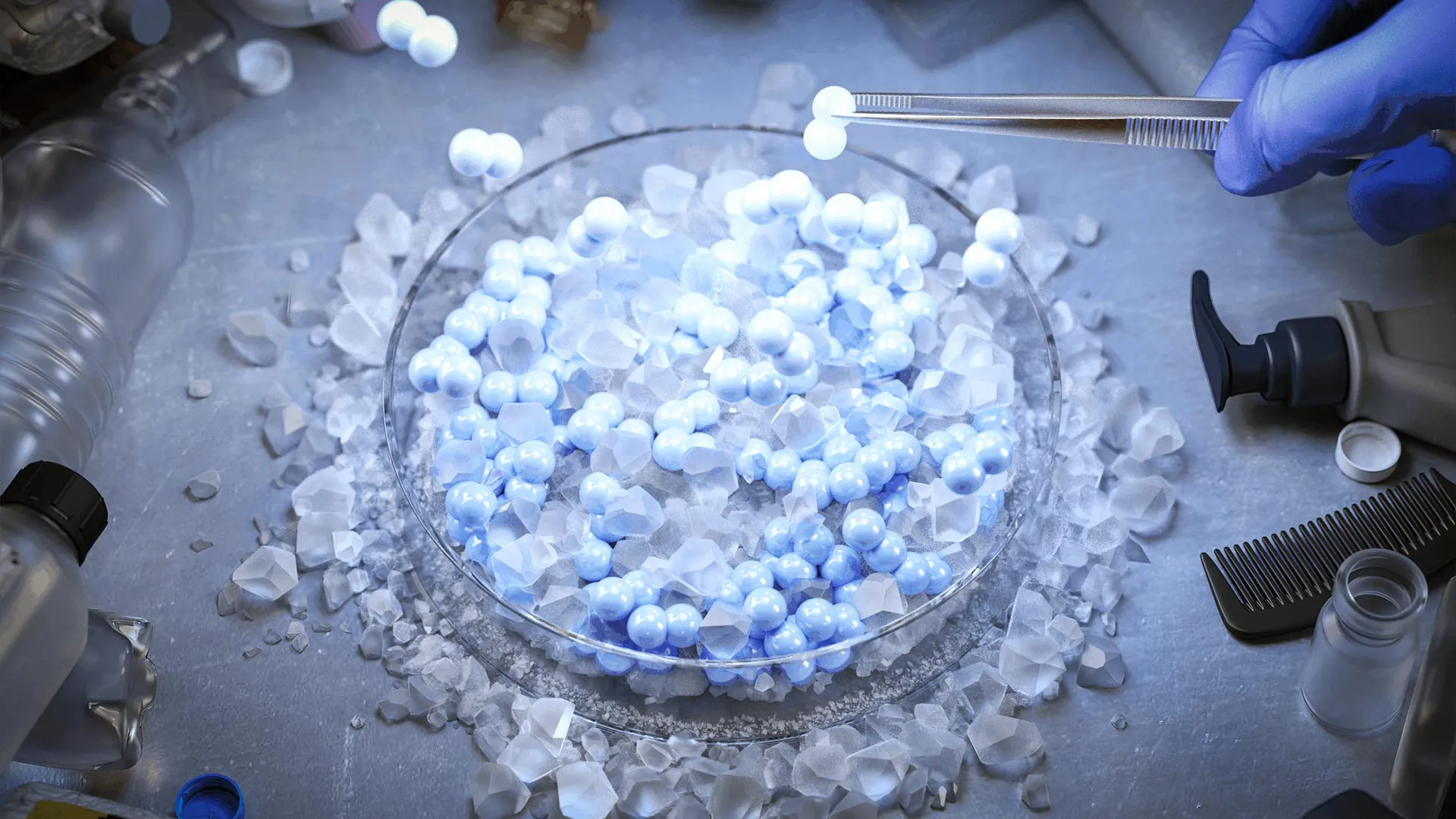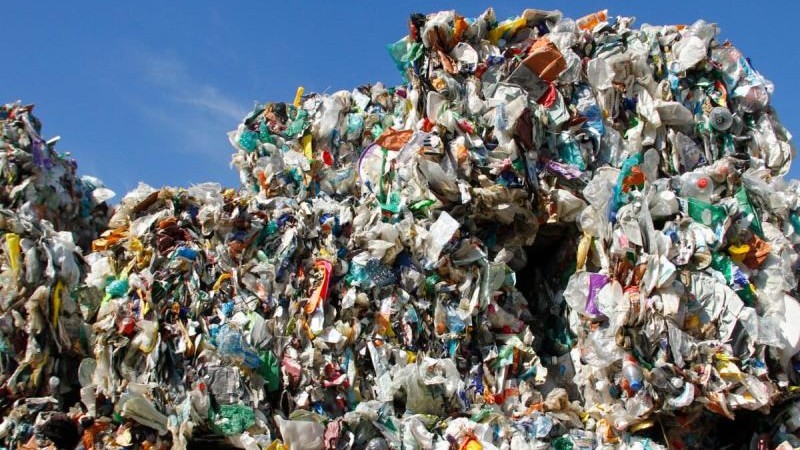
Plastic is cheap, but it’s an ecological, environmental, and human health disaster that actually costs Americans over $1 trillion a year, according to some estimates.By 2040, plastic waste management alone will cost the United States nearly $37 billion a year.Plastic is everywhere. We built it to be durable. We built it to be forever, and without the advanced technology to break it back down into something usable, its unstoppable production momentum will bury us all alive.Breaking down something that was manufactured to last forever has proved wildly challenging, but one innovator has developed what it calls a “gamechanging” depolymerization technology that transforms plastic waste into its chemical building blocks in just minutes.Roughly 90% of plastic waste is not recycled. It’s rarely recycled, and if it is, the products quickly become unusable, and the recycling process itself results in high carbon emissions.Denovia is looking to change the rules of this impossible game.The technology first cuts PET plastics into small pieces to increase surface area for fast and more efficient reactions. The shredded plastic is placed into a special liquid solution designed to react with the plastic at the molecular level, breaking down the long polymer chains in the plastic. Instead of melting the plastic with high heat, the process chemically splits it.What you are left with is the raw chemical components of plastic that are then filtered and cleaned in a final step, removing all dyes, additives and contaminants.The final output is purified base units of the plastic.Traditional recycling melts plastic, which degrades its quality over time and struggles to handle mixed or contaminated materials. In contrast, Denovia’s process breaks plastic down to its original molecules, removes impurities, and produces output that can be reused at approaching virgin-grade quality.And speed is key here.Most chemical recycling processes take 30 to 180 minutes and require high temperatures, which limits throughput and raises costs. Denovia’s reaction operates in minutes, enabling faster breakdown and significantly higher throughput, which translates into more material processed over time, lower energy use per batch, and greater overall output per system.It could also turn a trillion-dollar problem into a planet-supporting revenue stream.Instead of paying to dispose of plastic and textile waste, operators can convert it into a usable chemical output and generate revenue from it.And global capital is pouring into the opportunity.That’s one of the reasons why industry giants like Waste Management Inc. (NYSE: WM), North America’s largest waste and environmental services company, have spent years expanding their recycling and circular economy operations.If advanced depolymerization systems can consistently monetize mixed waste streams, companies already sitting on massive waste collection infrastructure could suddenly find themselves controlling valuable industrial feedstock.A $16.5 Trillion ProblemIt’s a global problem that demands over $15 trillion in private sector investment and $1.5 trillion in public expenditure just to turn the plastics clock back to 2019, according to Circulate Initiative. Investors in Europe have committed more than €8 billion to the problem, and across the Atlantic, the Circulate Investment Tracker shows $170.8 billion in private plastic management deals between 2018 and 2024. Over $86 billion of that deal-making went down in North America.In less than a decade, McKinsey sees this as a $75-billion opportunity for the right innovators. According to Mordor Intelligence, the value of the plastics management segment surpassed $48 billion in 2025, and is on track for $50 billion this year.But it’s no longer about traditional recycling, with Mordor noting that “investments are increasingly shifting toward advanced recycling technologies and circular economy models, with organizations adopting smarter sorting and processing systems to improve efficiency and material recovery”.The next phase, and the next round of big capital, is all about new technology, not more traditional recycling, which has failed time and again. Industry giants such as Eastman Chemical (NYSE: EMN) have already started investing heavily in molecular recycling infrastructure, including large-scale polyester depolymerization facilities aimed at turning difficult plastic waste streams back into usable feedstock.It is all part of a broader industry realization that traditional recycling economics no longer work at scale, and that the next phase of plastics recovery will likely be chemical, not mechanical.The Innovators’ Answer to Failed RecyclingInnovator Nick Spina is the mastermind behind Denovia and its mission to reinvent the plastic remanufacturing industry by dissolving and upcycling plastic waste.With the technology proven, Spina is now focused on the next leap: moving Denovia from batch processing into a high-output industrial system. The company has already achieved flash depolymerization in minutes in commercial tests, demonstrating the speed of its chemistry. Over time, a much larger continuous system could potentially deliver up to 100x the output of the current platform, supporting Denovia’s move toward true industrial-scale deployment.Strong partnerships are making it possible. Denovia is working with organizations that generate large volumes of waste, including Goodwill, where the system is being used to process unusable textile streams that would otherwise be discarded. In Canada, the company has also been involved in recycling tens of thousands of pounds of hospital garments, a particularly challenging waste category.Institutional backing is following. Support from the Canadian government has helped position the company within a broader push to scale advanced recycling capacity.Private capital interest is also accelerating. Denovia has a close relationship with Jett Capital, a firm focused on critical resources and emerging technologies, and has been working with the firm on capital markets strategy, investor introductions, and financing pathways to support Denovia’s next phase of facility deployment. In January 2025, Denovia made headlines when it deployed its machine at Canada’s Tymac’s marine services facility in the Port of Vancouver, marking its first real-world industrial application. The system processes plastic waste from maritime sources, including major shipping operators. It converts up to 1,000 liters of shredded plastic into its base chemical monomers using its liquid process that avoids high temperatures. The deployment demonstrates the technology’s ability to handle mixed waste streams at scale, while operating with lower energy requirements.Since then, the momentum has gained significantly.Today, throughput is designed to scale, with Denovia’s PL-5000 system processing roughly two tonnes per batch, with conservative cycle assumptions around two hours. Recovery rates are around 86% of input material as usable output, while the remainder could be converted into secondary products rather than discarded. From a revenue-stream perspective, Denovia says a batch costs roughly $500 to run and, based on current estimates, could generate the equivalent of roughly $4,000 to $8,000 in output value, depending on recovery rates, output quality, and market pricing.That kind of output economics could eventually become highly relevant to major materials manufacturers looking for alternative feedstock sources. Companies such as Celanese Corporation (NYSE: CE), which produces a wide range of engineered materials and chemical products used across industrial and consumer supply chains, are facing increasing pressure to incorporate recycled and circular inputs into production.If Denovia can consistently return contaminated plastics to high-purity chemical form, technologies like this could help reshape how industrial materials are sourced altogether.Plastic was never the problem. It did exactly what it was designed to do: last forever. We built a material that wasn’t intended to break down, inside a system that depends on constant buying and disposing. The problem is now measured in trillions of dollars and rising, along with the infinite stream of waste.We need a hard reset, and Denovia is offering it. If plastic can be reduced to its original chemical form, cleaned, and reused at full quality, then the system may create a life-saving loop with its own multi-billion-dollar revenue stream.Innovation here turns an economic disaster into a momentous opportunity, and global capital will be watching closely for companies, like Denovia, rushing to be the first game-changers out of the gate. By. Michael ScottThe AI boom is triggering an unexpected and unprecedented bull run in natural gas and power stocks. If you aren't paying attention to the energy demands of data centers, you will miss the biggest energy story of the decade. The smart money is already quietly moving into the few companies prepared to power the trillion-dollar AI machine.Oilprice Intelligence brings you the inside view on where the next gains will come from, breaking down the market's biggest growth driver with analysis from veteran oilmen and experts. Click here to get this crucial intel for freeImportant Disclosure: The owner of Oilprice.com owns shares and/or stock options of the company and therefore has an incentive to see the company’s stock perform well. We encourage you to conduct your own due diligence and seek the advice of your financial advisor or broker before investing.
The Tech That Could Turn Plastic Waste Into a Trillion Dollar Opportunity | OilPrice.com
A breakthrough depolymerization technology is transforming plastic waste into their base chemical building blocks, offering a scalable alternative to traditional recycling with strong unit economics.
1,408 words~6 min read