The rapid production of custom components for rockets and satellites is often essential to support design modifications, repairs, and operational needs in space travel. Additive manufacturing can provide an effective solution, but optimization of the design, production and testing processes is crucial to maintain the quality and reliability of 3D-printed components.
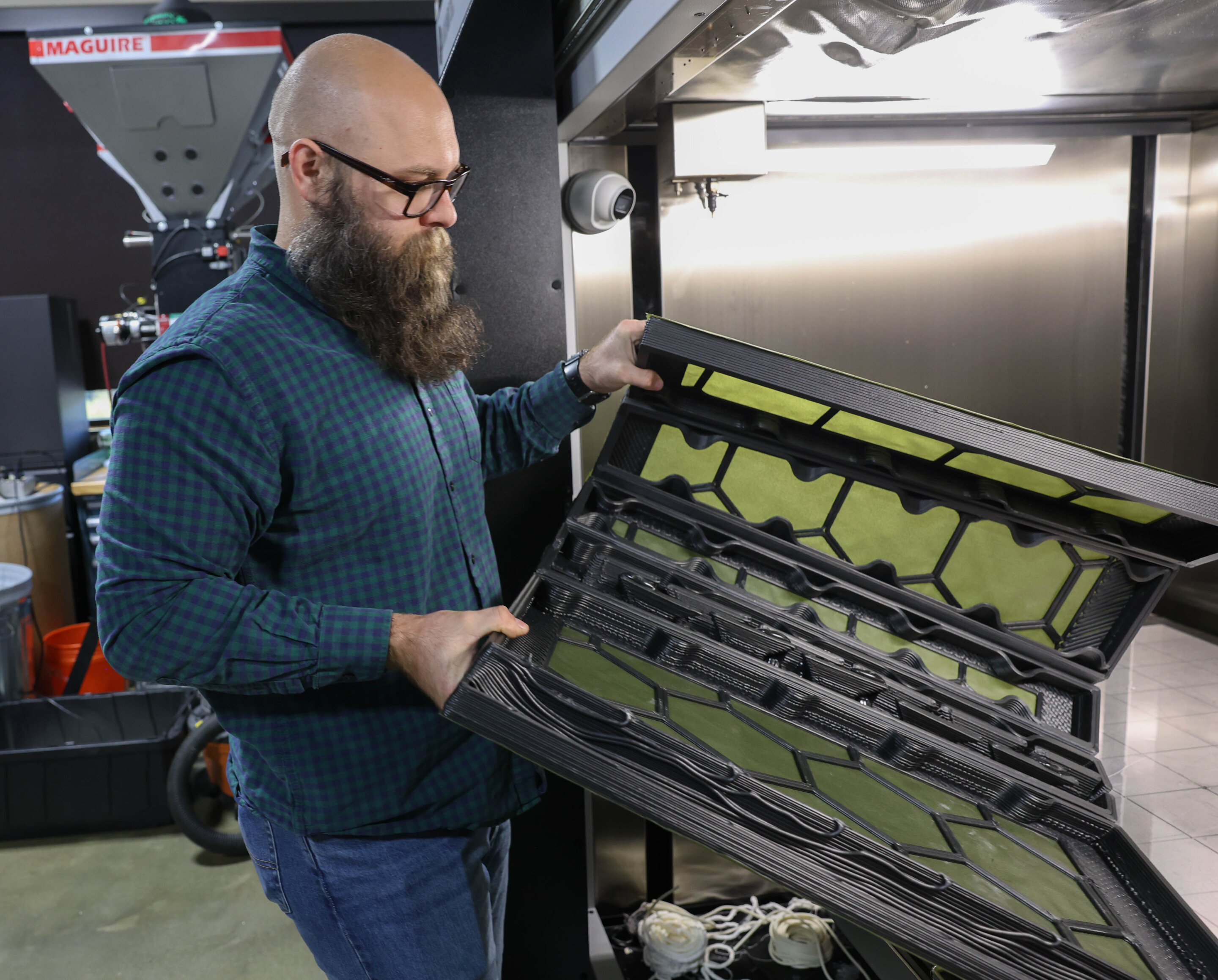
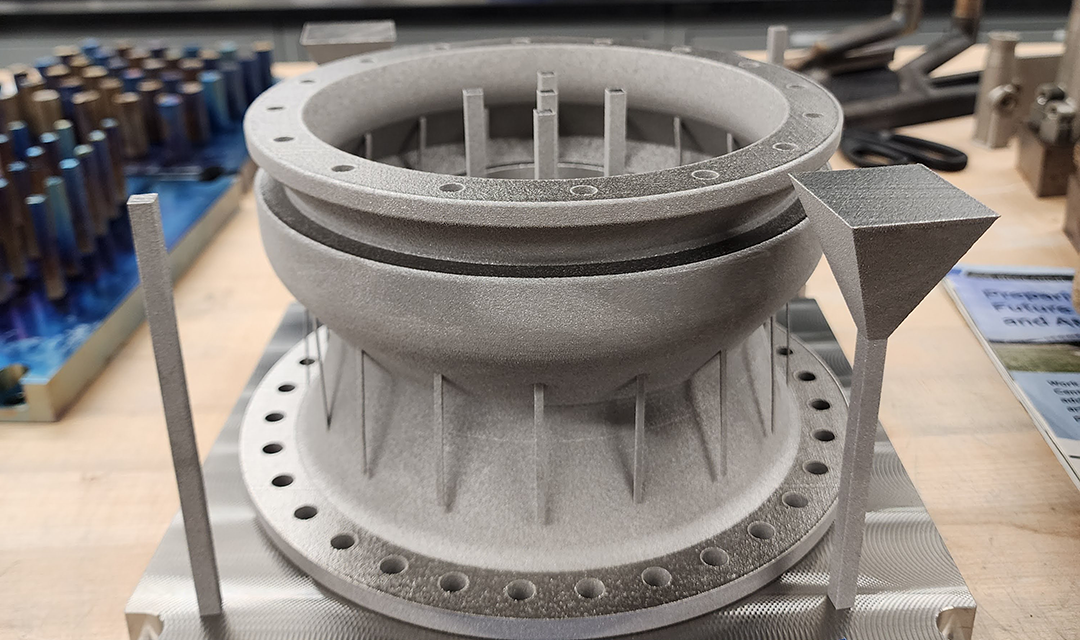
Researchers at Carnegie Mellon University have completed their first successful production of a challenge part through their Institute for Model-based Q&C of Additive Manufacturing (IMQCAM) that will advance efforts to achieve these outcomes. This part is representative of components used in aeroengines while being non-proprietary and is expected to be capable of sustaining loads at elevated temperatures. The digital twin that is being developed through this project will model fatigue evolution in this challenge part for incorporation in the qualification and certification (Q&C) process.
The IMQCAM is a NASA Space Technology Research Institute (STRI) that is co-led by CMU materials science and engineering professor Anthony Rollett and Somnath Ghosh, professor of civil and systems engineering and mechanical engineering at Johns Hopkins University. Established in 2023, the effort seeks to shorten the cycle required to design, manufacture, and test custom vehicle parts that can withstand the conditions of space travel through the development of models for qualification and certification. By developing a digital twin through this project, NASA will ultimately be able to use computer based-integrated models to accurately predict fatigue performance of spacecraft parts.