Many activists believe that if politicians are failing to solve problems, then civic leaders should step into government themselves.While this frustration is understandable, I believe this would be a mistake. The strength of a civic organisation lies precisely in the fact that it is not a political party.
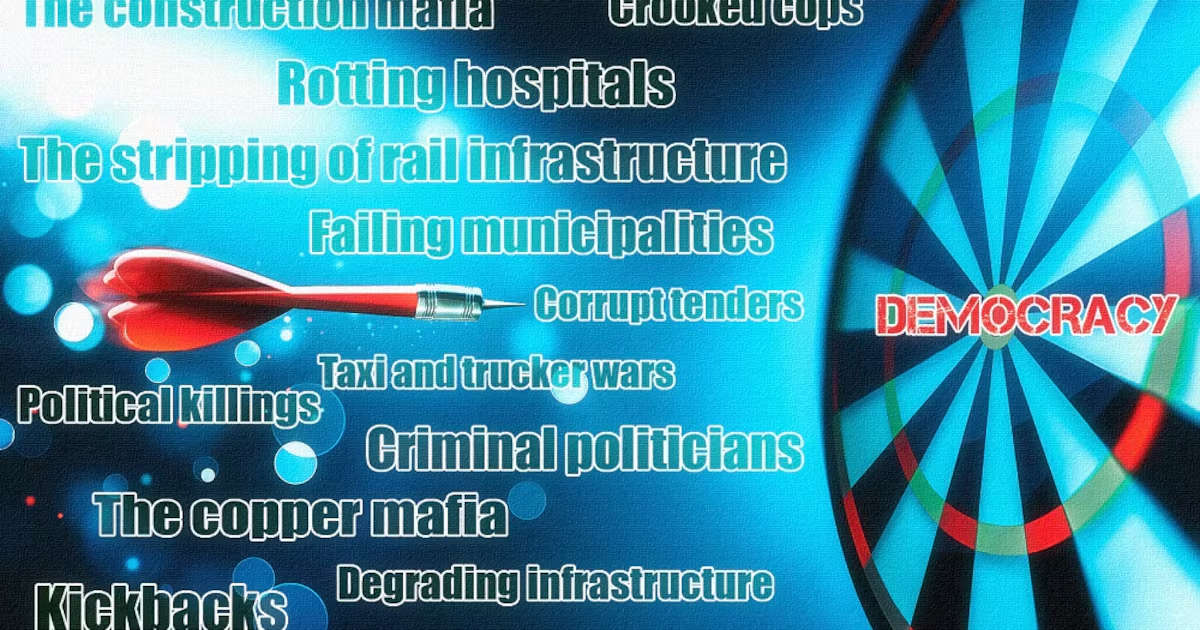
SOUTH Africans are becoming increasingly frustrated with the state of our democracy. Corruption scandals continue to emerge, service delivery failures persist, infrastructure is crumbling in many municipalities, and unemployment remains stubbornly high. The numerous commissions of inquiry over the years have exposed wrongdoing on a grand scale, yet meaningful accountability often appears elusive.
Against this backdrop, it is understandable that some civic organisations are considering entering electoral politics. Many activists believe that if politicians are failing to solve problems, then civic leaders should step into government themselves.
While this frustration is understandable, I believe this would be a mistake. The strength of a civic organisation lies precisely in the fact that it is not a political party.
A civic movement can challenge any government, regardless of which party is in power. It can oppose bad decisions and support good ones without worrying about votes, coalitions, election campaigns or political survival. Its loyalty is to the community, not to a party manifesto.