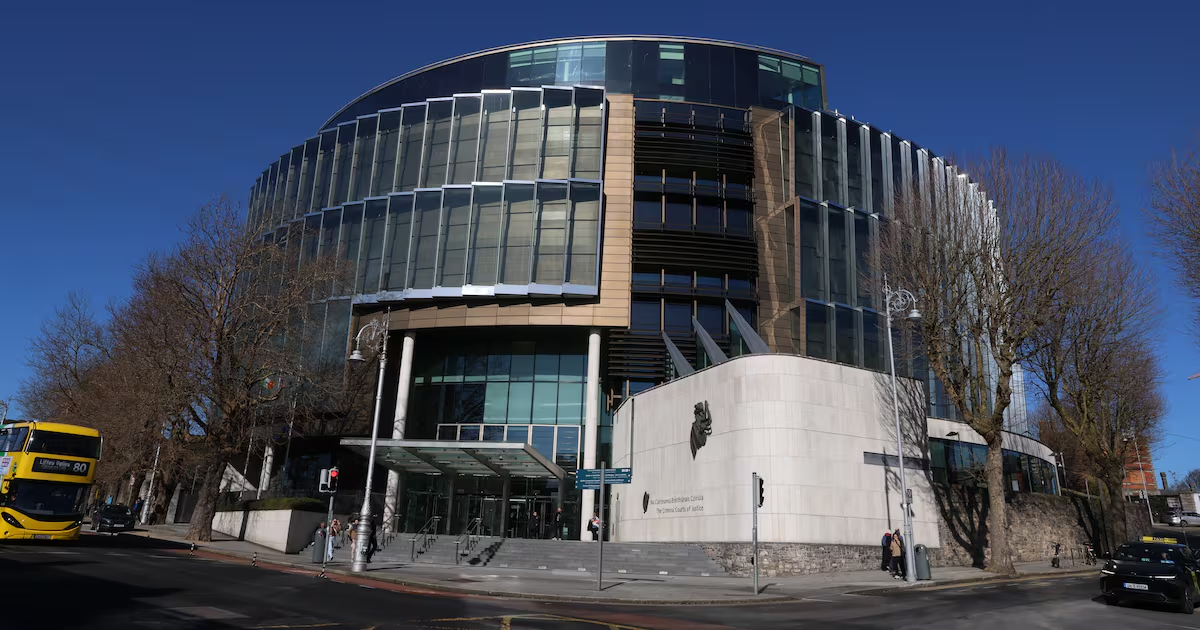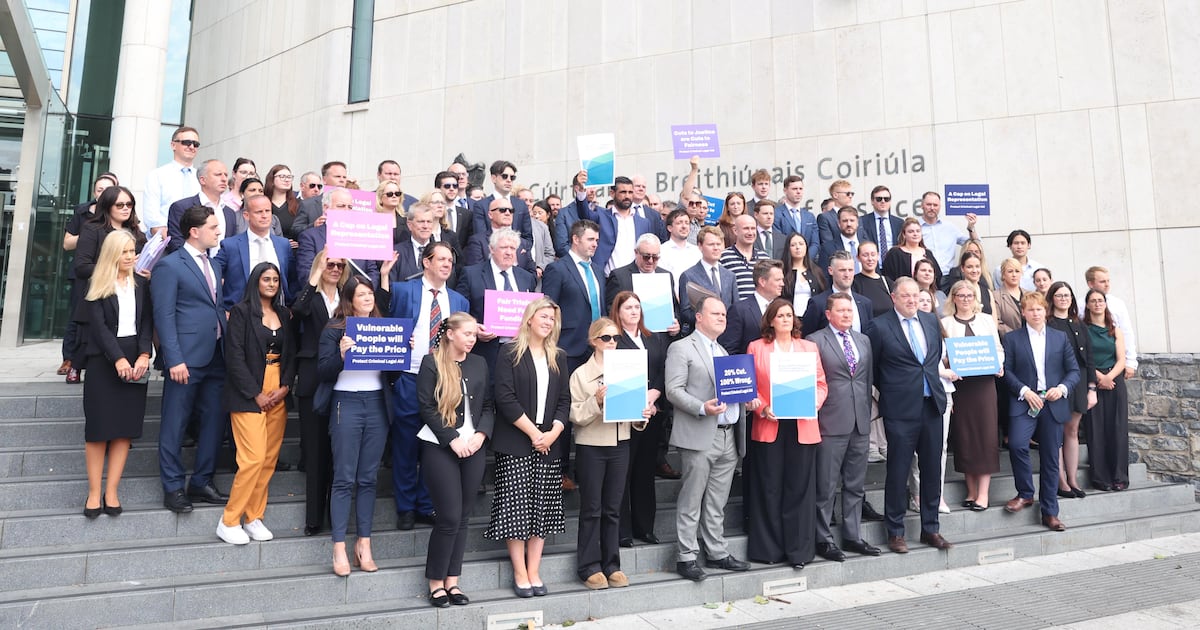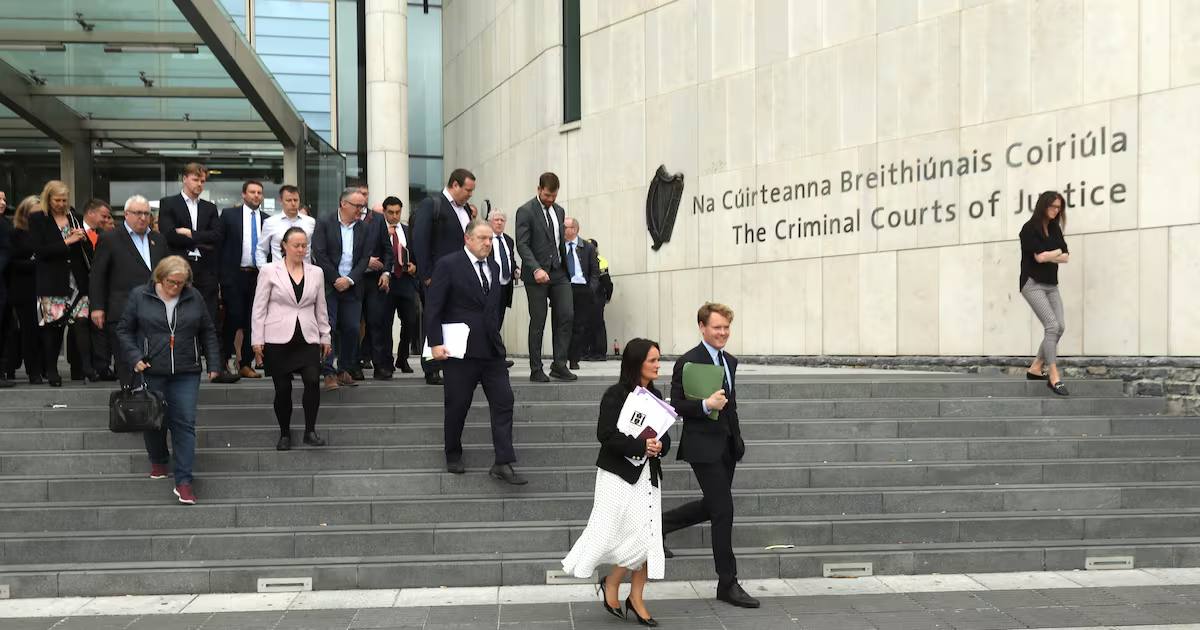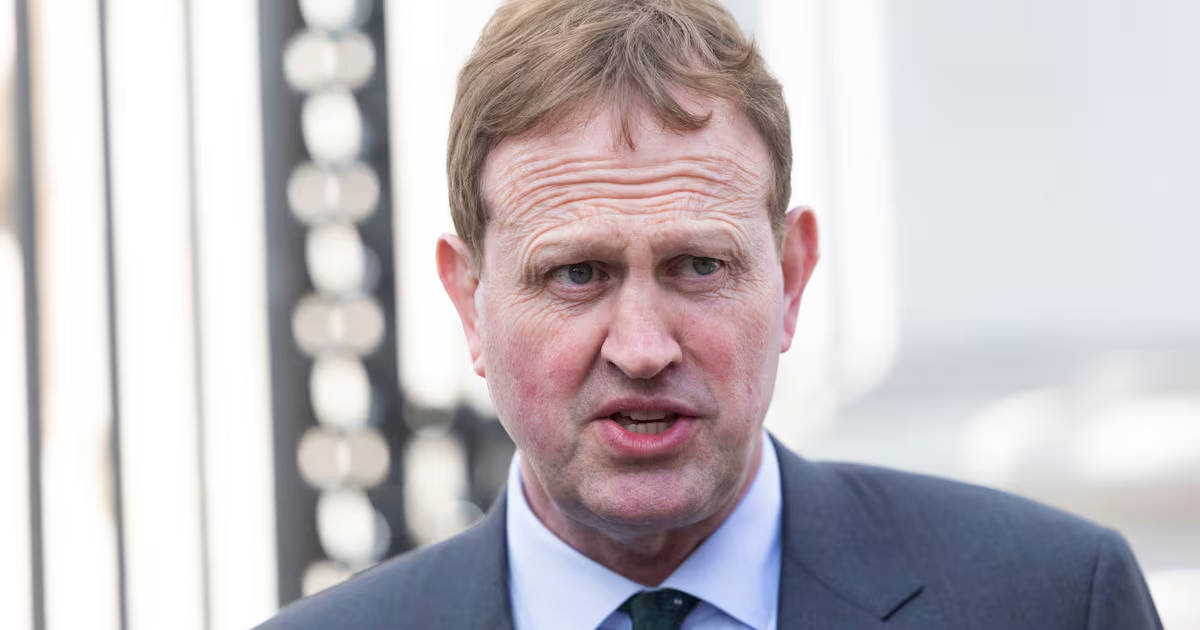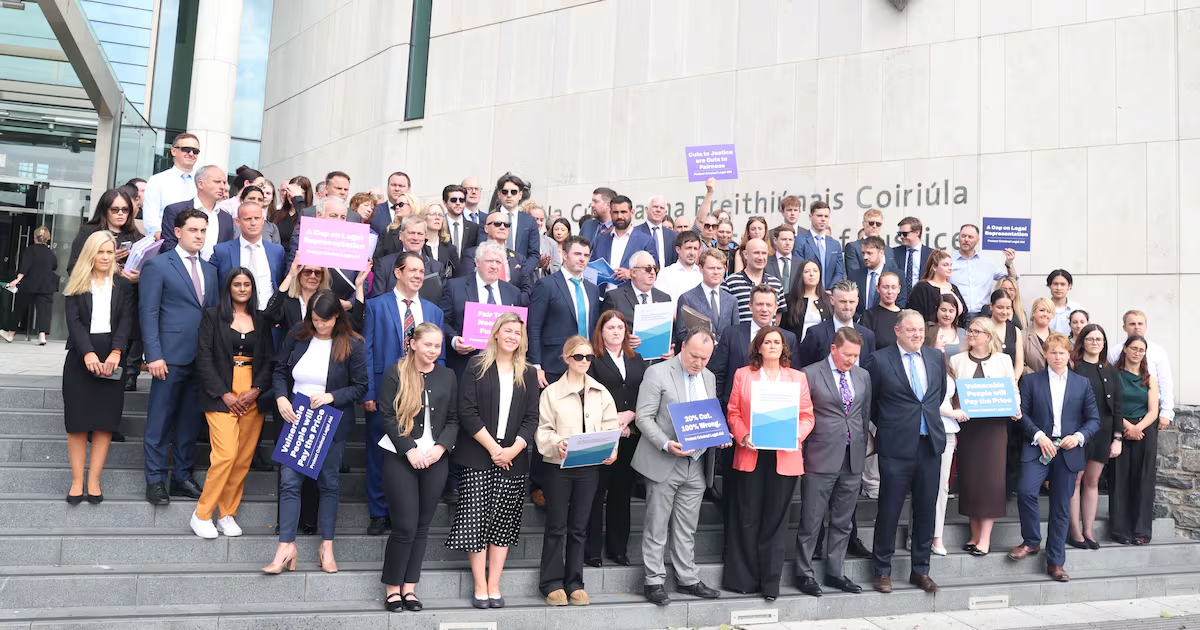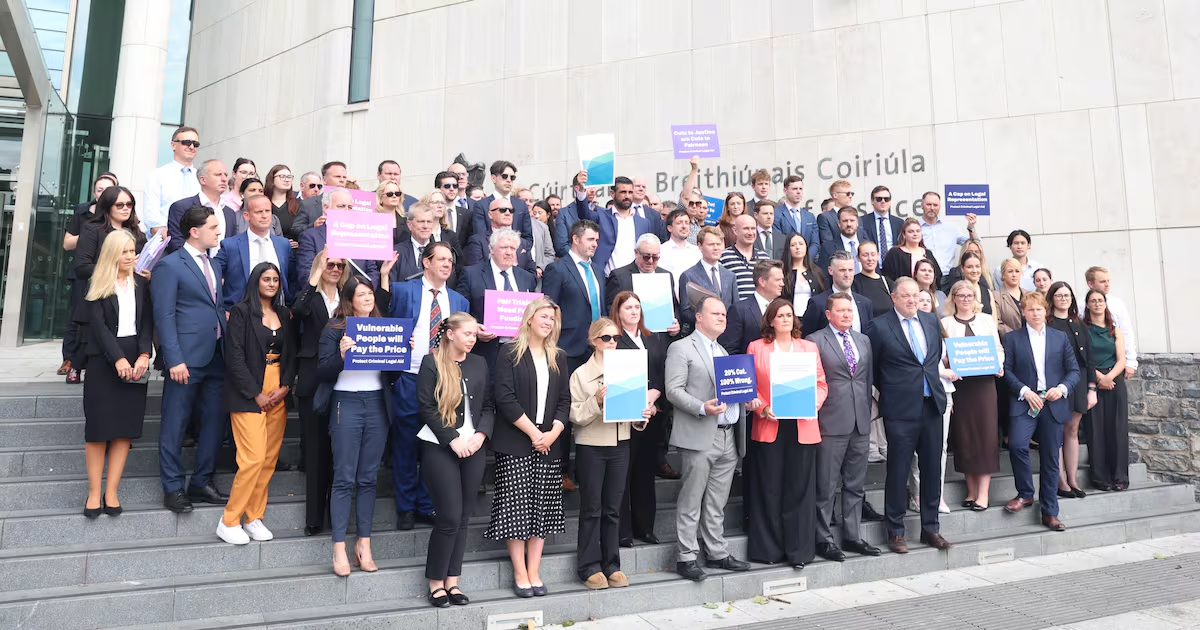
A new payment model for criminal legal aid cases in the District Courts due to come in to effect next week may exacerbate an “already challenging” legal aid situation, the Irish Human Rights and Equality Commission has said.Chief commissioner Liam Herrick was speaking outside the Courts of Criminal Justice on Friday in support of the Law Society’s call for “meaningful” engagement with the Department of Justice about criminal legal aid reform. The Bar of Ireland, Free Legal Aid Centres, Irish Penal Reform Trust and the Irish Council for Civil Liberties also expressed support.More than 100 criminal legal aid solicitors gathered outside the court on Friday bearing placards opposing the department’s plan, bearing slogans such as “Dublin will become a legal aid desert”. Thousands of criminal cases continue to be adjourned daily due to the continuing withdrawal of services by criminal legal aid solicitors, now in its second week. Several rape trials listed at the Central Criminal Court next Monday look set to be among the cases affected. The solicitors are strongly opposed to the department’s proposal to introduce a single flat fee payment model for legal aid cases in the District Courts.[ Cork solicitors withdraw from legal aid scheme for criminal workOpens in new window ]Criminal defence solicitors agreed last Monday, on an individual basis, not to act in new custody cases from midnight but continue to act in custody cases where they are already assigned. They agreed not to attend Garda stations, or provide phone advice to people in custody, from midnight on Monday and not to make themselves available for evening courts, Saturday courts or special sittings.On Friday, Law Society president Rosemarie Loftus said it was “hard to overstate” the level of anger among solicitors about the department’s proposals. She said it was “deeply alarming” the Government was “proposing a 20 per cent cut in criminal legal aid” and seeking to impose a flat fee payment model that “demonstrably failed” in family law, causing an exodus of solicitors from family law legal aid panels, she said.Loftus said she had “every empathy” for judges and those managing the courts during the “untoward upheaval” caused by the withdrawal of services.However, the issues involved are “fundamental to the vulnerable in society whom solicitors represent and their ability to access a fair and appropriate trial and appropriate representation”, she said. Bar council chairman Sean Guerin said the two issues of most concern to the department, the number of legal aid certificates issued in an individual case and the number of adjournments are already provided for in existing legal aid regulations. The department needs to “put in place systems that are capable of managing the existing regulatory environment”, he said. The Bar and Law Society would co-operate in those reforms “to ensure the system operates as intended”. The department’s “failure” to manage those systems “is not an excuse for undercutting essential funding for a core public service”, he said. Liam Herrick said the commission was “very mindful” of existing challenges of access to justice and delays in the system, both for accused people persons and victims.While the commission understood why the Government felt change might be necessary, it was concerned the changes may have “unintended consequences in exacerbating an already challenging situation”, he said. The department said its officials had constructive engagement last week with the Law Society, there was further engagement since “and in the circumstances, it would not be appropriate for the department to comment further at this time”.It is “regrettable” that some solicitors have withdrawn their services as discussions were continuing, a spokesman said.Asked for clarification whether the new model would provide for one flat fee of €582, based on an average six appearances, rather than a €455 fee initially referred to, a department spokesman said it had no further comment at this time.Its proposals are to replace the current payments system based on appearances with one flat-fee for representation from the start to the end of a case. They follow an internal department review of about 350,000 District Court cases during 2022 and 2023 that noted expenditure on criminal legal aid in the District Court rose from €19 million in 2015 to €37 million in 2024. The current fees structure, the review said, incentivised solicitors to seek multiple hearings. The Law Society has described the review as “seriously flawed”.
‘Hard to overstate’ the level of anger with new pay model among solicitors
Solicitors protest outside criminal courts as thousands of cases adjourned
720 words~3 min read