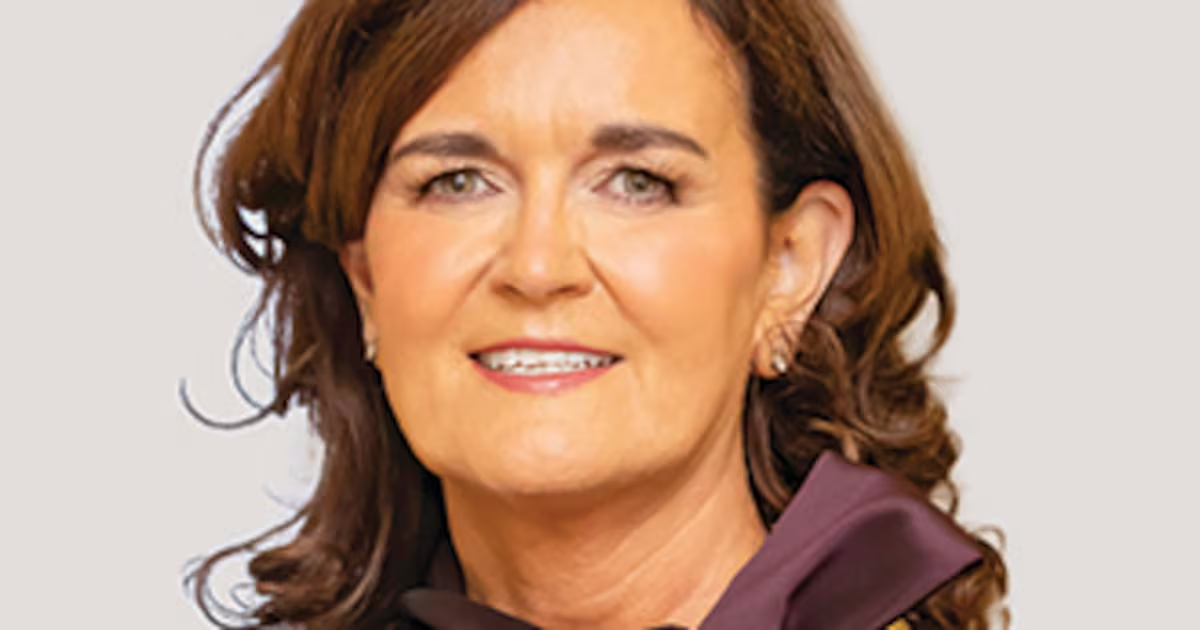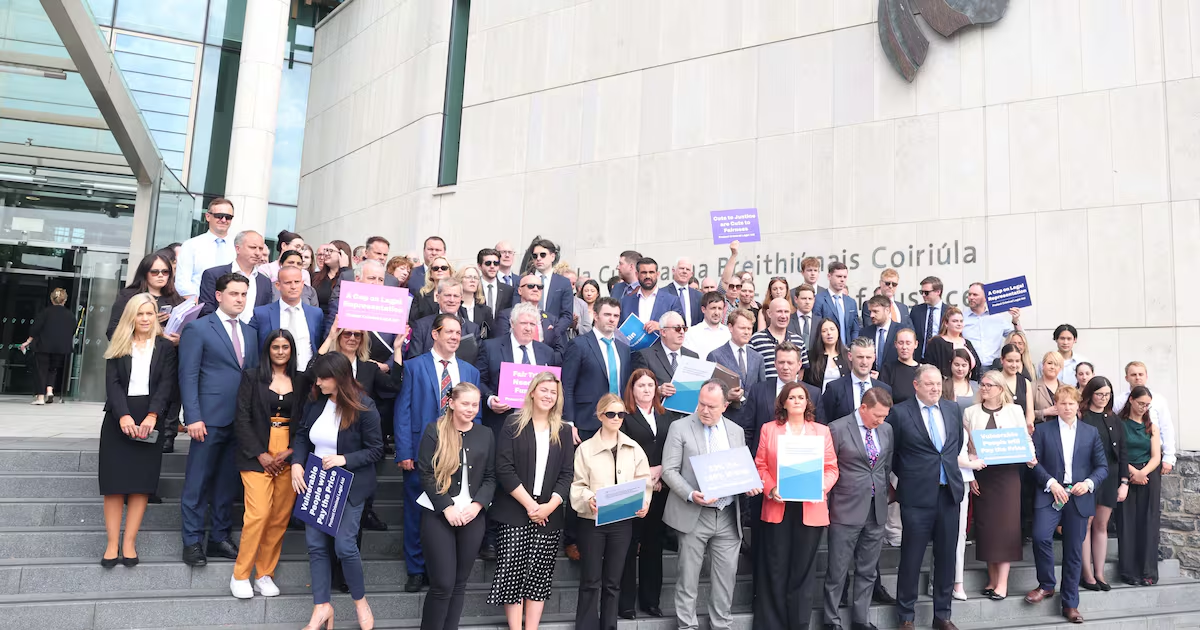
Thousands of criminal cases nationwide could not proceed on Monday as criminal defence solicitors escalated their action over a new criminal legal aid payments model.The withdrawal of services could further escalate as the Department of Justice appears set on introducing the new “one flat fee” system next month. More than 250 solicitors who met in Dublin last Friday were told that department officials the previous evening had informed the Law Society the new system would be implemented from July 1st as planned. At a further meeting on Monday, criminal defence solicitors agreed, on an individual basis, not to act in new custody cases from 11.59pm on Monday. They will continue to act in custody cases where they are already assigned.They agreed not to attend at Garda stations or provide phone advice to persons in custody from 11.59pm on Monday and not to make themselves available for evening courts, Saturday courts or special sittings.The effect of the solicitors’ withdrawal of services, sources said, meant no new juries could be sworn in for bail cases from Monday.The action also meant the adjournment on Monday of thousands more cases in the District and Circuit courts, Central Criminal Court and Court of Appeal.Judge Paul McDermott, who manages the Central Criminal Court list, said, when adjourning several sexual offence cases before him, he could not let trials proceed where people were unrepresented. He was told by counsel in one case listed for trial it was the third or fourth time it had been listed and the complainant was very anxious to have it heard. The court faced “real difficulty” in the absence of notification of the withdrawal of services, the judge said. The solicitors’ action affected criminal cases in courts in Dublin and other venues from last Wednesday, except those involving accused persons in custody, juveniles or priority sexual offence cases involving young people.On Monday, criminal solicitors in Cork also withdrew their services, leading to block adjournments of cases in Cork District and Circuit courts. A meeting last week of the Southern Law Association supported an indefinite withdrawal until there was “meaningful” engagement by the department with the society, but it deferred that action to Monday to allow for notice to be given to the affected courts. In a message on Monday to criminal solicitors, Law Society president Rosemarie Loftus said the situation “has now escalated to a point none of us wanted to reach”. The society had “engaged repeatedly, constructively and in good faith”, but the department still intended to impose a flat-fee model from July 1st, she said. Criminal defence solicitors were “portrayed unfairly” by the department “as maximising payments and causing unnecessary delays” when the reality was “complex cases, vulnerable clients, adjournments driven by prosecution and court resources you do not control”, she said. The proposed flat fee for “unlimited, unpredictable work” was not reform, she said. It was “a cap on legal representation that undermines the complex, expert services you provide to uphold the rule of law”. The department has described the solicitors’ withdrawal as “regrettable” and said it “remains open to further engagement in advance of the new arrangements coming into effect on July 1st”. Its proposals involve replacing the current payments system based on appearances with a single flat-fee for representation from the start to the end of a case. These follow an internal department review of about 350,000 District Court cases during 2022 and 2023 that noted expenditure on criminal legal aid in the District Court rose from €19 million in 2015 to €37 million in 2024. The review said the current fees structure incentivised solicitors to seek multiple hearings. But the Law Society said the review was “seriously flawed”, involving “anecdote deployed as accusation” rather than “evidence-based policy analysis”.
New custody cases may be disrupted as solicitors escalate action over legal aid payments
More criminal hearings are adjourned as row with Department of Justice worsens
622 words~3 min read