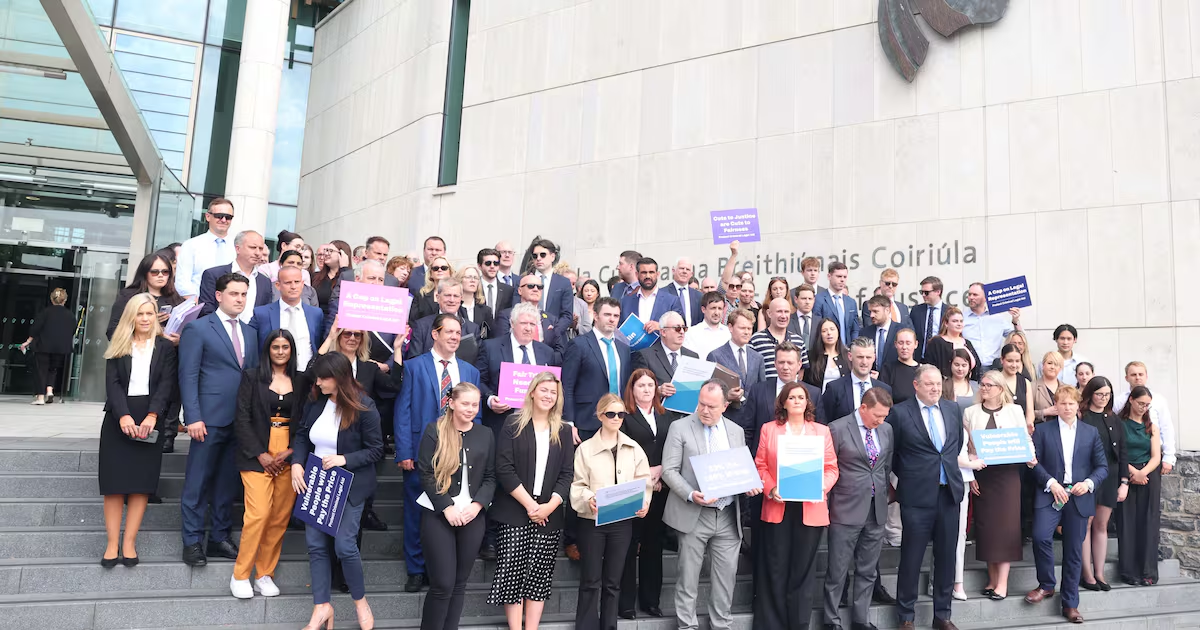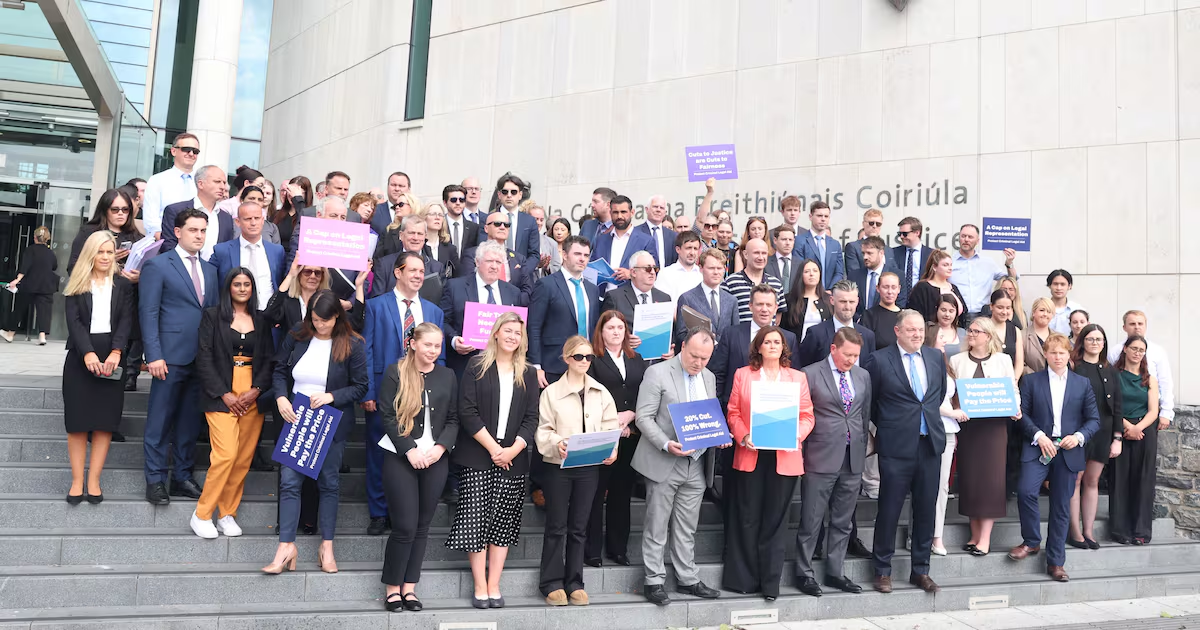
Hundreds of criminal cases in Dublin and across the country could not proceed on Wednesday following a mass withdrawal of services by criminal legal aid solicitors.The action continues on Thursday and Friday, and looks set to intensify next week, in a dispute over the Department of Justice’s proposed new payments model for criminal legal aid cases in the District Courts.The action affects criminal cases in the District, Circuit, Central and Special Criminal Courts, and the Court of Appeal, except those involving accused persons in custody, juveniles or priority sexual offence cases involving young people. It was organised by an ad-hoc group of criminal law solicitors in the wake of a meeting last week of more than 150 solicitors from all over the country in Dublin. The Law Society of Ireland, the solicitors’ professional representative body, has made repeated calls for “meaningful” discussions with the department about the proposals, due to come into effect on July 1st. On Wednesday, several cases listed at the Central and Circuit Criminal Court in Dublin were adjourned due to the solicitors’ action. Defence counsel told Judge Paul McDermott, who manages the Central Criminal Court list, they were not attended by a solicitor and did not have instructions.Some defence solicitors were present, and one told the judge, “with the greatest respect to the court, I’m withdrawing my services”.Thanking the solicitors who were present, McDermott said if individual solicitors were going to withdraw their services they should “come to court and indicate that, not simply as a matter of courtesy to the court” but so it could “address in advance any proposed withdrawal of service”.People may have travelled to attend court, complainants may be expecting to give evidence in a trial and others, including the jury panel, have made themselves available to the court, he said.Two Central Criminal Court cases involving sexual offences listed for sentence, in which the accused were in custody, were attended by solicitors and finalised.In Dublin Circuit Criminal Court, Judge Orla Crowe adjourned to another date cases where solicitors were not present.Crowe is the presiding judge in court number five, which has an extensive list of cases for mention, arraignment and sentence. Cases involving accused persons in custody generally went ahead as the barrister was attended by a solicitor and had instructions.[ ‘Highly discourteous’: Judge critical of silence around proposed withdrawal of solicitorsOpens in new window ]Five of eight cases listed for sentence were adjourned due to solicitors not attending. The five involved accused persons on bail and included a case of harassment, an armed burglary, a man who had pleaded guilty to a charge of sexual activity in the presence of a child and a man who admitted an offence of criminal damage.Cases listed for trial in Dublin Circuit Criminal Court were also adjourned.The withdrawal, solicitor sources said, had a nationwide impact including in Mayo, Meath, Arklow, Limerick, Athlone and Thurles.A meeting of the Southern Law Association in Cork on Wednesday resolved to withdraw legal services in criminal cases in Cork from Monday.The withdrawal will continue until the department engages “meaningfully” with the Law Society, well-known Cork solicitor Frank Buttimer told The Irish Times.“No solicitor I know, including myself, wants this to happen. We all deeply respect the functioning of the criminal justice system, that is why we are working in it. Lawyers, judges, guards, witnesses, victims, clients, no one wants this, only the department of justice who are guillotining any form of discussion.”The department’s proposals involve replacing the current criminal legal aid payments system based on appearances with a single flat-fee for representation from the start to the end of a case, aimed at reducing delays and simplifying representation. It follows an internal department review of about 350,000 District Court cases during 2022 and 2023 that noted expenditure on criminal legal aid in the District Court rose from €19 million in 2015 to €37 million in 2024.The review said the current fees structure incentivises solicitors to seek multiple hearings and referred to some particular claims, including by a firm that sought €14,000 over 63 legal aid certificates, reflecting the number of charges, during one court appearance on behalf of an alleged brothel-keeper. In opposing the plan, defence solicitors say they are being unfairly blamed for multiple adjournments when much of the fault lies with the State and Director of Public Prosecutions and a dearth of probation and addiction services and mental health resources for vulnerable clients.
Hundreds of criminal cases adjourned as solicitors withdraw services in legal aid row
Action could intensify next week to affect all cases, solicitors warn
735 words~3 min read