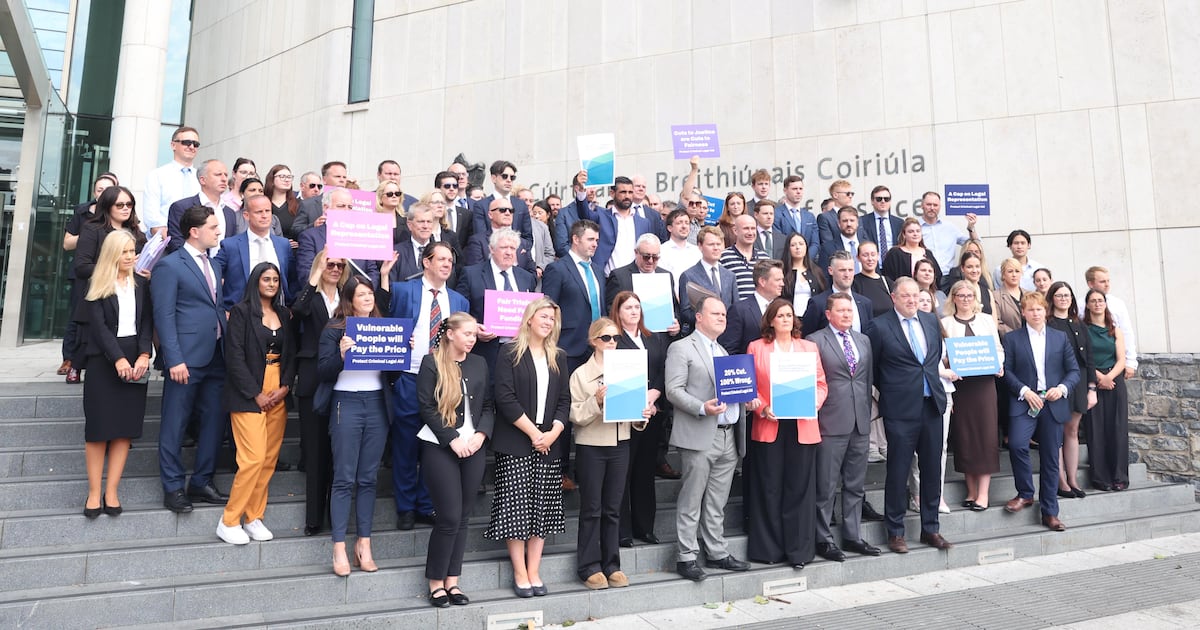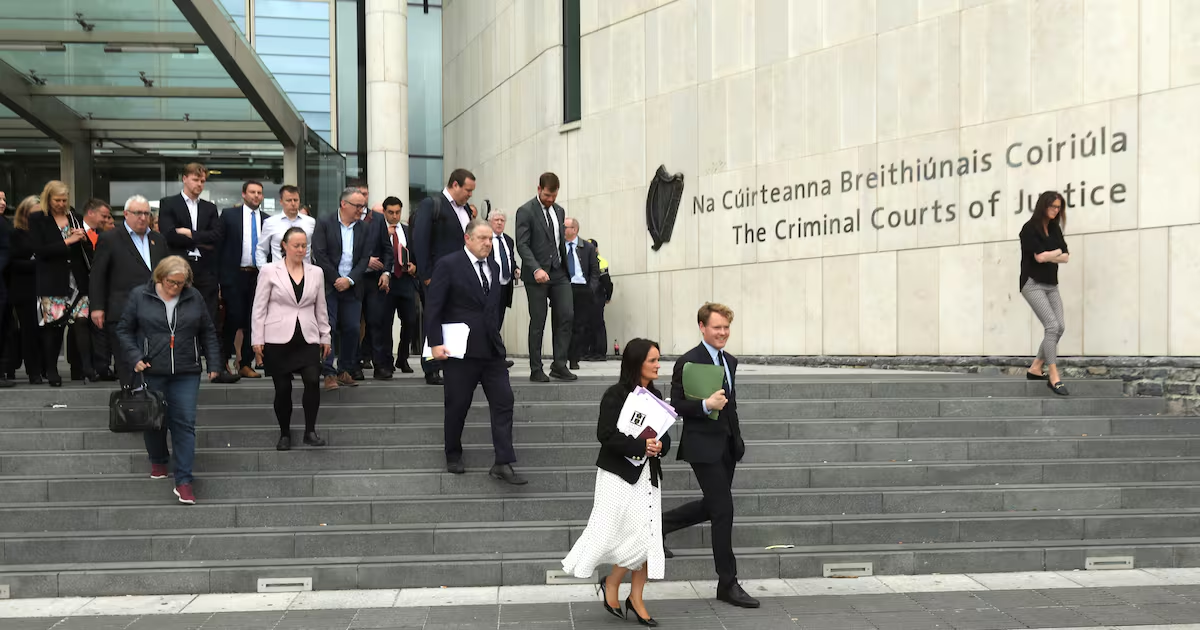
A criminal legal aid payments system due to come into effect next month is “seriously flawed” and open to legal challenge, the Law Society has warned.The solicitors’ group says the flat-fee proposals for criminal legal aid work in the District Court are unworkable, will lead to an exodus of solicitors from such work and undermine fair trial rights, particularly for vulnerable defendants. The society’s detailed submission opposing the proposals is being published on Thursday. It follows a meeting last week with Minister for Justice Jim O’Callaghan and discussions with his department, which failed to assuage its concerns. The scheme was proposed after the department reviewed more than 350,000 District Court cases during 2022 and 2023. The review noted that expenditure on criminal legal aid in the District Court had risen from €19 million in 2015 to €37 million in 2024.A core proposal is for a €455 ‘one accused, one fee’ payment for cases with an individual accused, irrespective of the number of appearances. The current system pays solicitors €239.38 per accused for their first appearance and €59.86 for each subsequent appearance.The society’s submissions include examples of cases involving multiple appearances for reasons including requirements for psychiatric or probation reports. One case, involving a brain-injured young male facing 20 separate charges, was before the court 40 times with adjournments granted for reasons including to get reports related to capacity concerns. The new scheme takes no account of the individual circumstances of cases and will mean “an actuarial form of justice”, Shane McCarthy, chair of the society’s criminal legal aid committee (CLC), told The Irish Times.[ Minister’s plan to reduce criminal legal aid fees will lead to solicitor ‘exodus’ – Law SocietyOpens in new window ]The department’s own data shows a District Court case referred to the Circuit Court will involve an average of nine court appearances, he said. The proposed €100 flat fee for such a case, meaning an €11 payment per appearance, was “an insult”.There was no prior consultation about these proposals and no real engagement by either the Minister or his department since their publication, said McCarthy. The society was effectively presented with “a fait accompli” and told the new system will be implemented on July 1st. There is “lots of anger and disappointment” among solicitors about the proposals, he said. Many engaged in criminal legal aid work are defending the rights of the most vulnerable, including people with addiction and mental health issues, and are dismayed about being portrayed as “out to milk the system”.The CLC has organised an information meeting next Tuesday because there is a lot of uncertainty among solicitors about the revised fee structure and how it will work in practice, he said. Officials from the department have been invited to attend to discuss the practical implications of the changes proposed.Asked if solicitors would contemplate withdrawing their services, McCarthy said he would not be advocating strike action but anticipated the new system will lead to many solicitors leaving criminal legal aid work. He believed the end result will not be costs savings for the State but “a system that will work a lot less efficiently and provide a much lesser service, to everybody’s loss.” The current criminal legal aid system is “creaking at the seams” but it does provide vital safeguards to people who are very vulnerable, he added. In its submissions, the society says the scheme will undermine fair trial rights without any acknowledgment of the complexity, personal circumstances or length of an individual case and “by looking to introduce potentially perverse incentives for an early guilty plea”.The proposals are based on “incomplete and fundamentally defective” data, including data about the numbers of case adjournments which failed to note those are often caused by statutory requirements and delay by State agents, it said.A department spokesman said the Minister “fully recognises” the “critical role” played by the legal professions in the effective administration of criminal justice, “and equally that the Criminal Legal Aid scheme is fundamental to upholding the constitutional and human right to a legal defence”. The fee structure reform “is aimed primarily at improving efficiencies, speeding up case resolution, and reducing unnecessary adjournments, while ensuring fair and sustainable remuneration for legal practitioners”. The department has been “engaging extensively” with relevant stakeholders, including legal professionals and their representative bodies, on the proposed changes to the scheme, the spokesman added.
New ‘actuarial’ criminal legal aid payments open to legal challenge, Law Society warns
Anger mounts among solicitors after Minister for Justice presented plan as a ‘fait accompli’
725 words~3 min read