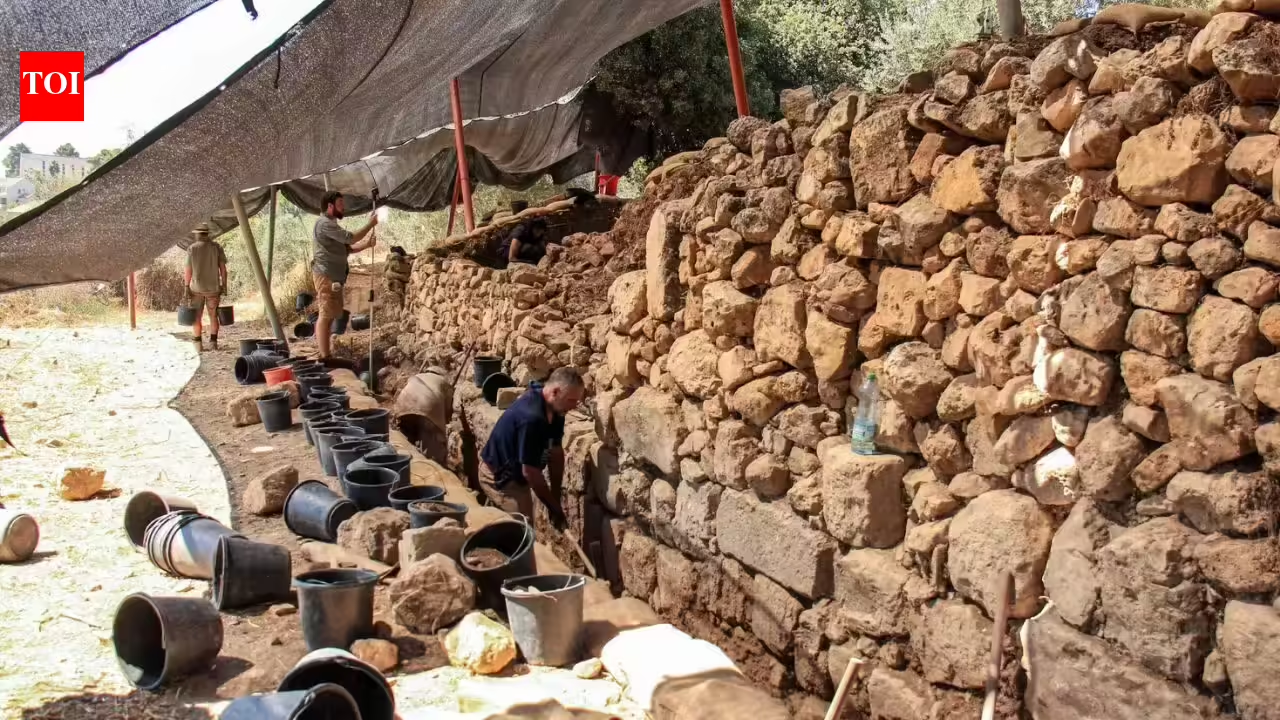
Every so often they talk about other people – about scientists they admire, associates they value, Pylian locals they formed close friendships with. Having worked together on and off since meeting at a dig in Ancient Nemea in 1984 and married since 2000, American archaeologists Jack Davis and Sharon Stocker avoid singing their own praises.
When our conversation gets to Davis recently being awarded the Athens Prize by the American School of Classical Studies at Athens (ASCSA), which also organized a conference in his honor, Stocker expresses pride at his distinction. He speaks modestly of his joy and promises that he will take a break, though “that day is not coming soon.”
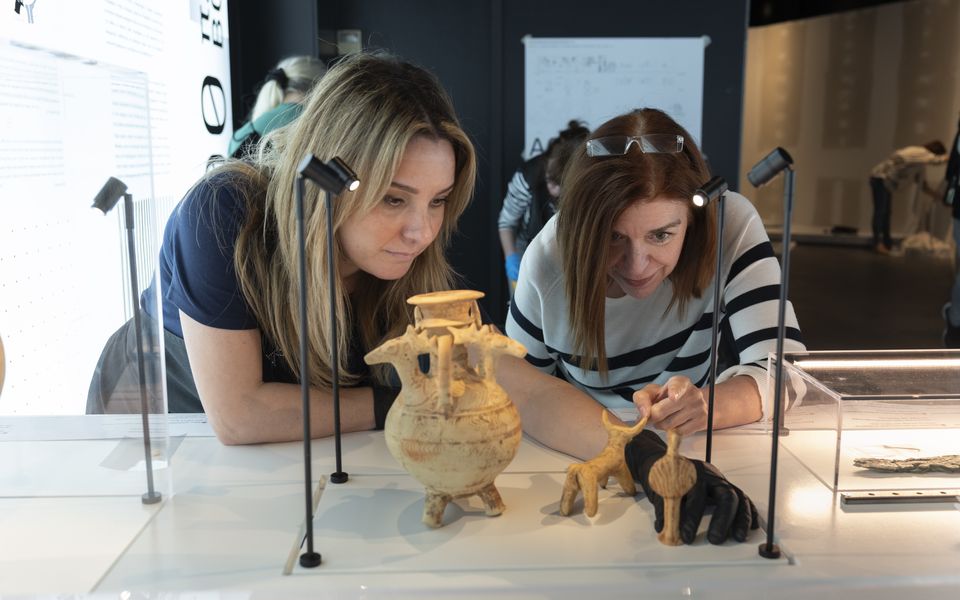
Davis, a professor at the University of Cincinnati; and Stocker, a senior research associate at the same institution, also comment on the exhibition “Nestor’s Pylos: A Mycenaean Kingdom Revealed” – on show at the National Archaeological Museum in Athens through October – praising how it “emphasizes the importance of archaeological context.”
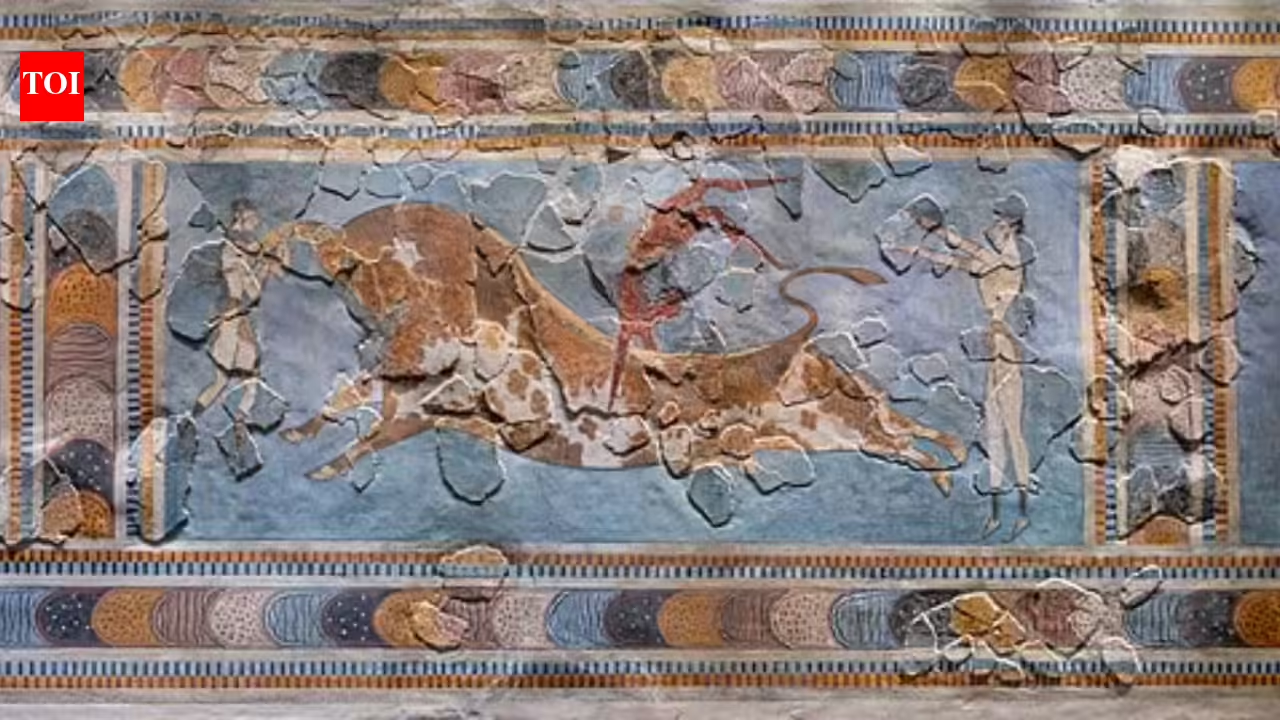
The exhibition, which was first put on in Kalamata, the capital of Messinia in the southwestern Peloponnese, and then traveled to the United States before returning to Greece, comprises findings from the tomb of the so-called “Griffin Warrior,” buried in 1450 BC on the hill of Epano Englianos in Pylos, in Messinia. Davis and Stocker discovered the tomb in 2015 and have not stopped studying it since.