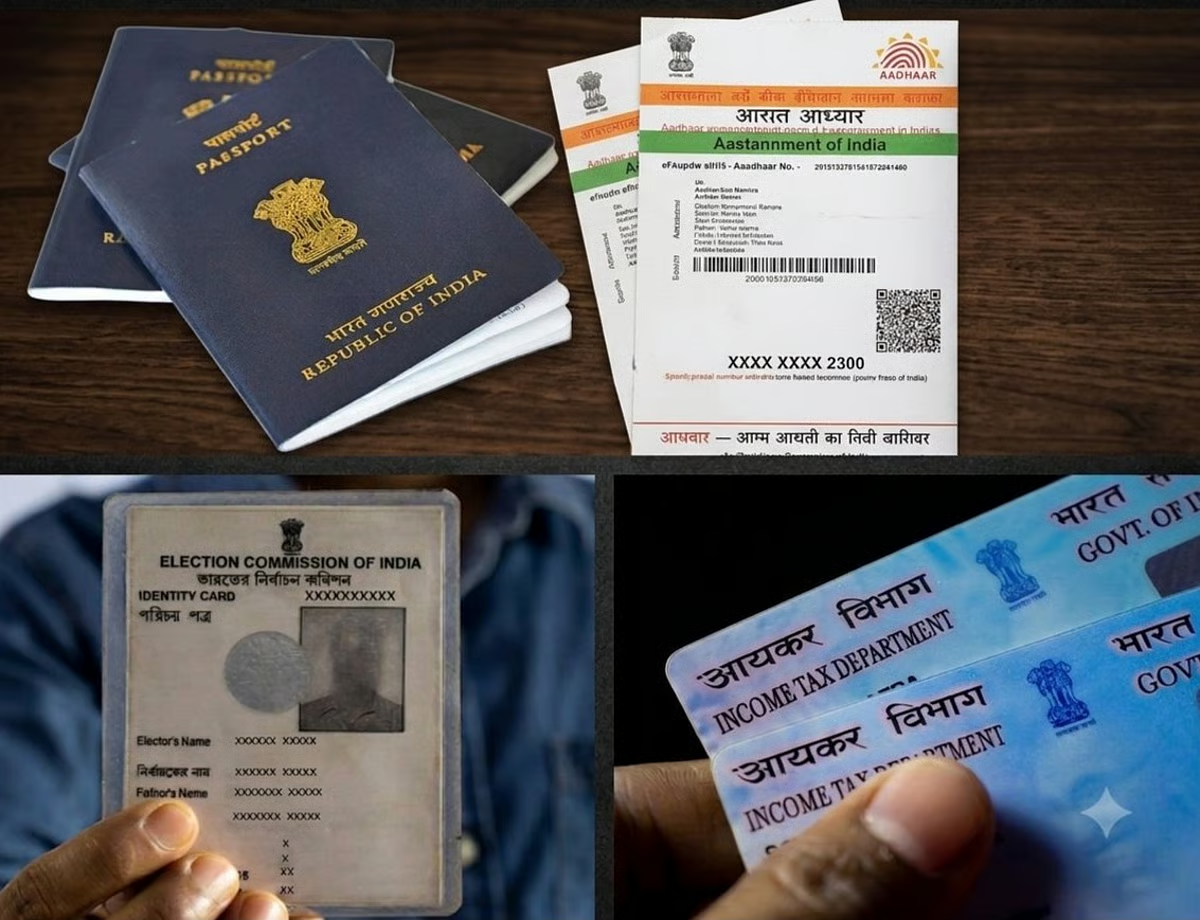
Why this debate mattersIndia does not issue a single, universal citizenship card. Instead, citizenship is determined through legal records, historical documentation and eligibility criteria under the Citizenship Act, 1955.As a result, while multiple documents may support identity or residence, citizenship must be established separately under law.At present, no single document — whether Aadhaar, voter ID or passport — serves as conclusive proof of citizenship.Government sources have also said there is no change in policy, adding that passports have always been issued after verification of citizenship but remain travel documents, not citizenship certificates.What is citizenship in India?Citizenship is a legal status that defines a person’s relationship with the state. It is governed by the Citizenship Act, 1955 and shaped by factors such as birth, parentage, residency and official records.India recognises five routes to citizenship:By birthBy descentBy registrationBy naturalisationBy incorporation of territoryWhy identity documents are not citizenship proofIndian law and court rulings consistently separate identity documents from citizenship status.Passport: Trusted, but not final proofA passport is issued only after verification, making it strong evidence of nationality. However, under the Passports Act, it can in rare cases be issued in the public interest, meaning it is not conclusive proof of citizenship.Issued after verification by the governmentUsed mainly for international travelRelies on underlying citizenship recordsCan be cancelled if eligibility is questionedReality: Strong supporting document, but not conclusive legal proof on its own.Aadhaar: Identity, not nationalityAadhaar is proof of identity and residence, not nationality. The Supreme Court has reaffirmed it cannot be used to establish citizenship.Issued to residents of India, not only citizensBased on biometric identity, not nationality statusForeign nationals residing in India can also obtain itReality: Cannot establish citizenship.PAN card: Tax identification onlyIssued by the Income Tax DepartmentRequired for financial and tax transactionsCan be held by foreign nationals earning or investing in IndiaReality: No link to citizenship status.Voter ID: Electoral eligibility, not legal citizenship proofRequires declaration of citizenship to registerUsed for voting rightsManaged by the Election CommissionReality: Indicates eligibility, not definitive legal proof in disputes.Election authorities have also clarified that being on the voter list does not automatically confirm citizenship.What actually proves citizenship?India does not issue a universal citizenship card. Instead, citizenship is established through:Birth records aligned with legal citizenship rulesParentage and migration historyRegistration or naturalisation certificates (in specific cases)Rules also vary depending on year of birth and parental status, with stricter provisions for those born after 2004.Why passports matter — but are not final proofPassports are widely accepted internationally and issued only after verification, but they remain legally separate from citizenship proof.Special categories of travel documents have also been issued in the past for groups such as Tibetan refugees and Sri Lankan Tamil refugees under specific legal provisions.What courts have saidJudicial rulings consistently underline that citizenship cannot be proven by documents alone:Citizenship must meet legal criteria under lawAadhaar, PAN and voter ID are not conclusive proofDocuments are treated as supporting evidence, not final proofIn landmark rulings including Sarbananda Sonowal v Union of India (2005), the burden of proving citizenship has been placed on the individual.Why India does not have a universal citizenship certificateUnlike many countries, India does not issue a single citizenship card for all citizens.Only those who acquire citizenship through registration or naturalisation receive formal certificates. Citizens by birth typically do not receive any standalone document.As a result, citizenship is inferred through multiple records rather than a single official proof.How Indian citizenship is acquiredUnder the Citizenship Act, 1955, citizenship can be obtained through:BirthDescentRegistrationNaturalisationIncorporation of territoryPassport vs citizenship: Key differencePassportGovernment-issued travel documentUsed for international travel and consular protectionCan be issued, renewed or revokedStrong evidence of nationality, but not proof of citizenshipCitizenshipLegal bond between an individual and the stateDefines political and civil rightsGoverned strictly by citizenship lawEstablished through legal criteria, not a single documentWho qualifies as an Indian citizen?By birth: depends on year and parental citizenship under the lawBy descent: children born abroad to Indian parents (subject to conditions)By registration: eligible residents, spouses and persons of Indian originBy naturalisation: requires long-term residence, including 11 years of stay in the last 14 years and 12 months of continuous residence before applicationExceptional cases: possible relaxation for contributions in fields such as science, art or public serviceWhy the distinction mattersA passport can be issued even if citizenship is later questionedA passport can be revoked without affecting citizenship statusAuthorities may require additional proof beyond identity documentsCitizenship must be established independently under lawGlobal approach: How countries differCountries where passports are not sole proof of citizenshipIndia: citizenship governed by law, passport is only a travel documentUnited Kingdom: citizenship proven via registration or naturalisation certificatesGermany: citizenship based on nationality recordsJapan: citizenship linked to family registry (koseki system)Singapore: citizenship separate from passport ownershipCountries where passports are strong proof of citizenshipUnited States: passport is primary evidence of citizenshipCanada: accepted alongside citizenship certificatesAustralia: widely used proof of citizenshipNew Zealand: generally accepted as citizenship evidenceKey takeawayA passport is a strong and widely accepted identity document, but citizenship itself is ultimately defined by law and official records — not by the passport booklet alone.With inputs from Agencies
What actually proves Indian citizenship? Passport vs Aadhaar vs voter ID vs PAN
Explainer on why passport, Aadhaar, voter ID and PAN do not prove Indian citizenship, and what legal records actually establish nationality under Indian law.
831 words~4 min read