Story audio is generated using AI
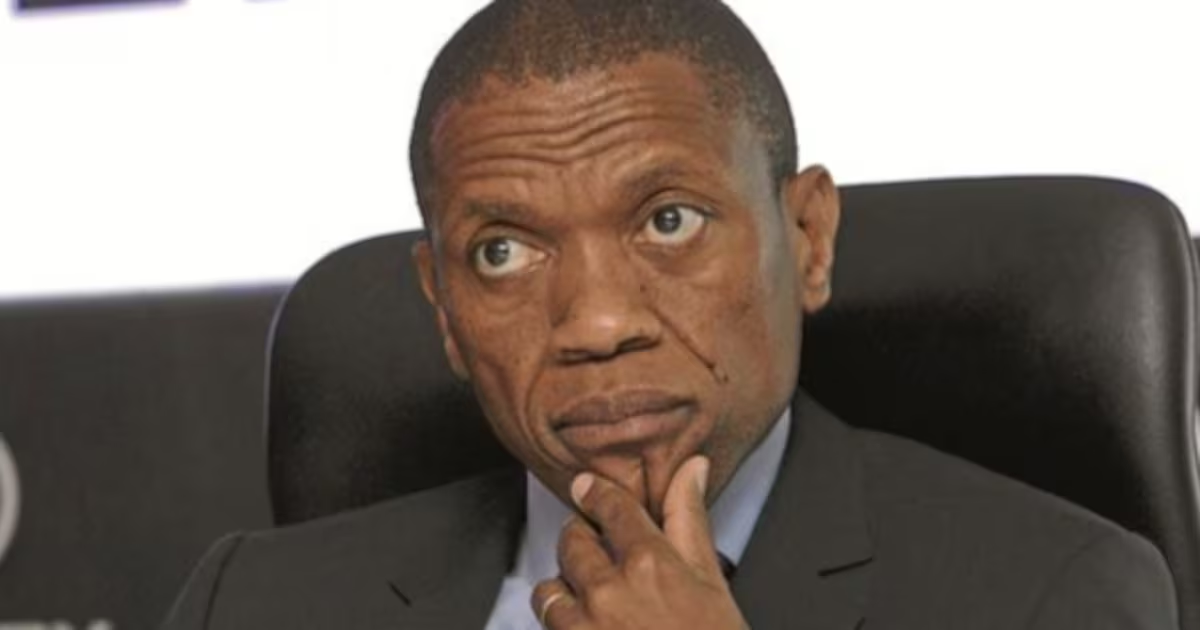
Embattled lender African Bank aborted plans to buy Eskom’s home loan book to avoid adding further complexity to its business, which is facing credit headwinds, with the group now focused on integrated businesses it acquired over the past three years and closing leakages in its lending book.African Bank and Eskom took the market by surprise in May when they announced that the R5.7bn deal had fallen through.African Bank interim CEO Zweli Manyathi said the group has opted to focus its energies somewhere else after it swung from a profit of R262m in the 2025 financial year to a hefty loss of R624m in the first half of its 2026 financial year.“The Eskom home loan book deal was affected by our decision to trim down on the things that we do and focus on consolidating what we have got. The deal would have created a major distraction for us,” Manyathi told Business Day on Tuesday.The collapsed transaction was first announced in 2024 under the leadership of ousted CEO Kennedy Bungane.At the time, the bank said the deal was part of efforts to diversify its product offering and increase its capabilities and presence in the secured home loan lending market.African Bank’s move to walk away from the deal as it embarks on a painful turnaround journey has left Eskom looking for another buyer for the asset. For Eskom, the failed deal was key in its fulfilling one of the conditions imposed on it by the National Treasury in a R254bn debt relief package.African Bank under Bungane went on an aggressive acquisition spree, which saw active customers grow from 1.5-million in 2021 to 6.3-million in 2025 and total assets surge from R29bn to R57bn.The bank’s retail deposits grew from R10bn to R37bn while gross advances surged to R44bn from R25bn in the period.Some of the marquee acquisitions included the R3.2bn purchase of Sasfin’s capital equipment finance and commercial property finance businesses and the R1.5bn deal to buy Grindrod Bank.Other deals included the purchase of UBank. The company, in its six months to end-March results, published on Thursday, said the deals were designed to transform African Bank into a fully fledged, diversified financial services institution capable of serving customers across every major financial touchpoint.However, African Bank acknowledged that certain components of this expansion did not fully materialise in the originally anticipated timeframes, “largely due to delays” in obtaining the necessary regulatory approvals.“We had to absorb the associated costs of these acquisitions, including staffing, systems integration and operational alignment initiatives,” it said.“The delayed integration of new businesses and capabilities meant that the expected earnings uplift has taken longer to realise than anticipated, placing pressure on both our reported financial performance and market expectations of our growth.“In the first half of 2026, we deliberately shifted our focus towards consolidation, integrating our operations, aligning our systems and embedding a unified operating model across the group.”The poor first-half results included worsening impairments, which increased from R1.2bn to R1.7bn, and elevated expenses.Manyathi said the group has instituted measures to improve the quality of its loan book, including a new credit scoring system.