Story audio is generated using AI
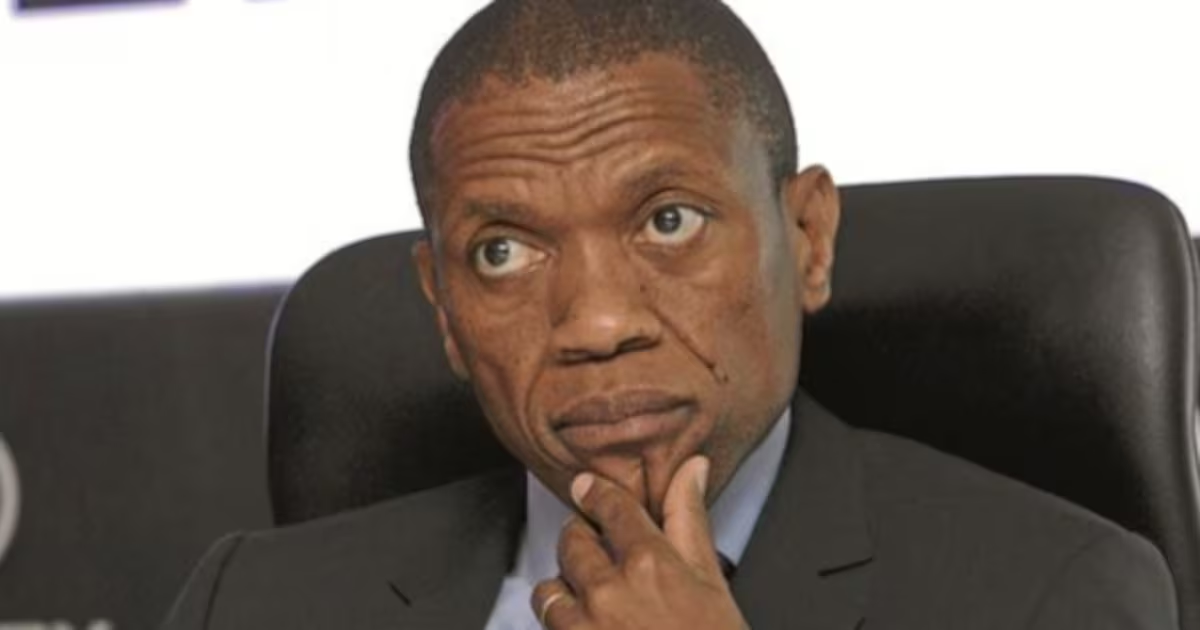
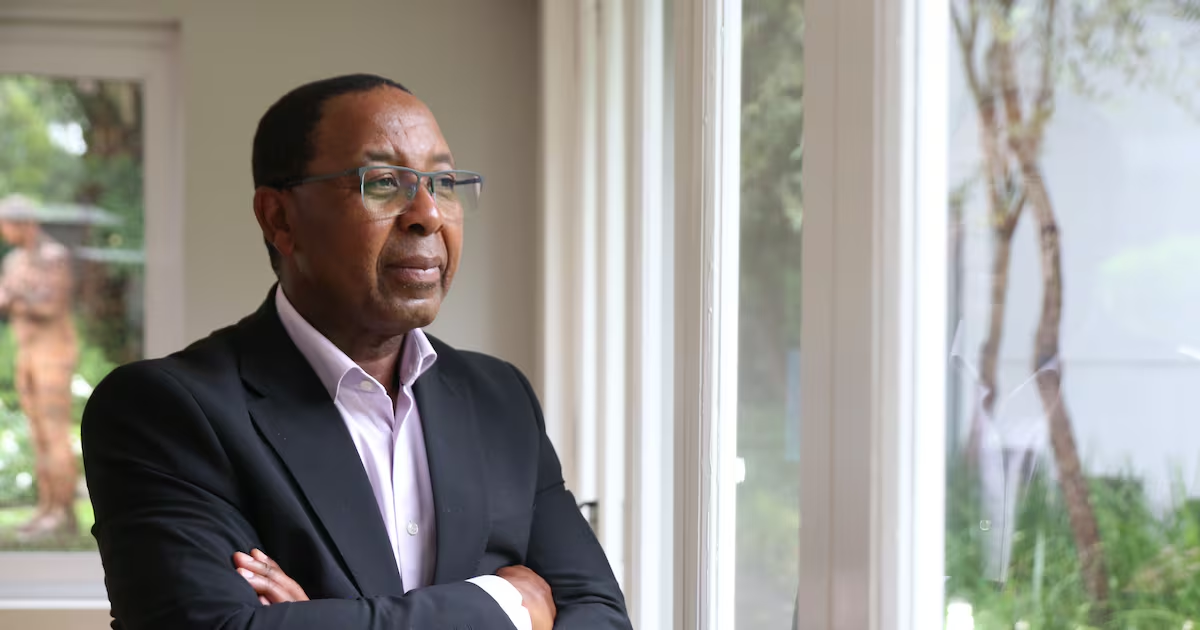
African Bank is reviewing its retirement age to pave the way for a prolonged stay by veteran banker Zweli Manyathi as he leads a painful turnaround that might involve a consolidation of branches and a loss of jobs.Manyathi has been African Bank’s interim CEO since March, when Kennedy Bungane was ousted after he fell out of favour with the board over the bank’s performance and regulatory filing missteps. Manyathi turns 65 in July, the official retirement age for executives at the bank.He told Business Times that plans were afoot to keep him at the helm of the loss-making lender for “much longer” than July.“The retirement age is 65, which is next month,” he said. “All I am going to say is that I am going to be a CEO in this business beyond that.”Manyathi said work had been done by the board to extend his tenure, and the bank had engaged with the South African Reserve Bank’s Prudential Authority.“We have already put to them a motivation for the approval to be a group CEO as opposed to interim CEO,” he said.He said the change of retirement age was an internal matter and was the responsibility of the board.“The board has got the discretion to engage with the trustees of the pension fund, which has been done. Actually, everything has been set up; that is why we have engaged with the Reserve Bank,” he said.Should the Prudential Authority give African Bank the green light to expand its retirement age beyond 65, it will be following other banks that have made similar adjustments.A year ago, Standard Bank changed the retirement age of its executives from 60 to 63 to attract and retain talent. Nedbank changed its retirement age for employees from 60 to 63.The board has got the discretion to engage with the trustees of the pension fund, which has been done. Actually, everything has been set up; that is why we have engaged with the Reserve Bank.— Zweli ManyathiThe move by African Bank to waive its retirement age to accommodate Manyathi raises questions around its succession planning and leadership stability.When appointed to the role in March, Manyathi became the group’s fourth CEO in eight years under the Thabo Dloti-led board.African Bank has been 50% owned by the Reserve Bank and 25% by the Government Employees Pension Fund, with the remainder owned by a consortium of banks, including Standard Bank, Absa, Nedbank, FirstRand, Investec and Capitec.It was placed in curatorship in 2014 after African Bank Investments Limited (Abil), its former controlling shareholder, collapsed due to high debt levels and a liquidity crunch.Under Bungane, the bank initially announced plans to list on the JSE in 2025, but this was later pushed to 2027/8.Manyathi said the bank had again deferred its listing to 2030/31, as it depended on three years of a solid financial performance.He said the bank continued to seek an exit from the Reserve Bank and the consortium of banks, and an IPO remained on the cards, albeit at a later stage.“While we have not yet as a board firmed up when that is going to be, we have not changed our minds that there is going to be an IPO,” Manyathi said. “That is going to go ahead. It depends on three years of solid delivery.” The latest move by the 50-year-old lender to delay its IPO comes after it swung from a profit of R202m in the 2025 financial year to a loss of R624m in the six months ended March. The group’s impairments surged to R1.78bn from R1.22bn. Net interest income fell by 7% to R2.3bn from R2.5bn a year earlier, while total net advances were R41bn. The lender’s cost-to-income ratio came in at 70% from 62%.Manyathi said leading a turnaround for the group was not easy.“If I reflect on the turnaround I have been a part of, it is not easy,” he said. “It does not take six months, as people would like to see. Some of these things that have led us to where we are — strategies — would have been taken five years ago.” Part of the turnaround plan includes consolidating the group’s branch network and tightening its belt on extending credit.“We have just recalibrated our risk appetite and pulled back to reduce probabilities of defaults,” Manyathi said. “We have also introduced a new scorecard to improve our underwriting. In the long term, we want to improve the quality of the business we underwrite and not have impairments that bring volatility in our numbers.“Our cost-to-income ratio is also high. We are using this opportunity to right-size our cost base to reflect our revenue opportunities. We will also have to consolidate our branches to improve productivity.” African Bank has diversified from being a monoline lender to a bank with personal and business and commercial bank divisions. It went on an aggressive acquisition spree, taking in Sasfin’s capital equipment and finance business, Ubank and Grindrod Bank.It walked away from a plan to take over Eskom’s R5.7bn home loan book in 2026 to focus on the acquisitions it had.Manyathi said the fact that African Bank chose not to pursue the Eskom deal meant it was sitting on surplus liquidity. “Nobody forced us to abandon the Eskom home loan book; we did it ourselves. We said this is an era of consolidation and extracting value from the acquisitions we have done as opposed to adding more to it.” African Bank reported a flat interest income on the back of a shrinking personal banking book after growth in the business and commercial segment. The group this week announced Happy Ralinala as CEO for personal banking. It said it was focused on a new target operating model to integrate acquired businesses and improve its financial performance.Business Times