Story audio is generated using AI
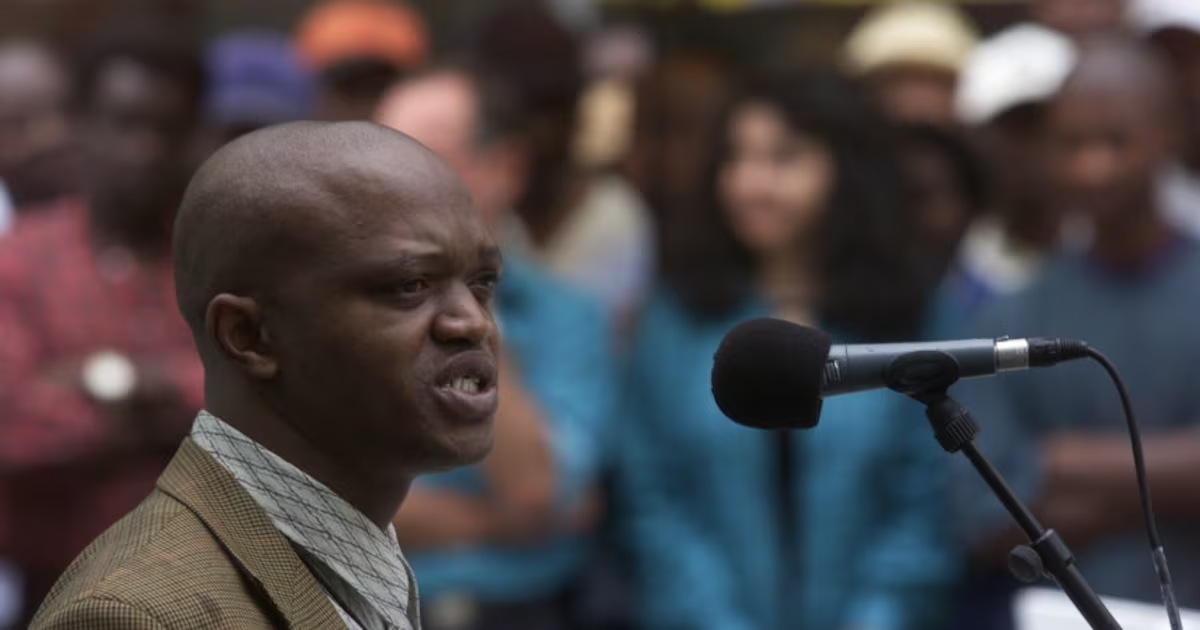
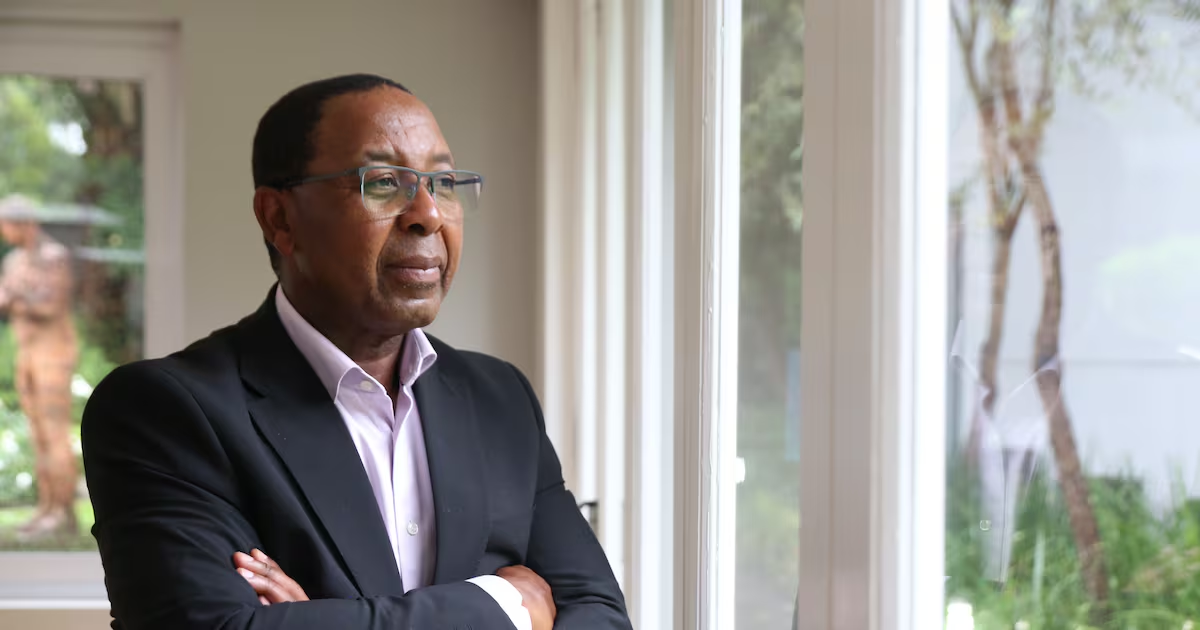
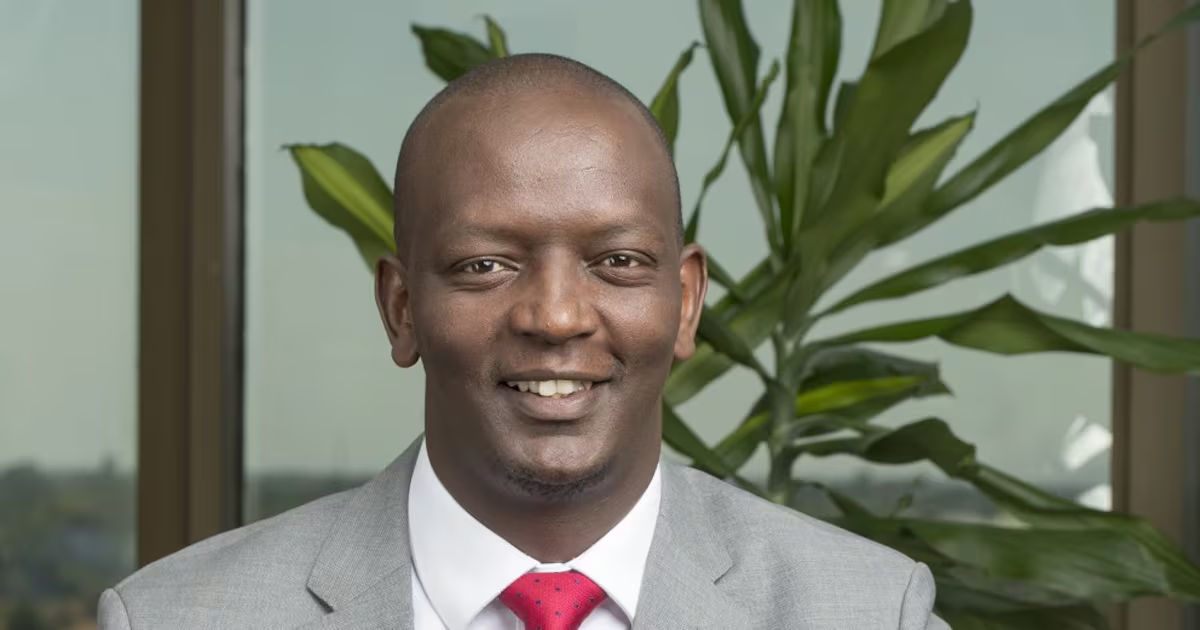
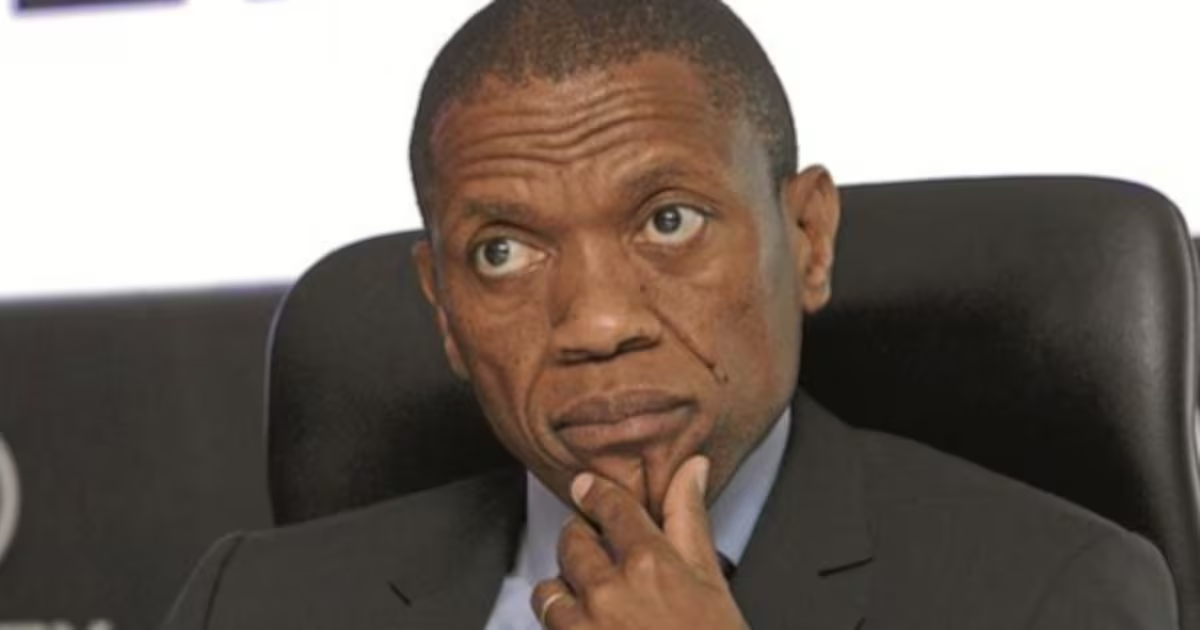
African Bank chairperson Thabo Dloti is no stranger to the hustle and bustle of corporate South Africa. He has a few scars to show for his many years in the top echelons of high finance — an environment where accountability is paramount and room for error is limited. Nearly a decade ago, Dloti, having lost the confidence of the Liberty board — an untenable position for any CEO — had to quit as the insurer’s boss.The May 30 2017 statement did not mince its words: “Thabo is leaving Liberty following a difference of opinion with the board on the immediate focus of the company at a time when the organisation is facing tough operational and environmental challenges.”Three months before his exit from Liberty, the company reported disappointing results, with normalised headline earnings for the financial year 2016 down 39%. This reflected a 37% decline in normalised operating earnings and a 42% decline in earnings from the shareholder investment portfolio.Something had to give. With Standard Bank — then Liberty’s largest shareholder — dissatisfied with the situation, Dloti departed, and the banking group seconded its corporate and investment banking CEO, David Munro, to steady the ship.And steady the ship he did, with Liberty staging a recovery through a refreshed strategy before Standard Bank took full ownership of the insurer five years ago.Prior to leading Liberty, Dloti was CEO of the Old Mutual Investment Group from 2004 to 2009 and CEO of Stanlib from 2010 to 2014.After he departed from Liberty, Dloti co-founded Sithega Holdings, an investment holding company that invests in financial services businesses focused on transforming the non-banking financial services landscape.His big public comeback came nearly two years after he departed from Liberty, when he was appointed chair of African Bank in 2019. He replaced banking veteran Louis von Zeuner, who had led the bank after it exited curatorship in 2016 following its placement under curatorship two years earlier by the Reserve Bank.The Dloti board’s tenure with CEO Basani Maluleke would not last long. Maluleke abruptly resigned on the eve of the presentation of African Bank’s 2020 financial results in 2021.Maluleke, like Dloti five years earlier, left after a dispute with the board. She later joined Capitec, the former African Bank rival, where she heads its highly successful personal banking franchise, which has grown to more than 25-million customers since its rapid expansion in the early 2000s.Dloti subsequently spearheaded the appointment of Kennedy Bungane as CEO, bringing to the role more than two decades of banking experience gained at some of the industry’s leading lenders.For a while, African Bank enjoyed a renewed sense of optimism, taking to market its new strategy, “Excelerate”, in 2021. The strategy was aimed at building a customer-centric, data-enabled business that would be scalable, diversified and capable of supporting a compelling listing proposition.The group then splashed billions of rand to achieve greater scale and diversification through several transactions:2022: acquisition of Grindrod Bank for R1.5bn;2022: acquisition of the assets and liabilities of UBank; and2024: acquisition of key commercial banking units from Sasfin Bank for R3.25bn. However, the lender in 2026 walked away from the proposed R5bn acquisition of Eskom’s home loan book, shortly after parting ways with Bungane in March.The group reported a net aftertax interim loss of R624m for the six months ended March 31 this year, driven by rising credit impairments, integration challenges and the costs associated with its expansion strategy.Credit impairments increased to R1.78bn due to higher-than-expected default rates. To steady the ship, acting CEO Zweli Manyathi has embarked on a cost-cutting programme involving branch consolidation, a move that could result in up to 1,200 job losses and the closure of 90 branches.The consequence is that the group has postponed, for a second time, its mooted listing on the JSE — a key component of the 2021 strategy.The responsibility now rests firmly with the board and Manyathi to craft a strategy capable of turning around the group’s performance. This is a challenge for a bank that, in its 51-year history, has twice been placed in curatorship.The stakes are high for Dloti. A failure to restore African Bank’s credibiity would be a stain on his CV. Rating agency S&P, which has downgraded the bank’s outlook from stable to negative, has highlighted the challenge facing African Bank’s leadership in rebuilding confidence in the institution’s prospects. The agency said it expects African Bank’s operating costs to rise, driven by inflationary pressures and one-off restructuring costs. “At the same time, we expect credit impairments to account, on average, for 50%-55% of operating revenue over the next couple of years, as the bank rolls off its legacy loan book,” the agency said.“African Bank’s capital base will deteriorate because of the expected weak financial performance. We expect the bank’s capitalisation, as measured by our RAC [risk-adjusted capital] ratio, to deteriorate because of the expected operating losses.“While the bank has introduced a revised risk model to tighten credit origination and pause high-risk lending channels, pressure will remain as it still deals with legacy portfolios until they fully mature or are written off — a process that will only happen in 2028.” These are the concerns that will be top of mind for Dloti and his team, with little room for error.Business Times