Story audio is generated using AI
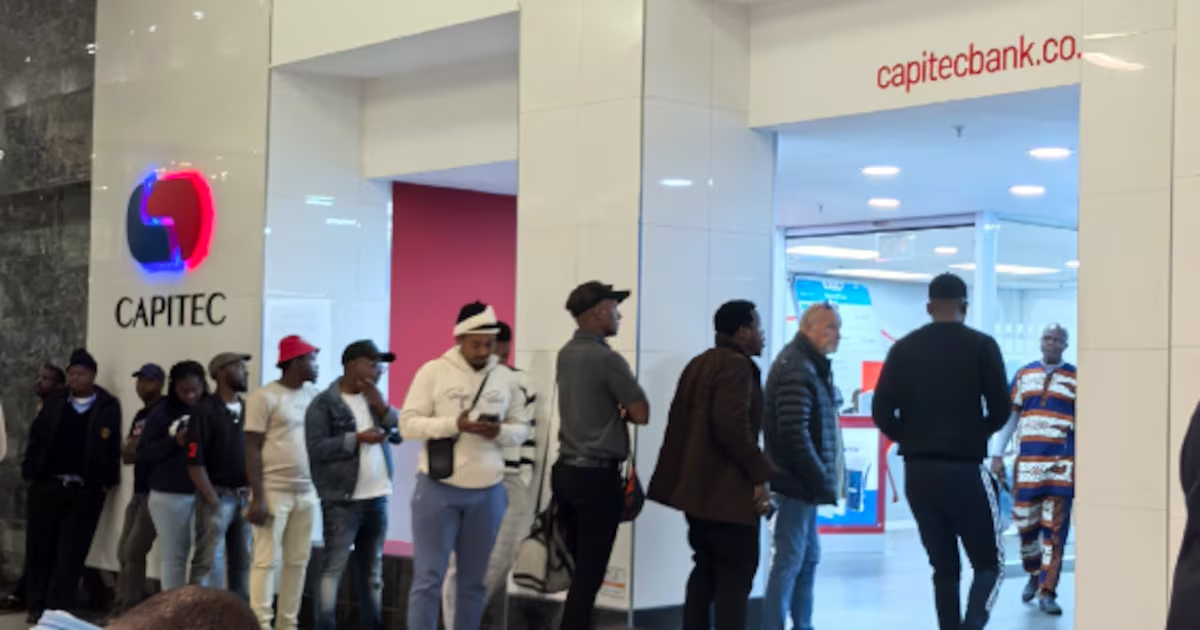
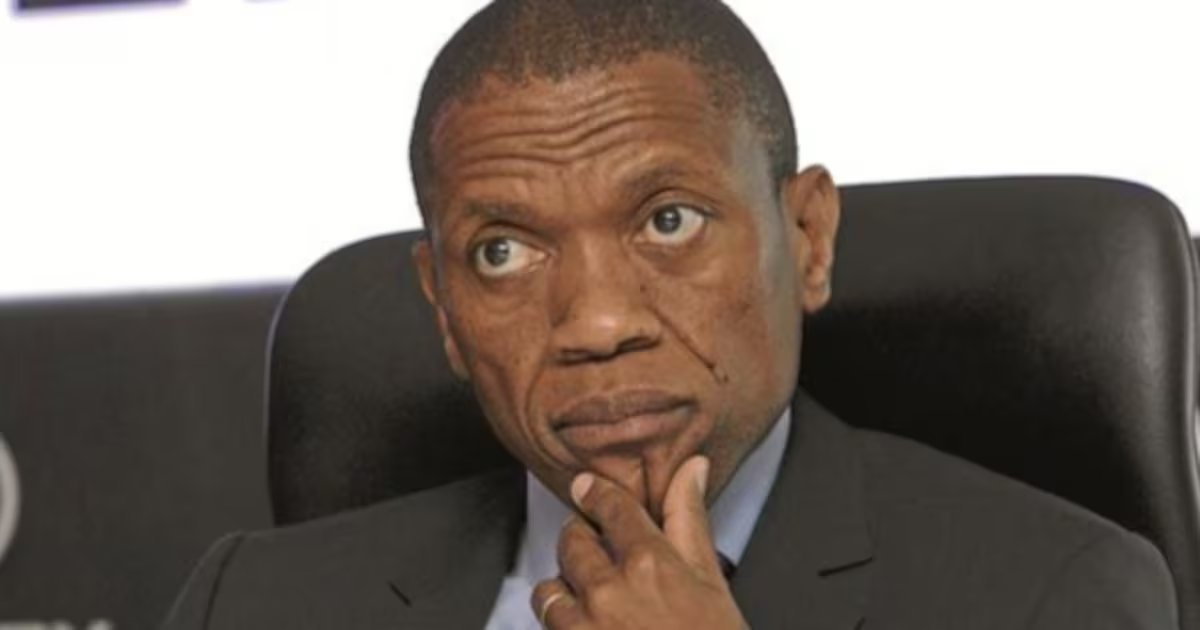
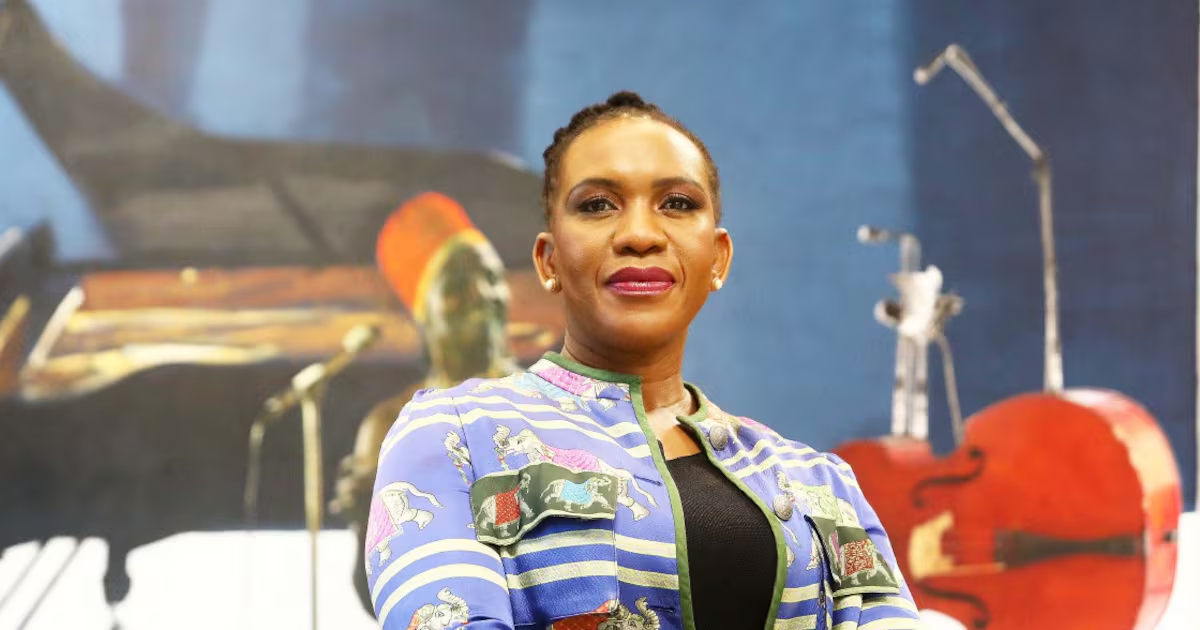
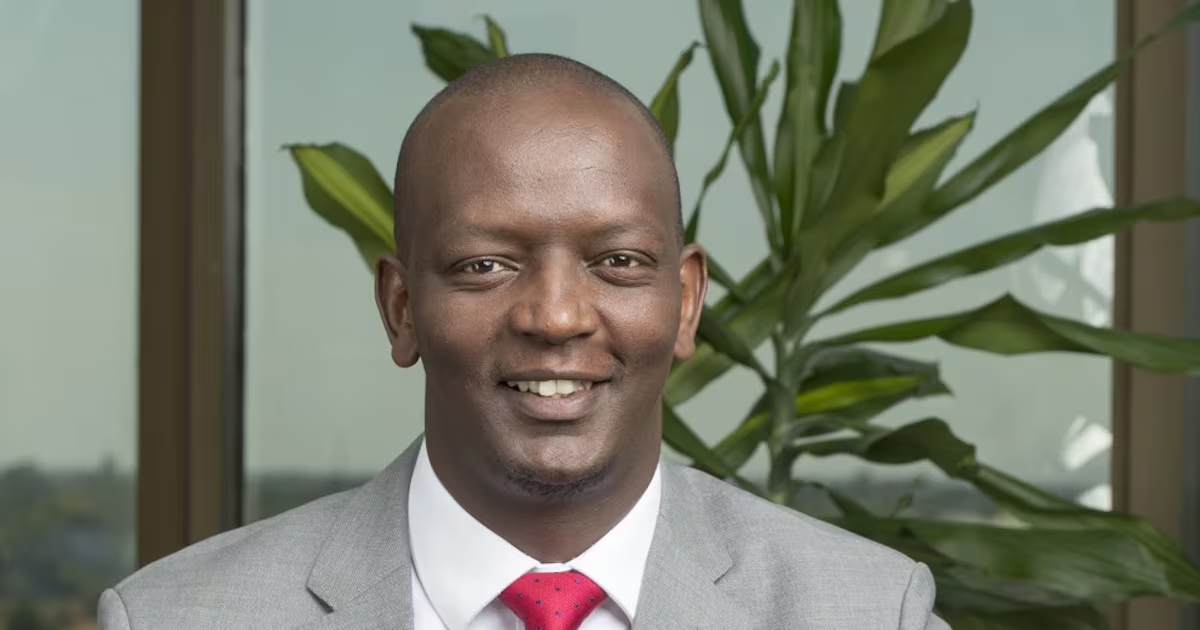
While African Bank was sleepwalking into a crisis in 2013, culminating in its being placed into curatorship by the South African Reserve Bank the following year, Capitec — its biggest rival for the unsecured lending market — was assembling the building blocks to dominate the sector.In 2026, African Bank’s nightmare continues while Capitec has become an investor’s dream. At last count it was the country’s most valuable banking group, at R546bn.African Bank’s listing remains a distant dream after several postponements.The reason for the two groups’ divergent ways is perhaps best explained by their fundamentals and the agility and execution of strategy.African Bank vs Capitec (Dorothy Kgosi) While Capitec has been creating jobs, African Bank is looking to close nearly 100 branches — putting about 1,200 jobs on the line — a far cry from the bullish outlook three years ago when it embarked on a huge acquisition spree that included Grindrod Bank, Sasfin’s capital equipment finance, and commercial property finance loan books.Beefing up the portfolio was intended to shore up profits and investor sentiment ahead of an initial public offering, initially slated for 2027 but pushed out to at least 2030 as a result of an R624m loss for the six months to end-March and credit impairments soaring to R1.787bn from R1.222bn.Reporting a record profit of R16.8bn in the 2026 financial year, Capitec continues from strength to strength.A cursory glance at the past 13 years offers clues why the two lenders, initially seen as competitors, have ended up in two entirely different universes.Under CEO Gerrie Fourie, who retired from the corner office last year, Capitec snapped up more than 20-million new clients and made bold but successful forays into life insurance, value-added services and business banking, as well as an aggressive digital drive.Those measures culminated in profit growth of more than R12bn when he handed over the reins to Graham Lee.African Bank, meanwhile, looks to be stuck in its old ways, struggling to carve out a space for itself in a highly competitive industry.Asief Mohamed, CEO & portfolio manager at Aeon Investment Management, says much of the divergence between the banks since 2014 comes down to strategy and talent.“By 2014, Capitec had already grown from an unsecured lender into a full transactional bank, allowing it to own everyday banking relationships with the mass market, giving it a sticky, low-cost retail funding base. That effectively funded its push into insurance, value-added services and business banking,” Mohamed said.“African Bank recognised that an unsecured lending business funded by wholesale markets was never going to be stable, so it followed Capitec’s diversification blueprint. “The trouble is that it started years behind, without the brand Capitec had spent over a decade building, and it chose to buy scale rather than grow it. Bolting together its acquisitions has proven expensive and messy,” he said.The divergence couldn’t be starker: Capitec’s profits are catching up with Nedbank — no mean feat for a lender that has been around for less than 30 years — and it is taking on rivals who have been around for more than a century.The trouble is that it started years behind, without the brand Capitec had spent over a decade building, and it chose to buy scale rather than grow it. Bolting together its acquisitions has proven expensive and messy— Asief Mohamed, CEO & portfolio manager at Aeon Investment ManagementAheesh Singh, MP9 Asset Management’s CIO, highlighted three areas behind Capitec’s success. He said the bank is winning big because it has kept its offering simple and remained disciplined on credit while building a robust value-added services franchise.“The acquisitions African Bank has made may not yet have yielded the return profile needed to stabilise the ship,” Singh said.“A decade ago, African Bank grew its unsecured lending book during good times, but when the credit cycle turned the losses were bigger than the balance sheet could absorb; that’s what led to curatorship. Since then, they’ve had to do repair work and growth work at the same time, which is a difficult position to execute from,” he said.Makwe Fund Managers founder Makwe Masilela said Capitec saw a niche and moved with speed to capture the unbanked market by making banking easy and cheap.“African Bank, which did well offering the unbanked cheaper and easy microloans, took time to convert those clients into transactional clients,” Masilela said.“Now, given increased competition, it’s a bit of an uphill battle for African Bank to rapidly attract new transactional clients. In my opinion it’s very important that they urgently loosen themselves from the shareholding of the bank consortium.”