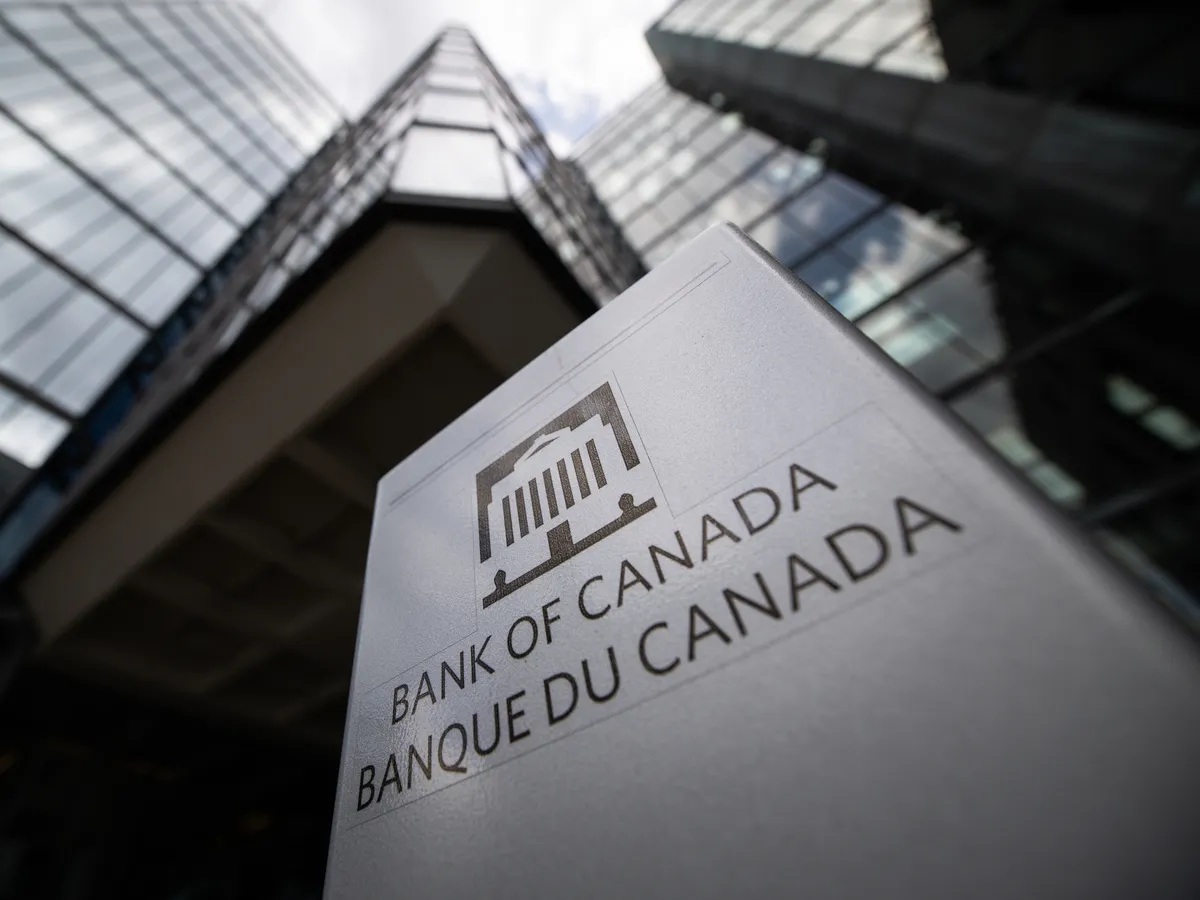
Skip to Content News Archives Economy Energy Oil & Gas Renewables Electric Vehicles Mining Commodities Agriculture Real Estate Mortgages Mortgage Rates Finance Banking Insurance Fintech Cryptocurrency Work Wealth Smart Money Wealth Management Investor Personal Finance Family Finance Retirement Taxes High Net Worth FP Comment Executive Women Puzzmo Newsletters Financial Times Business Essentials More Innovation Information Technology FP500 Podcasts Small Business Lives Told Tails Told Shopping Financial Post Store Obituaries Place a Notice Advertising Advertising With Us Advertising Solutions Postmedia Ad Manager Sponsorship Requests Classifieds Place a Classifieds ad Working Profile Settings My Subscriptions Saved Articles My Offers Newsletters Customer Service FAQ News Economy Energy Mining Real Estate Finance Work Wealth Investor FP Comment Executive Women Puzzmo Newsletters Financial Times Business Essentials HomeNewsEconomyWhere Deloitte sees 'real opportunity' for economic growth in 2026Deloitte's recent report notes that while the Canadian economy is stagnating, it’s not contractingLast updated 34 minutes ago You can save this article by registering for free here. Or sign-in if you have an account.Deloitte expects the Bank of Canada to hold its benchmark interest rate at 2.25 per cent for the rest of 2026 as it contends with “competing pressures.” Photo by DANIEL LEAL-OLIVAS/AFP/Getty ImagesAs U.S. trade frictions continue to be the top risk to Canada’s economy, a new report says the “real opportunity” for growth lies in a combination of government investment and boosting businesses’ confidence to get capital flowing. Subscribe now to read the latest news in your city and across Canada.Exclusive articles from Barbara Shecter, Joe O'Connor, Gabriel Friedman, and others.Daily content from Financial Times, the world's leading global business publication.Unlimited online access to read articles from Financial Post, National Post and 15 news sites across Canada with one account.National Post ePaper, an electronic replica of the print edition to view on any device, share and comment on.Daily puzzles, including the New York Times Crossword.Subscribe now to read the latest news in your city and across Canada.Exclusive articles from Barbara Shecter, Joe O'Connor, Gabriel Friedman and others.Daily content from Financial Times, the world's leading global business publication.Unlimited online access to read articles from Financial Post, National Post and 15 news sites across Canada with one account.National Post ePaper, an electronic replica of the print edition to view on any device, share and comment on.Daily puzzles, including the New York Times Crossword.Create an account or sign in to continue with your reading experience.Access articles from across Canada with one account.Share your thoughts and join the conversation in the comments.Enjoy additional articles per month.Get email updates from your favourite authors.Create an account or sign in to continue with your reading experience.Access articles from across Canada with one accountShare your thoughts and join the conversation in the commentsEnjoy additional articles per monthGet email updates from your favourite authorsSign In or Create an AccountorDeloitte Canada’s summer economic outlook, released Thursday, forecasts growth of just 0.7 per cent this year before expanding to two per cent in 2027. It also predicts a “slow recovery” for exports, assuming the effective U.S. tariff rate on Canadian goods stays at today’s “relatively low level.” Deloitte projects exports will grow 0.8 per cent in 2026 and strengthen to 2.4 per cent in 2027. SUBSCRIBER EXCLUSIVE: FP West: Energy Insider brings you behind the oilpatch’s closed doors with exclusive insights from insiders every Wednesday morning.By signing up you consent to receive the above newsletter from Postmedia Network Inc.A welcome email is on its way. If you don't see it, please check your junk folder.The next issue of FP West: Energy Insider will soon be in your inbox.We encountered an issue signing you up. Please try again“There are a lot of moving pieces,” Dawn Desjardins, Deloitte Canada’s chief economist, said in an interview. With less than a week to go until the July 1 deadline for renewing the Canada–United States–Mexico Agreement (CUSMA), there is little expection the three sides will reach a deal. If they don’t, the trade agreement will undergo annual reviews until it expires in 2036. The trade pact currently shields an estimated 95 per cent of Canadian goods from U.S. tariffs. Deloitte’s report notes that while the economy is stagnating, it’s not contracting. Desjardins said “recessionary conditions” are characterized by “at least a couple periods of negative GDP,” which Canada experienced in the last two quarters. “But the other thing is the depth of the decline, which is not very deep at this moment, and also the number of industries it’s touching, where we are seeing a contraction in economic activity,” Desjardins said. “There, it’s just not lining up in terms of a recession.” The report says the “real opportunity” for economic growth comes from two sources. The first is governments pushing forward with spending on infrastructure, defence, critical minerals and resources, which Desjardins said will start a growth cycle that filters through the economy. After some “really hot spending” where government fixed investment surged 7.3 per cent last year, Deloitte expects a tamer 3.7 per cent gain this year — though Desjardins said it’s still “higher than any other number we’ve ever seen.” The second piece is restoring business confidence. Desjardins said the government needs to move quickly on policies and tax incentives that give companies the “green light” to invest. “What we’re looking for is some of the hurdles to business investment being reduced,” she said. “And by that I mean looking at things like the interprovincial trade barriers, zoning — all of the things that really inhibit businesses’ ability to get a return on their investment in a relatively quick manner.” On the monetary policy front, Deloitte expects the Bank of Canada to hold its benchmark interest rate at 2.25 per cent for the rest of 2026 as it contends with the “competing pressures” of a stagnating economy pushing down inflation and high energy prices stoking concerns about broad-based price acceleration. While the report said the central bank could be forced to hike rates earlier if inflation spreads, those fears haven’t materialized. Statistics Canada reported Monday that inflation jumped from 2.8 per cent in April to 3.2 per cent in May, which Desjardins said was mainly concentrated in energy. “I think it’s clear where the inflation is coming from,” she said. “And as we’ve seen recently, oil prices have really gone down considerably. So, assuming — and this is maybe a grand assumption — that we don’t see another significant spike in energy prices, we’ll see inflation rates start to come down a bit.” Join the Conversation This website uses cookies to personalize your content (including ads), and allows us to analyze our traffic. Read more about cookies here. By continuing to use our site, you agree to our Terms of Use and Privacy Policy.
Where Deloitte sees 'real opportunity' for economic growth in 2026
Where Deloitte sees “real opportunity” for economic growth in 2026
1,114 words~5 min read