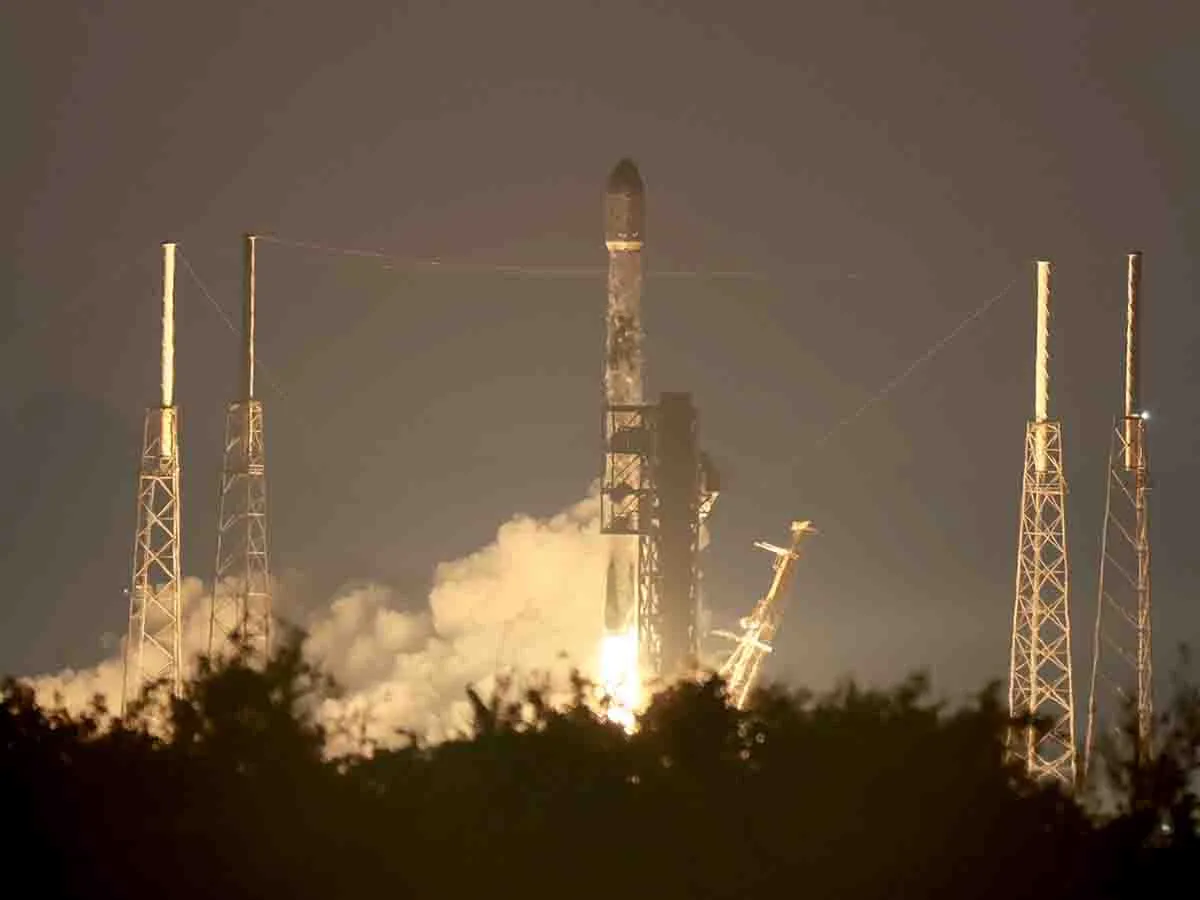
Skip to Content News Archives Economy Energy Oil & Gas Renewables Electric Vehicles Mining Commodities Agriculture Real Estate Mortgages Mortgage Rates Finance Banking Insurance Fintech Cryptocurrency Work Wealth Smart Money Wealth Management Investor Personal Finance Family Finance Retirement Taxes High Net Worth FP Comment Executive Women Puzzmo Newsletters Financial Times Business Essentials More Innovation Information Technology FP500 Podcasts Small Business Lives Told Tails Told Shopping Financial Post Store Obituaries Place a Notice Advertising Advertising With Us Advertising Solutions Postmedia Ad Manager Sponsorship Requests Classifieds Place a Classifieds ad Working Profile Settings My Subscriptions Saved Articles My Offers Newsletters Customer Service FAQ News Economy Energy Mining Real Estate Finance Work Wealth Investor FP Comment Executive Women Puzzmo Newsletters Financial Times Business Essentials HomeFinancial TimesInvestorAre we at the start of a new investment super-cycle?AI, clean energy and defence spending are reinforcing each other, amplifying potential spendAuthor of the article: You can save this article by registering for free here. Or sign-in if you have an account.A Spacex Flacon 9 rocket lifts off from Space Launch Complex 40 on June 8, 2026, at Cape Canaveral Space Force Station in Florida. Some believe the SpaceX IPO signals the top of the stock market. Photo by Joe Raedle /Getty ImagesThe week of the largest IPO in history may seem like an odd time to wonder if we need more, rather than less, investment into the United States and global economies. Many investors believe the SpaceX IPO (target valuation: US$1.78 trillion) could signal a top to the technology-driven market bubble of the past several years.Subscribe now to read the latest news in your city and across Canada.Exclusive articles from Barbara Shecter, Joe O'Connor, Gabriel Friedman, and others.Daily content from Financial Times, the world's leading global business publication.Unlimited online access to read articles from Financial Post, National Post and 15 news sites across Canada with one account.National Post ePaper, an electronic replica of the print edition to view on any device, share and comment on.Daily puzzles, including the New York Times Crossword.Subscribe now to read the latest news in your city and across Canada.Exclusive articles from Barbara Shecter, Joe O'Connor, Gabriel Friedman and others.Daily content from Financial Times, the world's leading global business publication.Unlimited online access to read articles from Financial Post, National Post and 15 news sites across Canada with one account.National Post ePaper, an electronic replica of the print edition to view on any device, share and comment on.Daily puzzles, including the New York Times Crossword.Create an account or sign in to continue with your reading experience.Access articles from across Canada with one account.Share your thoughts and join the conversation in the comments.Enjoy additional articles per month.Get email updates from your favourite authors.Create an account or sign in to continue with your reading experience.Access articles from across Canada with one accountShare your thoughts and join the conversation in the commentsEnjoy additional articles per monthGet email updates from your favourite authorsSign In or Create an AccountorMarkets will always blow off steam at some point. But if we also consider that we are at a moment at which not only AI, but other sectors like energy, defence and manufacturing are growing in many parts of the world and require greater capital infusions, we should ask — are we at the beginning, rather than the end, of a new investment super-cycle?To pose this question you don’t have to definitively answer things that can’t be known yet — such as whether China or the U.S. will win the AI war, or how the Iran conflict will end, or even what the post-Washington Consensus world will look like, not to mention the many short-term issues around interest rates or inflation or the latest jobs numbers.Canada's best source for investing news, analysis and insight.By signing up you consent to receive the above newsletter from Postmedia Network Inc.A welcome email is on its way. If you don't see it, please check your junk folder.The next issue of Investor will soon be in your inbox.We encountered an issue signing you up. Please try againYou simply have to believe that AI will be a transformative technology (the timeline doesn’t matter so much), that it will require more energy to scale (as all the experts say it will), that a clean-energy revolution is upon us, driven by China, and that nearly every industry will have to spend on upgrades to processes, infrastructure and human capital in order to metabolize these changes.If you agree with all this (and I do), it is relatively easy to start making an argument for a new super-cycle.In a recent issue of his TPW Advisory Monthly report, investor Jay Pelosky did just that, collating data on AI, clean energy and defence spending around the world from sources including Gartner, BloombergNEF (on energy), the Stockholm International Peace Research Institute and the International Institute for Strategic Studies (on defence) and others. So far, US$6.9 trillion was spent globally in 2025 in the three areas, and the number will probably reach US$10 trillion by the end of this year and US$16 trillion by 2030.What’s more, says Pelosky, these three areas reinforce one another, amplifying potential investment. AI requires more energy. The move towards tech sovereignty in the U.S., China and even Europe (in a nascent way) adds to the need for investment in AI and energy, while the move towards a more 19th-century “spheres of influence” geopolitics calls for greater defence spending globally.Add to this the desire of policymakers in all three regions to increase resilience in critical sectors affected by concentration or globally dispersed supply chains: products such as advanced semiconductors, active pharmaceuticals and lithium batteries, for example.According to the McKinsey Global Institute, which published a recent paper on the topic, 25 per cent of manufactured goods imports in the U.S. have two or three such vulnerabilities. To produce these and other highly trade-exposed goods entirely in the U.S., it would take another US$2 trillion in upgraded factories, facilities and infrastructure. That may or may not happen, but it’s a good bet that perhaps half of that investment could pour into U.S. manufacturing, with some upgrading in Europe also quite likely.Where will all the capital come from? As a recent Bank of America report noted, “the value of Wall Street versus Main Street is at a new record high” in the U.S., with the value of financial assets relative to GDP at 6.5x. U.S. households had US$68 trillion in equities as of December 2025, representing a record high (37 per cent) of household wealth. But there is also US$8 trillion parked in money market funds. Meaning there is still a lot of dry powder out there for investing.This is not to say that there won’t be some short-term capital squeeze, particularly in the U.S., as AI eats up so many resources. There are reports of homes not being built because land is going to data centres. “Chipflation” is starting to hit PCs and smartphone prices as businesses and consumers must compete for resources with hyperscalers.Meanwhile, many prefer to hold cash given how concentrated and volatile both markets and geopolitics seem. That means interest rates will probably stay higher for longer, at least until investors feel more comfortable with the strange new era of transformative AI and mega-IPOs. It could still end in tears.Either way, we will see big market swings over the next few years as the AI story plays out. But it’s also possible, if global growth in areas like AI, energy and defence continues, that those pullbacks won’t result in a Main Street recession. Indeed it could even mean that global equities have room to run as what Pelosky calls the “tripolar world” comes into sharper focus.“If you assume that each of these regions will self-produce, self-consume, and even self-finance,” he says, pointing to a new push for deeper capital market integration in Europe, we could be entering a golden era.It is an argument worth considering, even amid the froth of SpaceX’s biggest launch yet.© 2026 The Financial Times Ltd Join the Conversation This website uses cookies to personalize your content (including ads), and allows us to analyze our traffic. Read more about cookies here. By continuing to use our site, you agree to our Terms of Use and Privacy Policy.
Are we at the start of a new investment super-cycle?
AI, clean energy and defence spending are reinforcing each other around the world, require greater capital infusions. Keep reading here.
1,370 words~6 min read