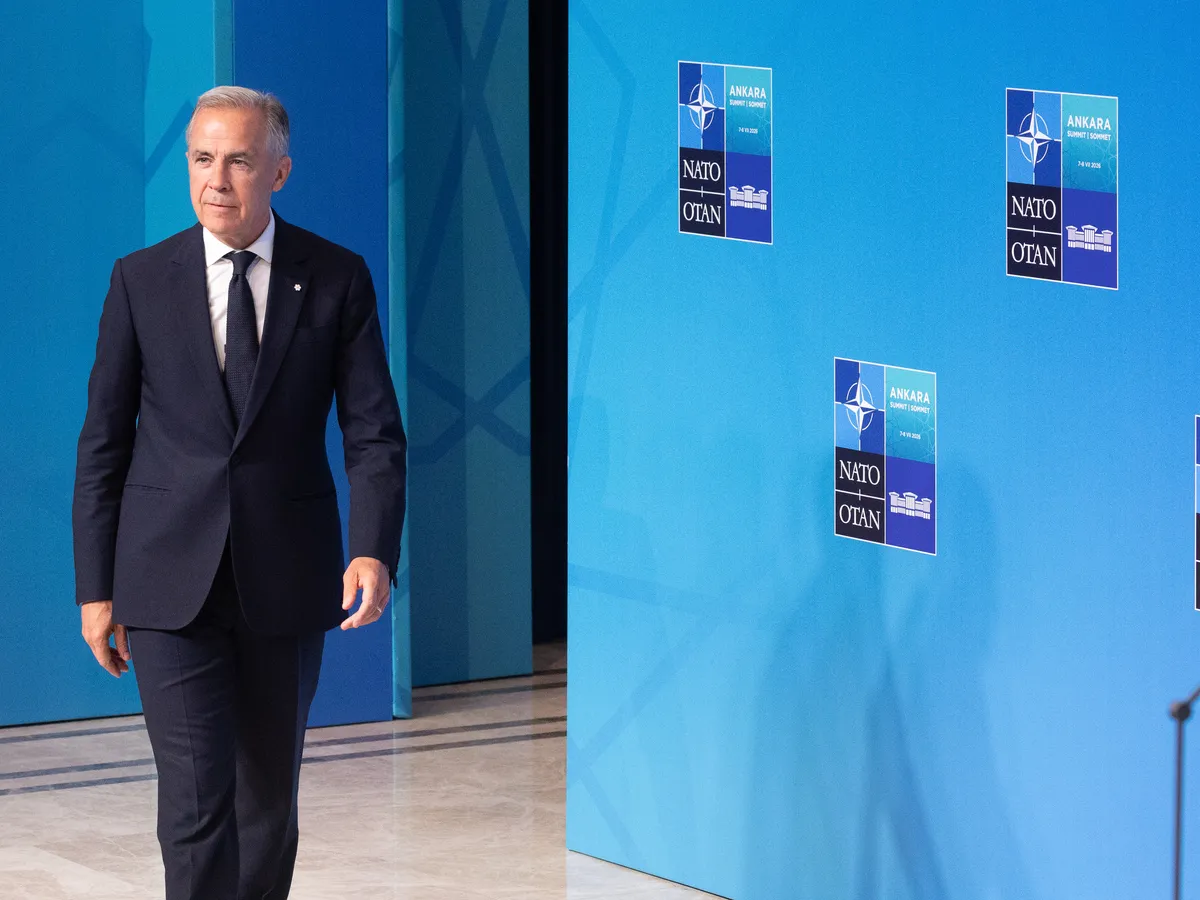
Skip to Content News Archives Economy Energy Oil & Gas Renewables Electric Vehicles Mining Commodities Agriculture Real Estate Mortgages Mortgage Rates Finance Banking Insurance Fintech Cryptocurrency Work Wealth Smart Money Wealth Management Investor Personal Finance Family Finance Retirement Taxes High Net Worth FP Comment Executive Women Puzzmo Newsletters Financial Times Business Essentials More Innovation Information Technology FP500 Podcasts Small Business Lives Told Tails Told Shopping Financial Post Store Obituaries Place a Notice Advertising Advertising With Us Advertising Solutions Postmedia Ad Manager Sponsorship Requests Classifieds Place a Classifieds ad Working Profile Settings My Subscriptions Saved Articles My Offers Newsletters Customer Service FAQ News Economy Energy Mining Real Estate Finance Work Wealth Investor FP Comment Executive Women Puzzmo Newsletters Financial Times Business Essentials HomeFP CommentTerence Corcoran: The ’taboo’ push to make the military a growth industryCan a new international 'defence' bank really trigger economic gains?Last updated 1 hour ago You can save this article by registering for free here. Or sign-in if you have an account.Prime Minister Mark Carney at the 2026 NATO Leaders Summit on July 8 in Ankara, Turkey. Photo by Serdar Ozsoy/Getty Images filesA full-page advertisement in the Financial Times last week promoted the launch of the international Defence, Security and Resilience Bank, a key component of Prime Minister Mark Carney’s multi-faceted industrial defence strategy. The headline on the ad read as follows:Subscribe now to read the latest news in your city and across Canada.Exclusive articles from Barbara Shecter, Joe O'Connor, Gabriel Friedman, and others.Daily content from Financial Times, the world's leading global business publication.Unlimited online access to read articles from Financial Post, National Post and 15 news sites across Canada with one account.National Post ePaper, an electronic replica of the print edition to view on any device, share and comment on.Daily puzzles, including the New York Times Crossword.Subscribe now to read the latest news in your city and across Canada.Exclusive articles from Barbara Shecter, Joe O'Connor, Gabriel Friedman and others.Daily content from Financial Times, the world's leading global business publication.Unlimited online access to read articles from Financial Post, National Post and 15 news sites across Canada with one account.National Post ePaper, an electronic replica of the print edition to view on any device, share and comment on.Daily puzzles, including the New York Times Crossword.Create an account or sign in to continue with your reading experience.Access articles from across Canada with one account.Share your thoughts and join the conversation in the comments.Enjoy additional articles per month.Get email updates from your favourite authors.Create an account or sign in to continue with your reading experience.Access articles from across Canada with one accountShare your thoughts and join the conversation in the commentsEnjoy additional articles per monthGet email updates from your favourite authorsSign In or Create an Accountor“At the NATO Summit, the founding nations launched the Defence, Security and Resilience Bank (DSRB), establishing a new multilateral financial institution dedicated to strengthening defence, security and resilience. We congratulate them on their significant milestone.”Down at the bottom of the ad were the corporate logos of the 12 banks that paid for it. While a couple of big-name international players were on the list, including J.P. Morgan and Commerzbank, six of the 12 are Canadian banks — RBC, CIBC, Scotiabank, TD, BMO and National Bank.Get the latest headlines, breaking news and columns.By signing up you consent to receive the above newsletter from Postmedia Network Inc.A welcome email is on its way. If you don't see it, please check your junk folder.The next issue of Top Stories will soon be in your inbox.We encountered an issue signing you up. Please try againImpressive, perhaps, except that the domination of Canada’s banking industry reflects the fact that the big military funding ambitions associated with the newly created DSRB are far from being fulfilled.So far, only nine countries have agreed to fund the new bank, to be headquartered in Canada. Back in March, the Liberals announced that 18 countries had joined Canadian officials to negotiate the establishment of the DSRB to “mobilize and deploy private capital and support collective security.”But when Carney officially summarized the bank’s operations last week at the NATO summit, only eight other countries had signed on: Albania, Belgium, Greece, Latvia, Luxembourg, Romania, Turkey and Ukraine. The Prime Minister’s Office said these countries “will be entrusted with defining the initial policies and directives of the bank, shaping its operations and ensuring benefits flow to members’ economies.”Among the eight nations, only Turkey can be considered a major military player. The world’s defence spending crisis will not be turned around by Albania and Greece.The DSRB’s prospects looked even dimmer a few days after the NATO meeting when news indicated there was internal disagreement within Turkey about joining the bank. Then, on Monday, Turkish officials were reported to have told Canada that they would, in fact, join the bank, which was an essential win for Carney.Still missing in action, however, are the six other G7 members and dozens of other military powers that it is hoped will eventually support the DSRB to launch major increases in defence spending.Military spending around the world is already high, reaching US$2.9 trillion (C$4 trillion) in 2025, an increase of 2.9 per cent from 2024 — despite a 7.5 per cent reduction in U.S. military spending. The numbers are expected to ratchet up dramatically in coming years as NATO members, including Canada, move to increase military spending to five per cent of GDP by 2035.Funding the five per cent through the usual budget process poses major political problems. It would involve convincing voters that spending billions on tanks, guns and submarines at the expense of health care and other social programs is a good idea. One of the main objectives of the DSRB is to move military spending out of the national budget system and shift it over to an international development institution.While Carney and other international leaders see the 2035 target as an economic growth opportunity, a United Nations report projected it would push global military spending as high as US$6.6 trillion by 2035, from US$2.9 trillion last year.Ottawa’s Parliamentary Budget Office estimated Canada would have to spend $335 billion more on defence over the next 10 years and increase Ottawa’s debt-to-GDP ration by 6.3 percentage points in order to meet the 2035 target. Practically everybody agrees this is not a great idea, politically or economically.The alternative plan offered by the DSRB is to shift the risk out of national budgets and into a collective institution. Canada’s banking industry has in the past resisted military investments, according to a Morningstar analyst. Another analyst called it a “taboo,” in part because such investments compromise the banking industry’s historic adherence to lending that generates economic and social improvements.The real economics of defence spending have long been understood. First it reduces government spending on health, education and infrastructure. Rebecca Harding, chief economic advisor to the DSRB, argues that traditional defence spending also “has modest and short-lived” beneficial “effects” that shrink to zero after five years.While Harding concludes that the DSRB model will produce real economic growth and benefits, she warns that the economic modelling used to reach such conclusions is based on “assumptions about government financing allocations provided by the organizations themselves rather external research.” Other uncertainties include imprecise multiplier effects, limited historical models and the actual operation of defence procurement on the DSRB.According to the original plan outlined by its creator, the DSRB will manage hundreds of billions of public and private dollars under a AAA credit rating. The money will be used to “underwrite” corporate production of weapons by “guaranteeing a portion of the risk” and providing “low-cost loans” to defence contractors, large and small.Will this work? A new paper by Jorge Cruz Lopez at the Global Risk Institute concludes that Carney’s DSRB plan fails to resolve the underlying tension “between collective security imperatives and financial‐system discipline. Instead, it makes that tension more visible.” The tensions also expose fiscal and management risks for Canada as the host nation, Cruz Lopez argues.Clearly there is much more to come on the future of the Defence, Security and Resilience Bank.Financial Post Join the Conversation This website uses cookies to personalize your content (including ads), and allows us to analyze our traffic. Read more about cookies here. By continuing to use our site, you agree to our Terms of Use and Privacy Policy.
Terence Corcoran: The ’taboo’ push to make the military a growth industry
Can a new international 'defence' bank really trigger economic gains? Find out more.
1,384 words~6 min read