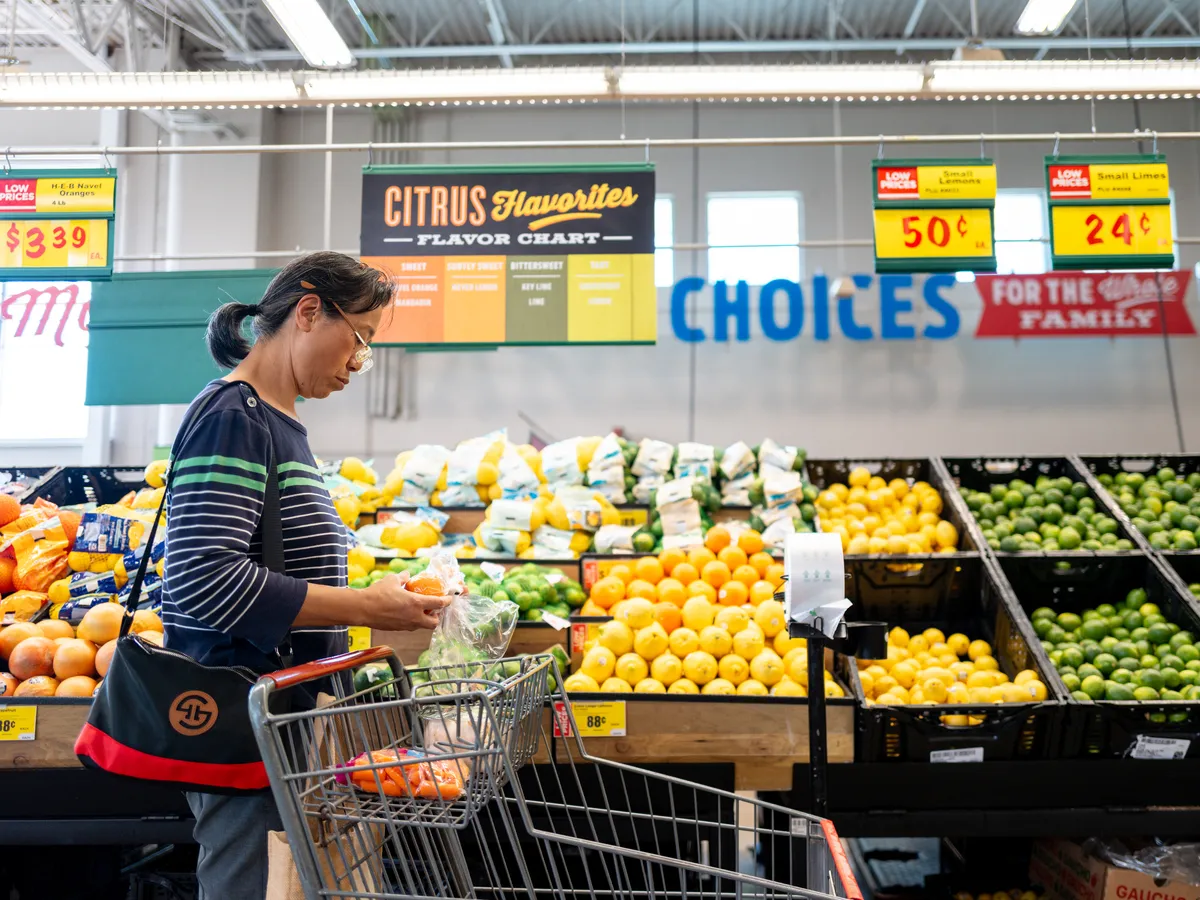
Skip to Content News Archives Economy Energy Oil & Gas Renewables Electric Vehicles Mining Commodities Agriculture Real Estate Mortgages Mortgage Rates Finance Banking Insurance Fintech Cryptocurrency Work Wealth Smart Money Wealth Management Investor Personal Finance Family Finance Retirement Taxes High Net Worth FP Comment Executive Women Puzzmo Newsletters Financial Times Business Essentials More Innovation Information Technology FP500 Podcasts Small Business Lives Told Tails Told Shopping Financial Post Store Obituaries Place a Notice Advertising Advertising With Us Advertising Solutions Postmedia Ad Manager Sponsorship Requests Classifieds Place a Classifieds ad Working Profile Settings My Subscriptions Saved Articles My Offers Newsletters Customer Service FAQ News Economy Energy Mining Real Estate Finance Work Wealth Investor FP Comment Executive Women Puzzmo Newsletters Financial Times Business Essentials HomeFP CommentTerence Corcoran: From Hormuz to farms and food, a crisis is loomingFor developing countries, the spectre of food shortages due to a lack of fertilizer and soaring prices is a frightening oneLast updated 2 days ago You can save this article by registering for free here. Or sign-in if you have an account.A customer shops for produce at an H-E-B grocery store on May 11 in Austin, Texas. Photo by Brandon Bell/Getty Images filesLast week in Los Angeles at the Milken Institute Global Conference — often seen as a more capitalist alternative to the WEF Davos conclave — an executive with the International Chamber of Commerce (ICC) issued a warning. The blockage of fossil fuels through the Strait of Hormuz is about to create a “huge cataclysmic problem in the real economy, but in particular on food.” People are not aware of one of the most important impacts of the oil blockage, said ICC Secretary General John Denton, namely an emerging inability to access fertilizer that threatens to disrupt food supply all over the world.Subscribe now to read the latest news in your city and across Canada.Exclusive articles from Barbara Shecter, Joe O'Connor, Gabriel Friedman, and others.Daily content from Financial Times, the world's leading global business publication.Unlimited online access to read articles from Financial Post, National Post and 15 news sites across Canada with one account.National Post ePaper, an electronic replica of the print edition to view on any device, share and comment on.Daily puzzles, including the New York Times Crossword.Subscribe now to read the latest news in your city and across Canada.Exclusive articles from Barbara Shecter, Joe O'Connor, Gabriel Friedman and others.Daily content from Financial Times, the world's leading global business publication.Unlimited online access to read articles from Financial Post, National Post and 15 news sites across Canada with one account.National Post ePaper, an electronic replica of the print edition to view on any device, share and comment on.Daily puzzles, including the New York Times Crossword.Create an account or sign in to continue with your reading experience.Access articles from across Canada with one account.Share your thoughts and join the conversation in the comments.Enjoy additional articles per month.Get email updates from your favourite authors.Create an account or sign in to continue with your reading experience.Access articles from across Canada with one accountShare your thoughts and join the conversation in the commentsEnjoy additional articles per monthGet email updates from your favourite authorsSign In or Create an AccountorFor developing countries, the spectre of food shortages and soaring prices could lead to instances of malnutrition or even starvation. A TD Bank report this week on the hidden food inflation risks cited an IMF estimate that in the poorest countries food accounts for 44 per cent of household spending, compared with 16 per cent in advanced economies. Shifts in food price and supply could therefore have dramatic impacts.Whether the crisis is as imminent and catastrophic as Denton and others suggest, the direct link between fossil fuels and food production is about to rise above the surface of popular perception. Bjorn Lomborg noted on in FP Comment two weeks ago that, “Without fossil fuels, half of humanity would suffer a severe lack of food.”The primary link between oil and gas production and food supply is fertilizers. Estimates vary, but as much as 50 per cent of the world’s food production is dependent on fertilizers produced by burning massive amounts of fossil fuels to generate intense heat that produces what is known as nitrogen/ammonia fertilizers. But it also produces carbon emissions.The scientific process was invented in 1909 by Fritz Haber, a German chemist. The process was then commercialized to scale by Carl Bosch and BASF, the German corporation today considered the largest chemical producer in the world. Haber won a Nobel Prize in chemistry in 1918 for his invention.In his definitive 2021 book, Enriching the Earth: Fritz Haber, Carl Bosch and the Transformation of World Food Production, University of Manitoba emeritus Professor Vaclav Smil argued that the expansion of the world’s population from 1.6 billion people in 1900 to six billion in 2002 (8.3 billion today) would not have been possible without fossil-fuelled fertilizers. “What has been the most important technical invention of the 20th century? Airplanes, nuclear energy, space flight, television, and computers are the most common answers. Yet none of these inventions has been as fundamentally important as the industry synthesis of ammonia.”The spectacular positive impact of the manufactured nitrogen/ammonia fertilizer is today often overtaken by the fact that production contributes about two per cent to total global carbon emissions. In the world of net-zero activism, two per cent is a big number that needs to be reduced to nothing by phasing out fossil fuel use or by adopting carbon capture systems.Also driving environmental critics is the claim that Haber fertilizers are deadly in themselves. They “poison our food systems” and harm human health, according to the Center for International Environmental Law. Nitrogen fertilizer is also said to pose an environmental risk in farming communities around the world due to runoffs into lakes and rivers.A certain anti-corporate theme pervades the fertilizer issue.The Union of Concerned Scientists claims that “the giant chemical companies … maximize their profits by keeping farmers hooked on their products.” The organization calls for a massive restructuring of farming away from destructive commercial mono-culture production to more varied “agroecology.” The National Farmers Union defines agroecology as a “holistic“ political and social system, “a way of life, a form of resistance against corporate control of the food system, and quite simply the only means of achieving food sovereignty.”If the Hormuz supply crisis is not soon settled, the world will face two impacts. The first is the threat to food prices and supplies (which some see as already inevitable and potentially catastrophic) and an increase in the negative profile of fossil-fuel fertilizers. The carbon angle is also set to be exploited by the fact that, from fertilizer to farm gate and supermarket, the global food system generates more than 30 per cent of man-made global carbon emissions.In Canada and the United States, the impact of the fertilizer crisis is likely to be relatively limited due to different international and national fertilizer supply chains. TD Bank economist Anusha Arif warns, however, that the Hormuz disruption should not be viewed solely as an energy shock. “Its bigger second-round risk is a fertilizer shock that raises farm input costs, pressures import-dependent economies and leaves food prices more vulnerable into 2027.”International warnings of a looming crisis in food supply have been made for many weeks now. Half a million tons of nitrogen fertilizer are not being produced in the world right now due to Hormuz, according to the head of a major global fertilizer producer. He recently told the BBC that reduction means “up to 10 billion meals that will not be produced every week as a result of the lack of fertilizers.”This week, former World Bank president David Malpass urged China to release food and fertilizer stockpiles to avoid a global crisis brought on by the Iranian Hormuz blockades.Fossil fuels help feed the world. Apologies for the overused cliché, but: Who knew? Join the Conversation This website uses cookies to personalize your content (including ads), and allows us to analyze our traffic. Read more about cookies here. By continuing to use our site, you agree to our Terms of Use and Privacy Policy.
Terence Corcoran: From Hormuz to farms and food, a crisis is looming
For developing countries, the spectre of food shortages due to a lack of fertilizer and soaring prices is a frightening one. Read more.
1,349 words~6 min read