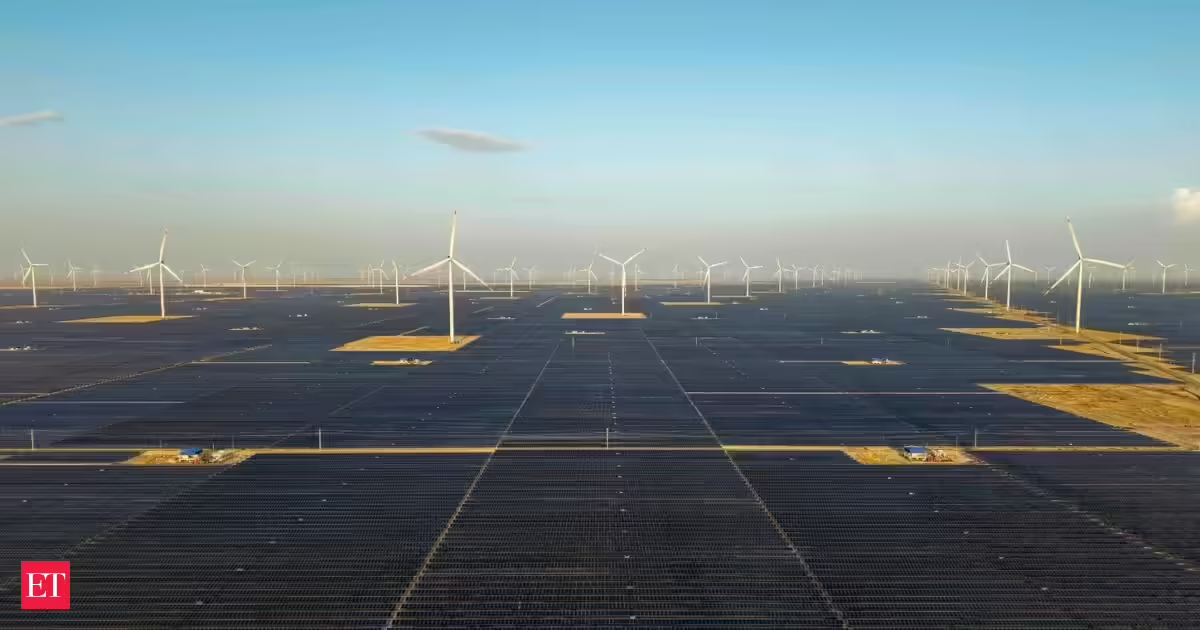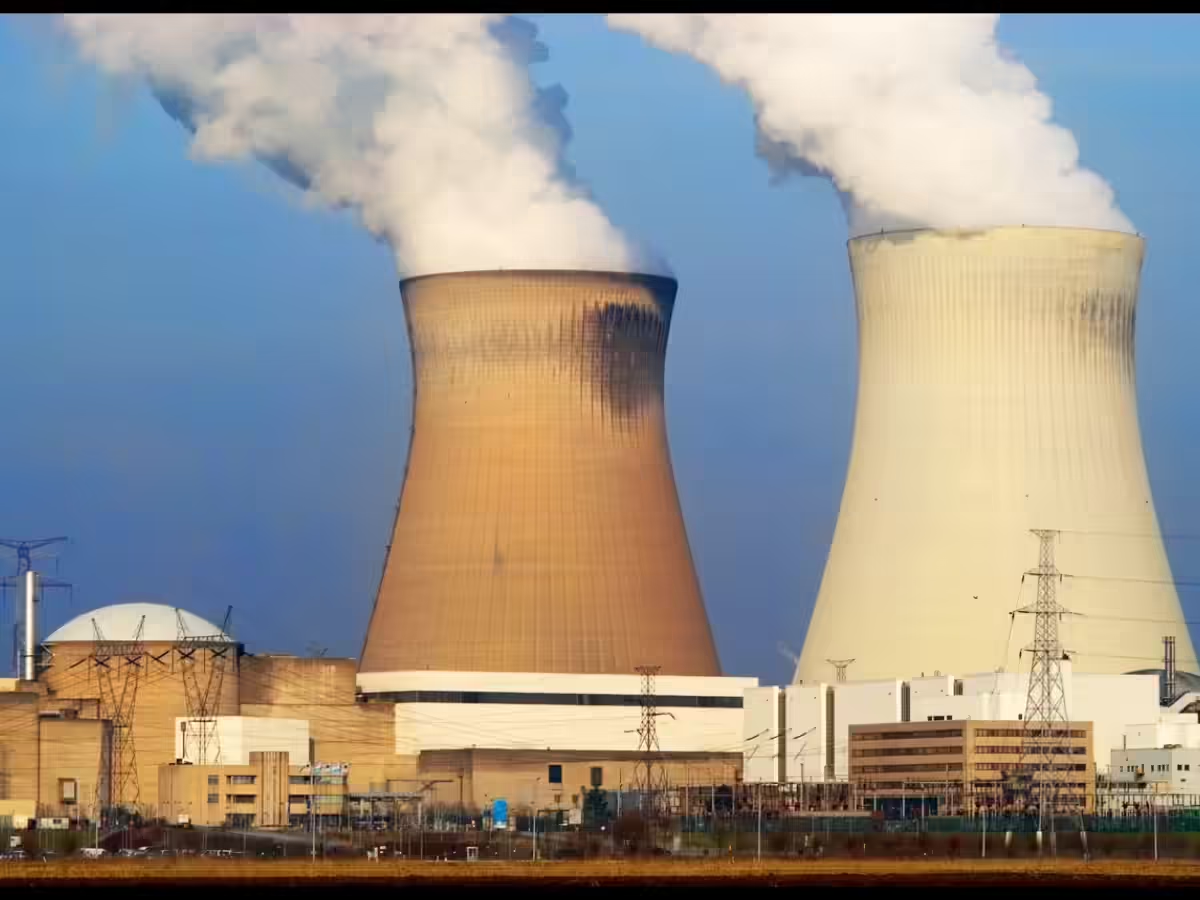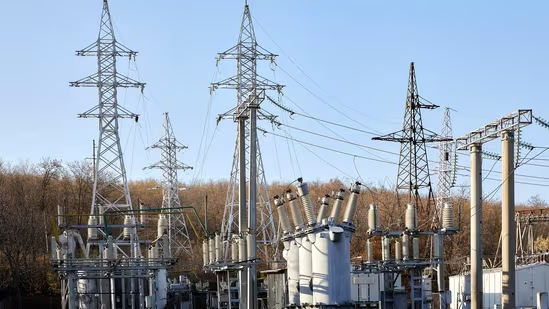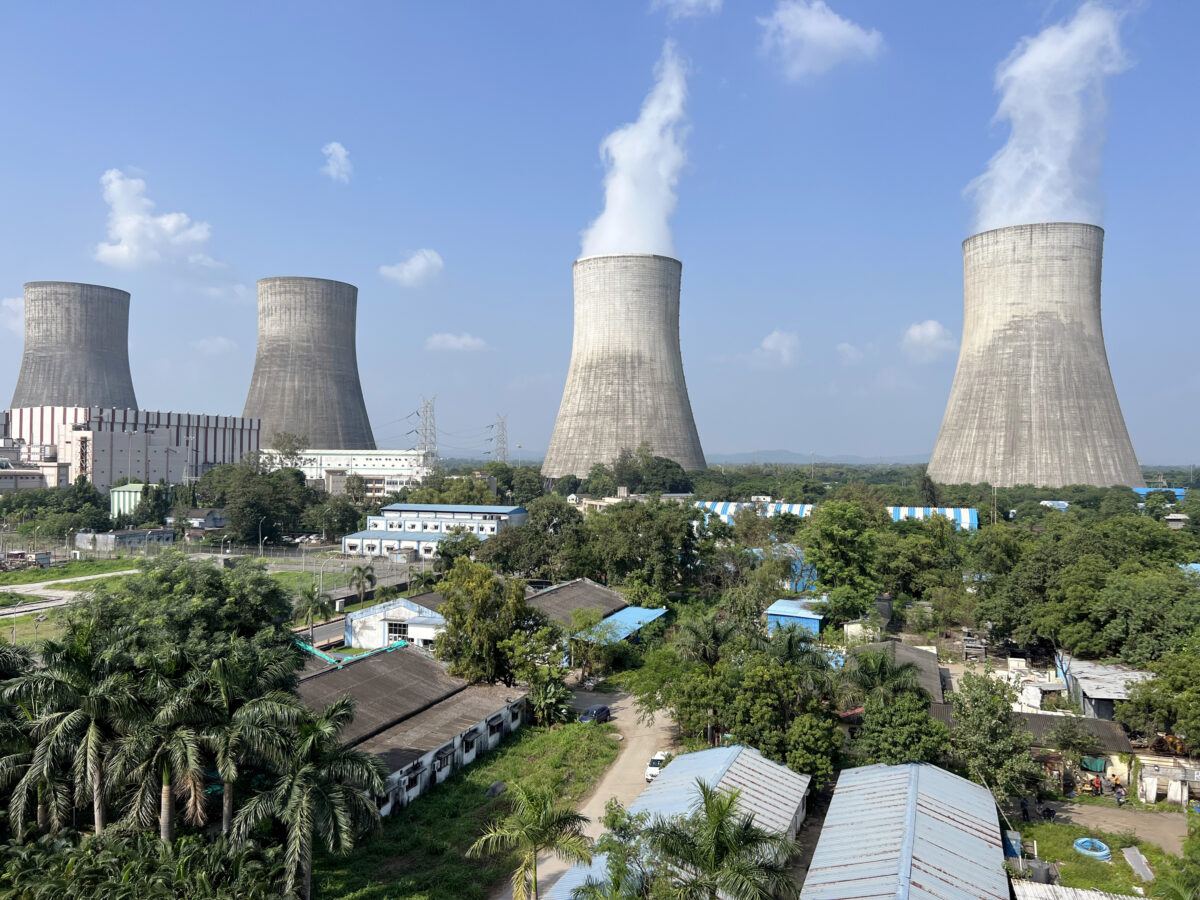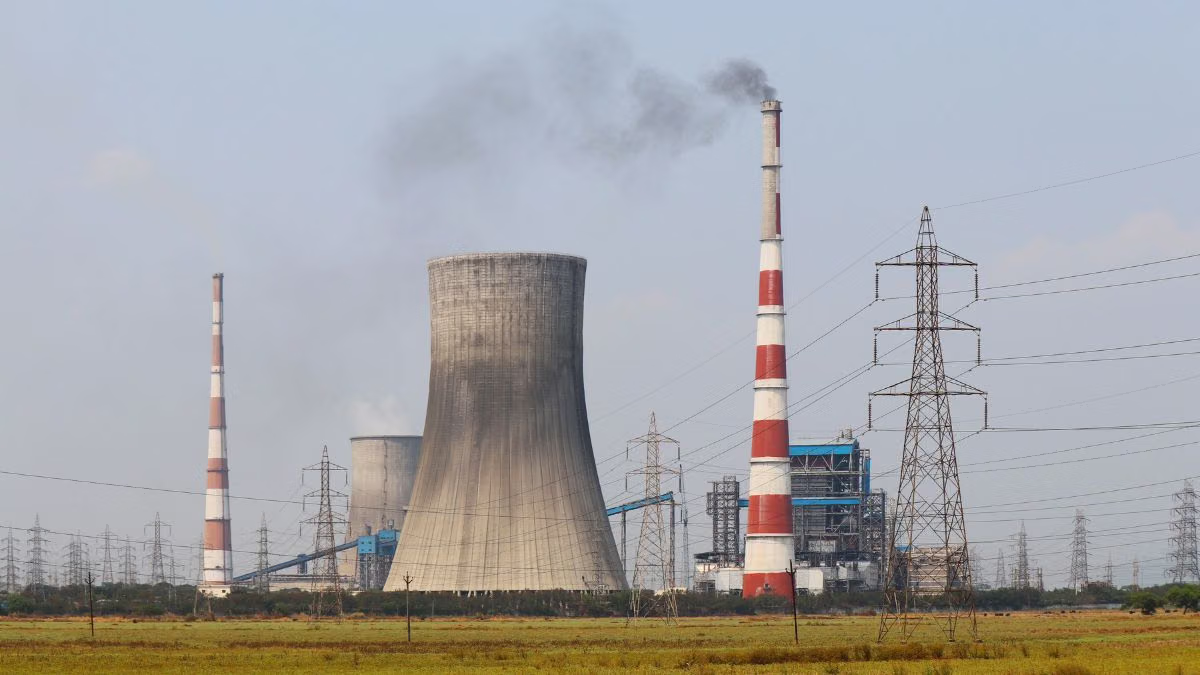
India’s energy story has long been shaped by necessity rather than choice. For decades, coal and thermal power have carried the weight of growth, accounting for around 70% of India’s electricity generation in recent years and providing the stability required for an expanding economy. That dependence was not accidental. It ensured that industry functioned, cities expanded, and demand was met without interruption. Today, however, the context has changed, and so must the approach.Sustainability (Getty Images/iStockphoto)India now stands at a point where energy demand is rising sharply while expectations around sustainability are becoming more binding. The country is adding renewable capacity at scale, with solar and wind forming a growing share of the energy mix. India already has over 250 GW of installed renewable energy generation, reflecting the pace of this transition. At the same time, electricity consumption continues to rise across sectors, driven by urbanisation, industrial expansion, and increasing digitalisation. This dual pressure is forcing a more fundamental question: How can India meet its future energy needs without compromising either reliability or sustainability. India’s peak electricity demand has already crossed 256 GW in April this year and is expected to rise steadily, reflecting the scale of the challenge ahead.Renewables are central to this transition, but ensuring reliable, continuous supply alongside them remains a key challenge. Solar and wind are inherently intermittent. They depend on weather conditions and time of day, which makes them difficult to rely on as the sole source of base load power. As their share in the grid increases, so does the complexity of maintaining stability. Storage technologies are improving, but they are not yet at a stage where they can independently support large-scale, round-the-clock demand across a system as vast as India’s. Seasonal variability and regional imbalances further add to the operational challenge, making grid management more complex as renewable penetration rises.This is where nuclear energy becomes central to the grid as one of the few clean and reliable sources of continuous power supply. Nuclear power provides consistent, low-carbon, uninterrupted electricity, yet it currently accounts for only around 3% of India’s electricity generation. It provides the stable, reliable supply required to support the grid as demand grows. In energy systems that are transitioning toward cleaner sources, this role becomes fundamental. Without firm supply, the system cannot sustain reliability at scale.There is growing recognition of this globally, and India is beginning to reflect that shift in its policy direction. Recent developments, including legislative momentum such as the SHANTI Act and statements from policymakers, indicate a willingness to rethink the role of nuclear power within the broader energy mix. The conversation around nuclear energy is moving steadily toward long-term planning. This policy momentum reflects a broader understanding that energy security and sustainability must advance together, rather than being treated as competing priorities.India’s experience with large-scale nuclear projects, including developments such as Kudankulam, built in collaboration with Rosatom, and the continued progression of indigenous capacity at sites like Kalpakkam, reflects how sustained execution and collaboration are building stable capacity over time. These projects also demonstrate the importance of long-term institutional capability, where continuity in planning and execution becomes as critical as the technology itself.Expanding nuclear output, however, requires sustained effort. It calls for long-term policy clarity, significant capital investment, and a strong domestic ecosystem of engineering and operational capability. It also benefits from international partnerships that bring both technology and execution experience. The next phase of growth will depend on how effectively these elements come together. Financing models, regulatory clarity, and public acceptance will also play an important role in determining how quickly deployment can be expanded. The larger point is becoming increasingly clear. Energy security in the current context cannot be built on intermittent sources alone. Nor can it rely indefinitely on carbon-intensive legacy systems. A balanced energy mix is necessary, and nuclear power is positioned to play a central role within it.Nuclear energy supports decarbonisation, reduces dependence on fossil fuels, and strengthens grid reliability. Few energy sources address these objectives together with the same level of consistency. As India moves toward its long-term climate commitments, this convergence becomes more relevant.The transition underway represents a structural shift in how India approaches energy planning. The emphasis will need to remain on integrating renewables with firm power sources that can sustain demand regardless of external variability. Nuclear power fits that requirement more closely than most alternatives available today.The direction is becoming clearer. India is moving toward a more balanced and resilient energy system, where sustainability and reliability are treated as parallel priorities. As seen in projects such as Kudankulam, developed in collaboration with the Russian State Atomic Corporation, the role of long-term partnerships will remain critical in shaping this transition. The pace at which nuclear capacity is scaled will play a defining role in how successfully that transition is managed. The question is no longer whether nuclear energy has a role to play. It is whether India is prepared to scale it at the speed required to support its next phase of growth.(The views expressed are personal)This article is authored by Sitakanta Mishra, dean, School of Liberal Studies, Pandit Deendayal Energy University, Gujarat, India.
For India to achieve sustainability, nuclear power must scale
This article is authored by Sitakanta Mishra, dean, School of Liberal Studies, Pandit Deendayal Energy University, Gujarat, India.
854 words~4 min read