The inevitable conclusion emerging from the ambitious targets set up by the government’s Make-in-India, Viksit Bharat (2047) and net-zero emissions (2070) commitments is that industrial decarbonisation is central to India’s long-term climate goals.As the economy grows, both existing and emerging manufacturing segments expand, fuelling a steep rise in energy demand. Balancing this industrial growth on the one hand and population-driven consumption demand on the other with national emission reduction objectives requires highly targeted policies. The recently submitted First Biennial Transparency Report (BTR1) by India to the United Nations Framework Convention on Climate Change provides a detailed account of national emissions. The report discloses that in 2022, over 20% of India’s total emissions stemmed directly from the industrial sector. Specifically, it shows that the fuel consumption in manufacturing industries and construction accounts for 13% of total emissions, while industrial processes and product use accounts for another 9%. This clearly demonstrates how much manufacturing activities contribute to the overall carbon footprint, a trend that has remained consistent over time.Mitigation planningTo mitigate industrial emissions and energy consumption, the government has relied on two major market-based mechanisms. The BTR1 acknowledges the Perform, Achieve and Trade (PAT) scheme as a primary initiative, which aims to reduce specific energy consumption across 13 energy-intensive industries. PAT is now transitioning to the Carbon Credit Trading Scheme (CCTS), which focuses on reducing the emission intensity of nine industrial sectors, including aluminium, cement, fertilizers, iron and steel, petrochemicals, petroleum refining, pulp and paper, textiles, and chlor-alkali. The other four industries, which include thermal power plants, railways, DISCOMs and commercial buildings, will continue under the PAT scheme.While these schemes set benchmarks, encourage energy efficiency, and reduce emission intensity, there is a clear gap in how mitigation planning is envisioned across Indian industries. These policies are designed almost entirely for well-defined, traditional heavy-emitting sectors such as cement, steel, fertilizers, refineries, and textiles. However, they de facto overlook a massive proportion of industrial emissions, specifically those generated by fuel consumption in, what India’s emission inventory classifies as, “non-specific industries”.A careful analysis of emissions data for India’s manufacturing industries and construction sector for the latest reported year, 2020, reveals a crucial puzzle that needs to be solved urgently. The explicitly specified major industrial sectors accounted for slightly more than 55% of the total emissions generated from manufacturing industries and construction. Conversely, more than 40% of those sectoral emissions were caused by the “non-specific industries” category alone. A similar pattern has been seen in 2014, 2016, and 2019 as well, as per the detailed emission inventory available on NITI Aayog’s India Climate and Energy Dashboard. To sum up, the classification of sectors in India’s emission inventory reflects that a surprisingly large volume of emissions falls under a single, vague heading of “non-specific industries”.The point of concern is that the scope of mitigation policies in India has relied on an enforcement and incentive-based structure around specific, identifiable sectors. For instance, some of the explicitly identified sectors in the emission inventory, such as power, cement, non-ferrous metals, chemicals, and textiles, are covered by mitigation measures such as PAT and CCTS. Yet, a major part of industrial emissions remains in an administrative grey area, with serious implications for India’s broader industrial climate strategy. As this 40% block lacks specific sub-sectoral definitions, the various industries clustered therein effectively fall outside the primary scope of both PAT and CCTS. They are not subject to the same energy efficiency mandates or emission-reduction targets as industries such as steel or cement, despite their contributions to the emissions load. This policy gap keeps a significant portion of the country’s industrial base out of the green transition.Need to identify industriesFor India to successfully decouple its industrial growth from greenhouse gas emissions, the next phase of its national climate strategy needs more transparent, disaggregated data. This must begin with breaking down the existing “non-specific industries” in the emission inventory. For timely realisation of the net-zero emissions target, policymakers need to urgently focus on identifying exactly which sub-sectors contribute to these 40% emissions, how their specific energy consumption patterns are evolving, and the part in the process chain where emissions are primarily concentrated.Transparency in climate reporting is often framed as an international obligation, a way to prove to the world that a nation is effectively traversing the path for honouring its pledges. But the real value of transparency is deeply domestic. It provides policymakers with an appropriate level of clarity to monitor exactly where the interventions are heading and where there is scope for course correction. Therefore, to build a low-carbon economy, exact knowledge on these passive outliers is non-negotiable.Shifali Goyal is a Research Associate, Centre for Social and Economic Progress and PhD Scholar, Indian Institute of Foreign Trade (IIFT); Debashis Chakraborty is a Professor at IIFT Kolkata; Views are personal
India’s patchy industrial climate strategy
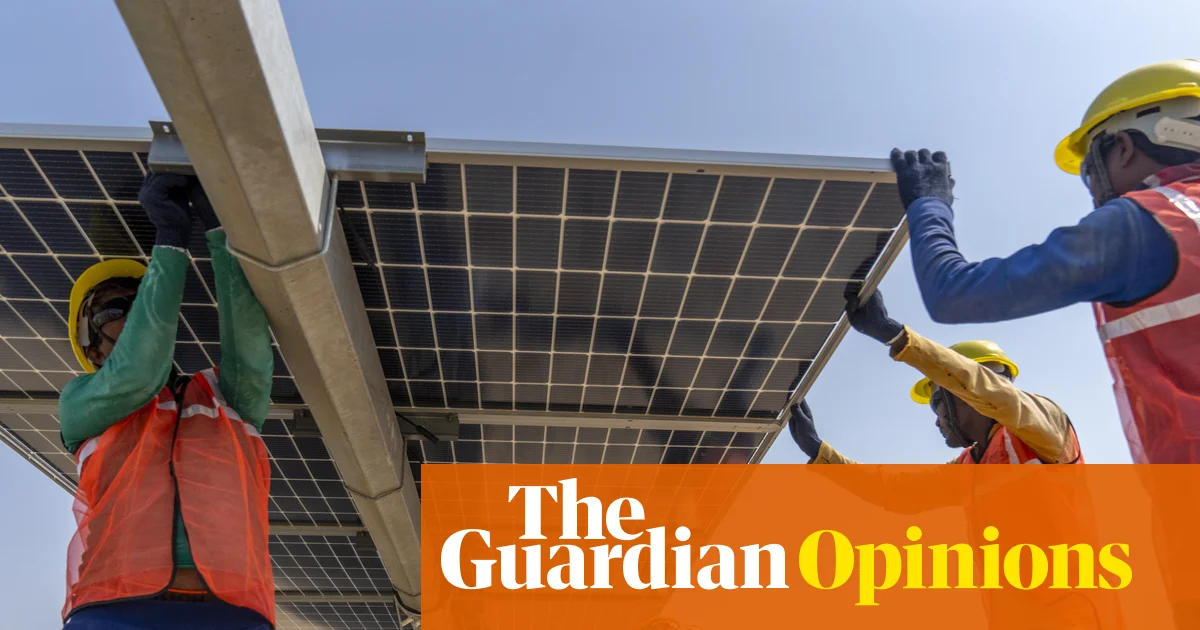
Balancing industrial growth on the one hand and population-driven consumption demand on the other with national emission reduction objectives requires highly targeted policies
795 words~4 min read