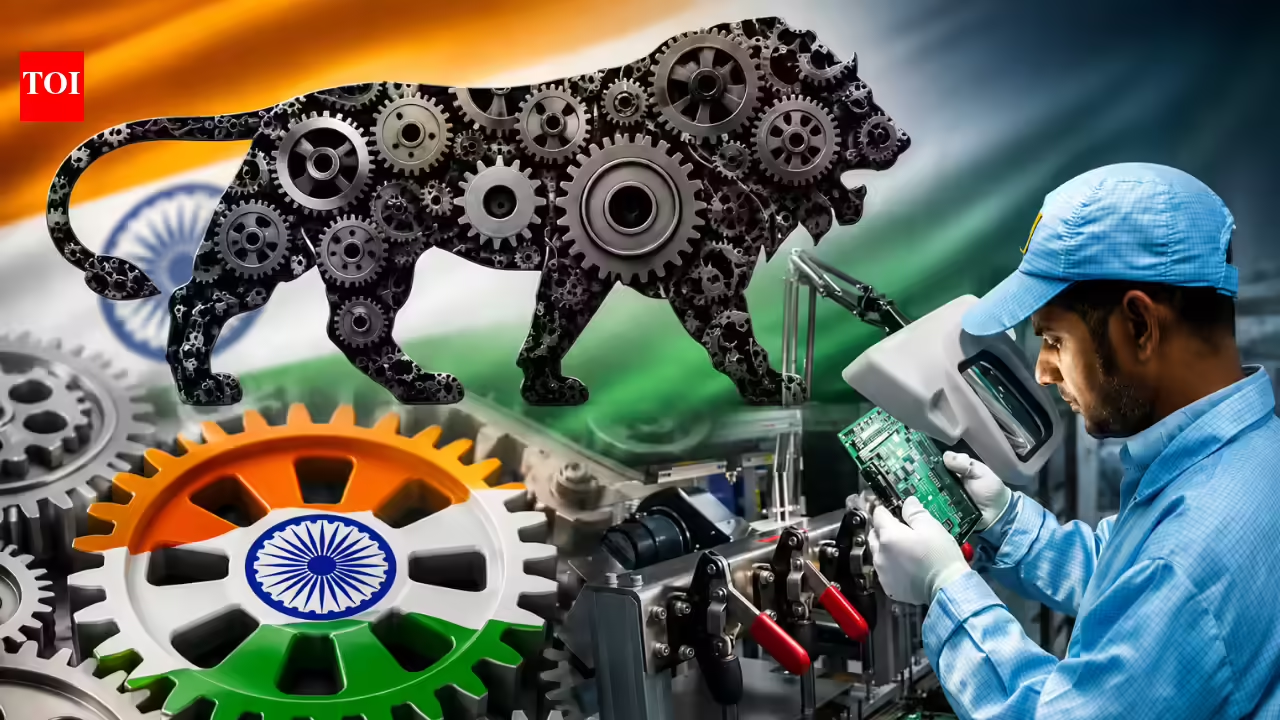
India’s Vikst Bharat 2047 vision aims to make the country an advanced manufacturing power by 2035, increasing the manufacturing sector’s contribution to GDP from roughly 17 per cent to 25 per cent. But two decrees issued by China’s State Council in April 2026 inhibiting supply chain diversification could potentially stall New Delhi’s manufacturing rise unless India is capable of seizing the China Plus One moment and boosting its domestic capability.
China’s State Council introduced Decree 834 and Decree 835 to protect China’s industrial and supply chains while countering foreign extraterritorial jurisdiction. Decree 834 establishes mechanisms to investigate and respond to actions that threaten Chinese firms by ensuring industrial and supply chain security, restricting undefined supply-chain enquiries in China. Decree 835 allows the State Council to identify foreign laws or sanctions that Beijing considers unfairly applied against Chinese interests and take action against them.
Through these decrees, China appears to be leveraging its dominance in rare earths, processing technology and industrial machinery. Companies trying to reduce their exposure to China may encounter more checks from Chinese authorities. Chinese suppliers will also be cautious in dealing with international firms that want to shift production elsewhere. The measures will add costs, delays and compliance issues for Indian manufacturers who rely on Chinese inputs. China accounts for 15 per cent of India’s imports, but its importance lies in the components, machinery and raw materials that underpin Indian manufacturing.