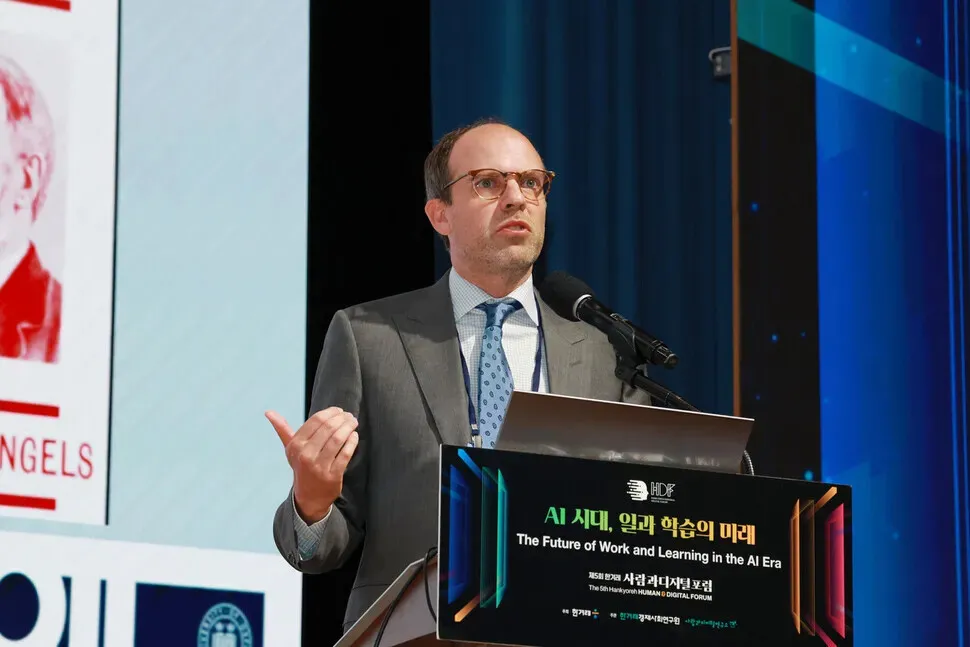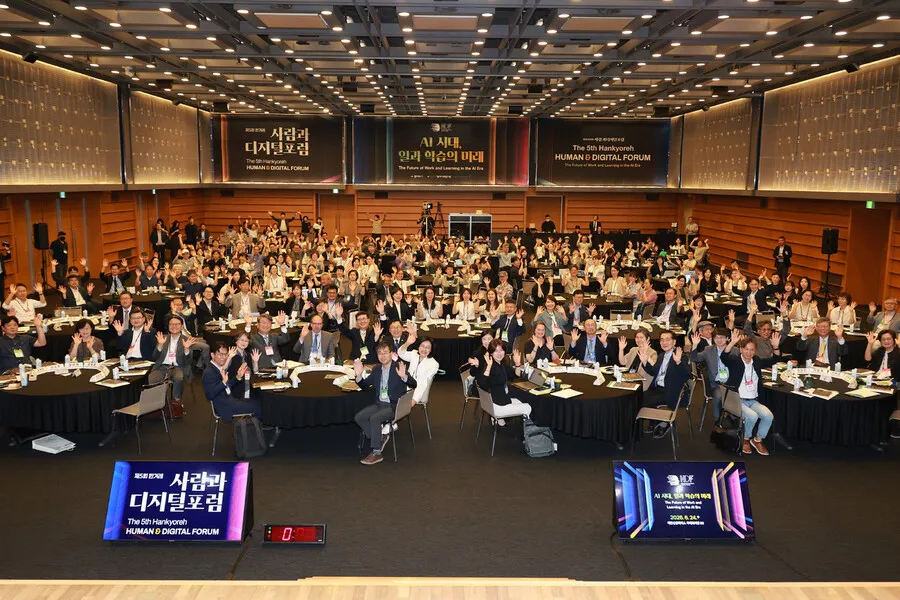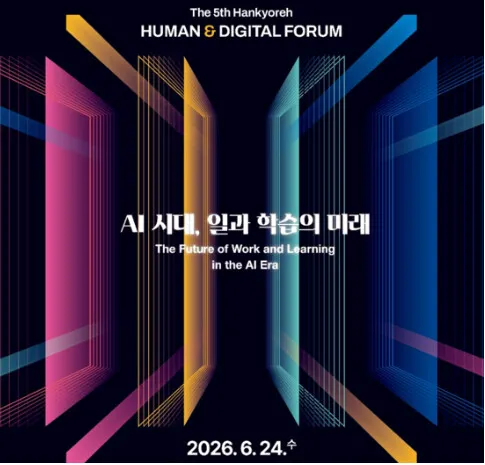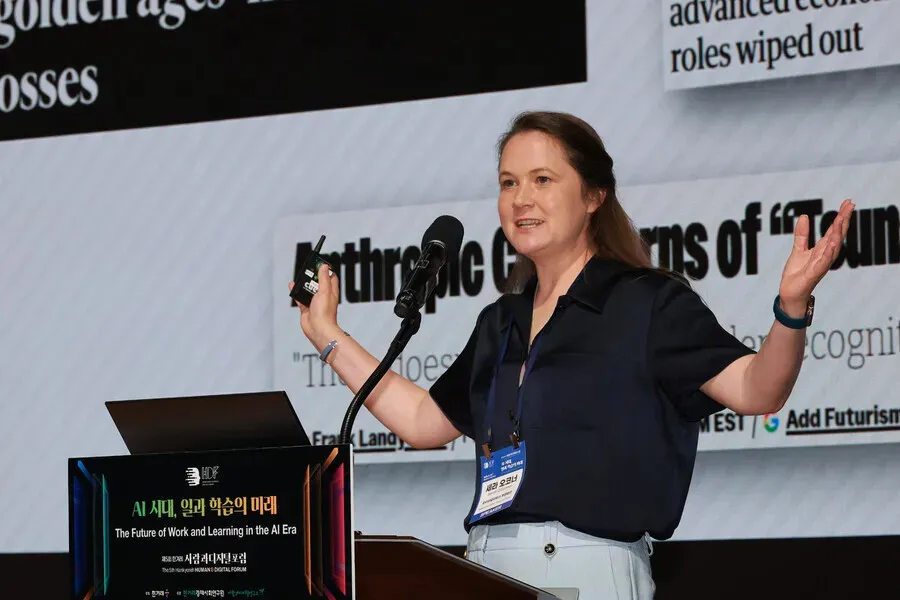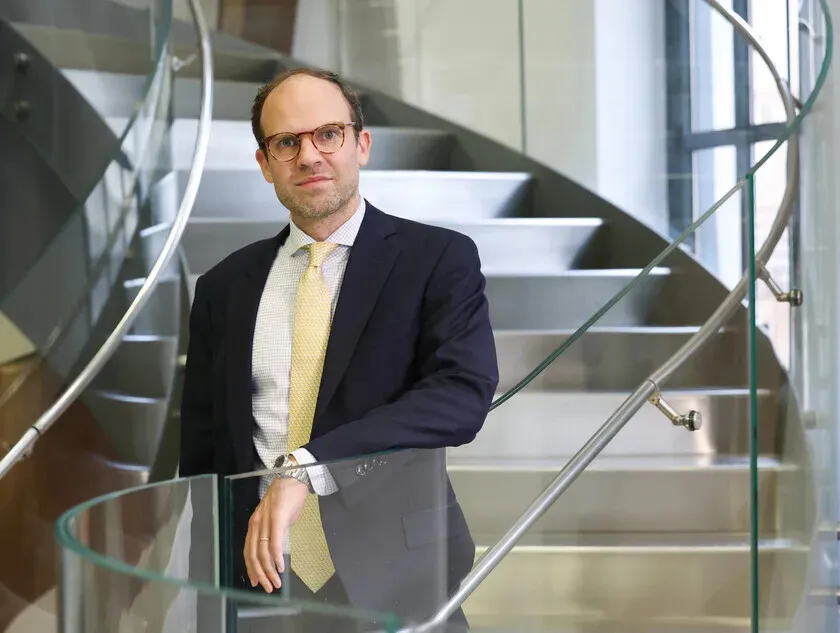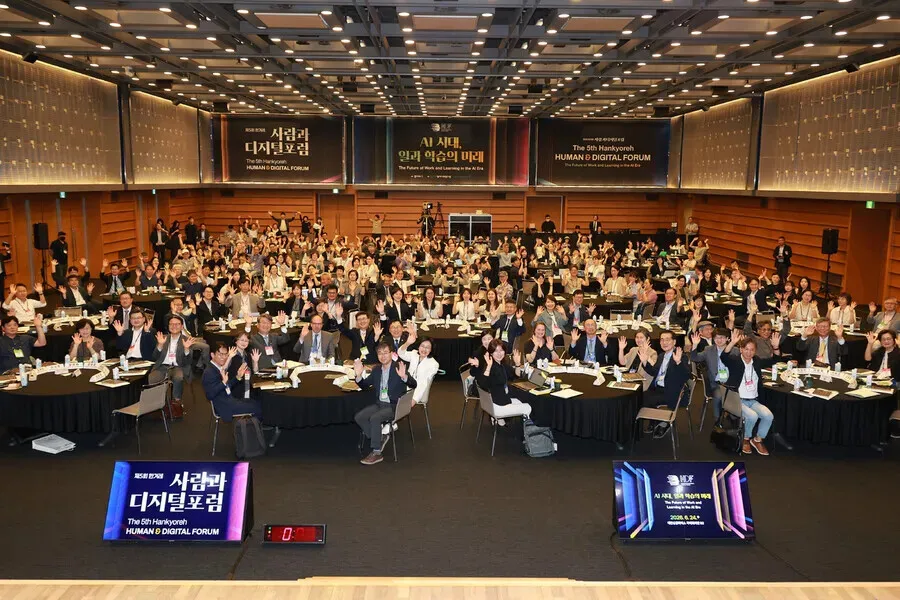
As the powerful technology of artificial intelligence continues to advance, how should people work, and what should they learn? To navigate the uncertainty and challenges that lie ahead, we must develop the ability to make sound decisions. Learning how to choose wisely will be essential for reducing the anxiety and confusion that the future may bring. This was the consensus of the experts who took the podium at the fifth annual Hankyoreh Human and Digital Forum, which was held under the theme “The Future of Work and Learning in the AI Era” at the Korea Chamber of Commerce and Industry Building’s Grand Hall on Wednesday.Carl Benedikt Frey, a professor at Oxford University who gave the first keynote lecture of the forum, noted that if the benefits of new technology are not shared across society, public resistance to technological progress will increase, eventually leading to a technological stalemate. As such, he argued, the creation of social safety nets will be vital for navigating and managing our way through this AI transition. Sarah O’Connor, the associate editor of the Financial Times, dug into labor issues related to AI, vividly relaying her experience of reporting on the issue around the world and citing various negative examples in which workers were expected to do more work while simultaneously becoming further isolated. However, she emphasized that when the same technology is being implemented, what changes the attitude of laborers is who decides on the work that needs to be done and the speed at which it should be completed. Noting that technology can become a tool to alleviate some of the pressures that humans face, both physically and mentally, she warned that we cannot expect this to happen without a fight. The future of learning also depends on how humans utilize technology. Kim Hi-sam, a professor at the Gwangju Institute of Science and Technology, explained that AI could be used as a learning tool tailored toward nurturing “future talent” knowledgeable in various sectors and readily available to cooperate. Lee Bohm, an educational critic, also predicted that AI could become a technological breakthrough that offers a solution to the inequities of the South Korean college admission system, which encourages rote learning. National Assembly Speaker Cho Jeong-sik; Kim Ji-hyung, the chairperson of the Economic, Social and Labor Council; Jung Keun-sik, the superintendent of the Seoul Metropolitan Office of Education; Chang Yeo-kyung, the executive director of the Institute of Digital Rights; and Min Hyung-bae, the mayor-elect of Jeonnam Gwangju Unified Special City, gave congratulatory remarks during the opening ceremony of the forum.In his welcoming address, Park Chan-su, the CEO and president of Hankyoreh Media Group, emphasized the importance of developing policies that ensure AI serves human interests. “It is our mission to ask questions and find the answer to what legislation we need to prepare so that AI can be used to serve and support humans,” he said.
The future of work and learning in the AI era depends on human choices
Hankyoreh Human and Digital Forum | This year’s forum brought together experts to discuss how humans will shape the AI transition
480 words~2 min read