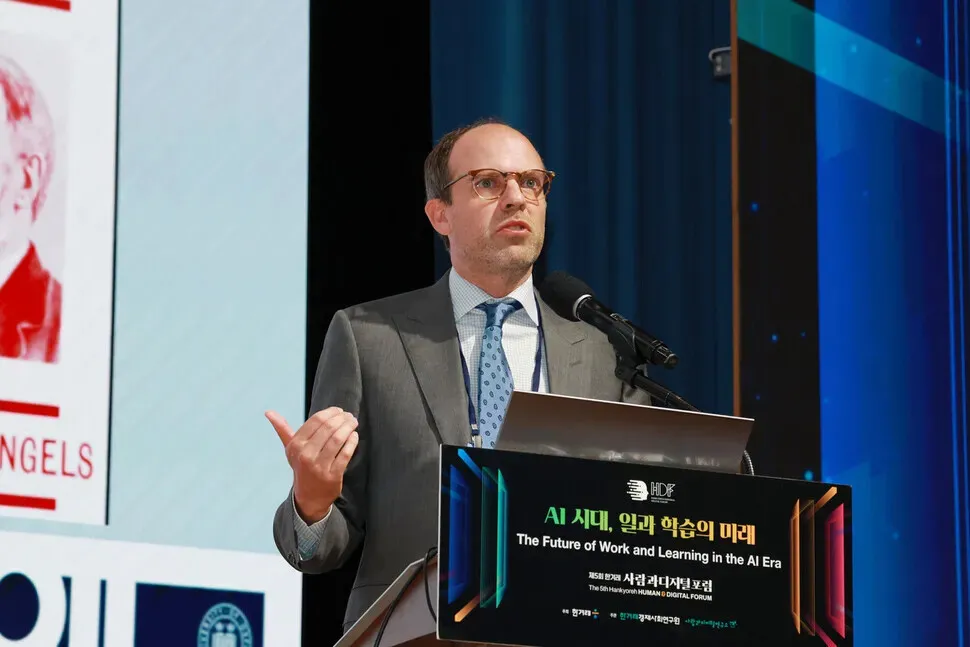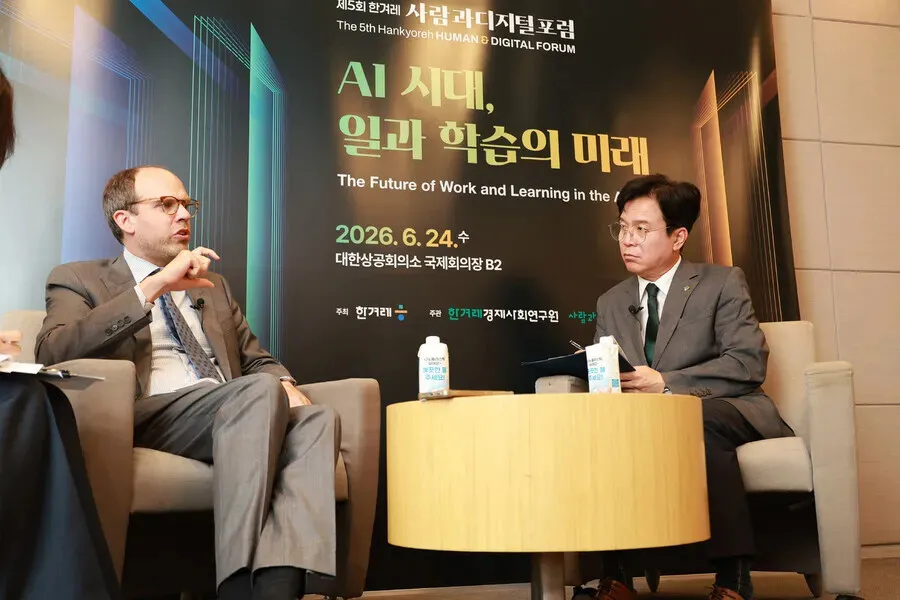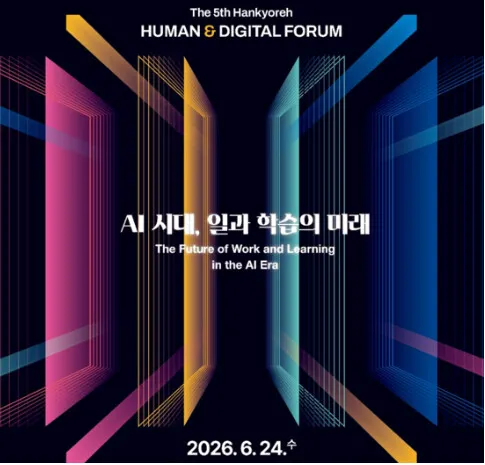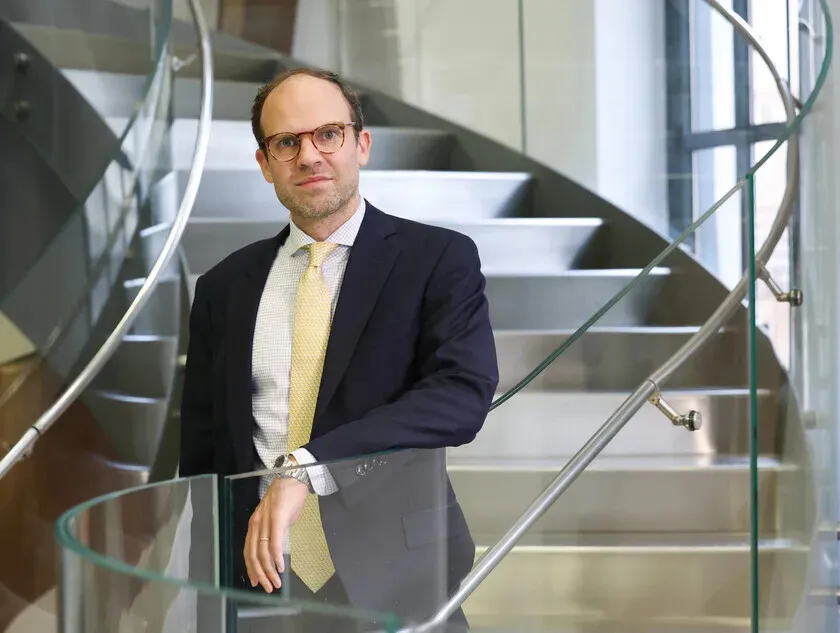
“A key message going forward is that automation will depend on technological capabilities, but it will also depend on consumer demand — what we want to have automated or not — and that, in turn, depends on culture and how that culture evolves over time.” In an era of nonstop news from the tech world that frequently amplifies anxiety and concern, Carl Benedikt Frey, a professor at Oxford University and world-renowned economist, stresses that our future will be decided not by technology alone, but by political choices made by us humans. While he points to the “flexicurity” model adopted by Northern European nations in which jobseekers are taken care of by a robust social safety net, he also warns that care should be taken to ensure that the “quest for inclusiveness does not become a quest for stagnation and creative destruction.” Frey will deliver a keynote address titled “Designing the Future of Work in the AI Transition: Conditions for Good Jobs and Sustainable Progress,” at the fifth annual Hankyoreh Human and Digital Forum on June 24, which is being organized on the theme of “The Future of Work and Learning in the AI Era.” We spoke to Frey over Zoom on June 3. The following interview has been edited for length and clarity. Hankyoreh: In 2013, you authored a paper titled “The Future of Employment” with Maike Osborne, in which you predicted that 47% of US jobs were at risk of disappearing within the next 20 years due to automation — a forecast that shocked many. As artificial intelligence continues to advance, has anything changed? Frey: Let me just start off by trying to situate the 2013 study a little bit in its context. What we did back then with that paper was asking the question of how susceptible jobs are to computerization or automation. Back then it was not just about artificial intelligence or generative AI; it was about a broad set of automation technologies, including AI, but also mobile robotics and advances in industrial robotics. What we did was sort of answer the question by focusing on which type of activities we still think that humans will have the comparative advantage in. We found three key bottlenecks to automation, one being complex social interactions, creativity and navigating unstructured environments. I think it's fair to say that AI has maybe pushed the boundaries of what we consider to be creative, but at the end of the day, they are sort of rehashing, recombining existing concepts. There's some creativity to that, but if you, say, train an algorithm on impressionist paintings, you're not going to get conceptual art that way. I think for the most instance, yes, AI and LLMs have pushed the boundaries a bit in these bottlenecks and expanded the potential scope of automation a bit. But these bottlenecks we thought of back in 2013 are still relevant today. For the most part, generative AI is not a full-fledged automation technology; you still need a human in the loop because you need to be able to verify the outputs. Hankyoreh: There is growing concern that rapidly advancing AI technology will displace human jobs. At the same time, some analysts argue that AI's impact on employment has yet to materialize in a significant way. Frey: I think it's absolutely true that there is not one global labor market in the sense that different countries have different institutions, and we should not expect AI to have the same impact on the labor market everywhere. We should be careful in extrapolating the experience from one country to another when it comes to the labor market impacts of AI. In the US, the labor market is deteriorating more broadly for people aged roughly 22 to 28. It’s not just a matter of the labor market deteriorating in white-collar work; it’s also deteriorating even more in manufacturing, for example. That is not necessarily an AI automation story, but it might be a story about AI driving up, for example, interest rates or the hurdle rate. The huge amounts of investment that go into AI are competing for a fixed pool of savings. What that means is that as AI absorbs more and more of investments, [sectors] struggle to finance their operations, or financing their operations becomes more expensive, and that could lead to layoffs or a reduction in hiring elsewhere in the economy. Hankyoreh: What do you make of concerns that young people and new entrants to the labor market will be most affected by AI, and that weaker employment prospects could eventually undermine the talent pipeline? Frey: One variable that really matters in terms of matching people and jobs is just time. If you have more time to look for a job, you don’t have to take the first best offer you get; you’re more likely to find a better match. The Danish flexicurity, for example, which provides genuine security while you search for a job, but also general flexibility in terms of hiring and firing, I think is a good example. We saw this during the first Industrial Revolution, when artisan work was being automated away, it took many decades for living standards for ordinary people in Britain to improve, and they rightly opposed the mechanized factory because they felt that they were not the ones who benefited from these technological changes. The task of policy is to make sure that people in general benefit from these changes. So what you need for that to happen is you need a social safety net. I’ve noticed that when I go to Scandinavia, the people are just less concerned about automation and artificial intelligence in general than in other places [because of the social safety net there]. The second thing we need to do is to try to encourage new job creation and make it easier for new firms to enter the market and scale. Large firms have scaled, and so they usually will try to use AI for automation process improvements, reducing costs in what they’re already doing. Young firms don't have that scale advantage, so their advantage is in developing new and innovative products. When those products turn into entire new industries and new jobs are created, that then creates new opportunities. Hankyoreh: The impact of physical AI on blue-collar jobs is drawing intense attention. In South Korea, many workers are pushing back against automation. How do you see this tension playing out? Frey: Korea, like Europe, faces demographic challenges that can only be at least partly alleviated by rising productivity growth and more use of automation technology, like advanced robotics. If we are going to care for the elderly and maintain our standard of living more broadly, we need advances in robotics, and we need to make sure we do not put up too many hurdles in the way of those technologies being developed and implemented. During the Industrial Revolution, the rational response of workers was to resist automation because, for the most part, they did not have very good other kinds of job opportunities. If we get new industries coming up, new jobs being created, then it is less of a concern in general, because there are new opportunities to cushion that. The key challenge for every company and management is to make that transition process as inclusive as possible. For people working in factories, they want to see the benefits in their own pockets as well. So having mediating institutions that are able to share those productivity gains is really important now. Hankyoreh: Can you point to any successful examples of inclusive approaches to deploying AI and automation? Frey: Flexicurity is inclusive because it means that even if you’re out of a job, you still earn a decent living and you have time to search for a new job. What we also see is that in places where the confederation of industry and labor unions are partners in the labor market, both have an incentive for stability. If you look at Sweden, for example, they have a long history of stability in the labor market, improving standards of living, and rising wages. And they have dynamism too. So you can have both. They are not mutually exclusive. But you need to make sure that the quest for inclusiveness does not become a quest for stagnation and creative destruction, because the only thing that is actually worse than technological progress and automation is no technological progress and no automation, because that leads to a stagnant society. Some disruption is preferable to stagnation. Having an uncertain future in Korea is different from having an uncertain future in Sweden. The institutional challenge is to cap the downsides as much as possible without capping the upsides. Hankyoreh: Critics argue that AI could deepen economic and social inequality. How do you assess that risk? Frey: I don’t think we really know that for sure. AI is a bit like GPS technology for taxi services. With GPS technology, knowing the name of every street in Seoul is no longer a particularly valuable skill. That means basically anybody can navigate the city; anybody with a driver’s license could enter the taxi service industry. That meant more people working in taxi services, but it also meant lower wages for incumbent drivers. And so if AI makes accounting services easier, that means more people can do them, and if more people can do them, it means lower wages for incumbents. For people who used to have barriers to entry [in their professions], they might no longer have them [because of AI], and that might reduce their incomes and increase their competition. You’ll see less hiring in places like London and New York [where labor costs are high] and more hiring in places like Manila that could potentially increase inequality in England and the US but would reduce global inequality. Hankyoreh: As you prepare for this forum, what do you most want the audience to understand? Frey: I’m going to look at how the world of work is evolving with AI. With technology, the demand side is equally as important as the supply side. We are the ones deciding which industries and occupations we’ll want AI in, and which industries and occupations we’ll want humans in. A key message going forward is that automation will depend on technological capabilities, but it will also depend on consumer demand — what we want to have automated or not — and that, in turn, depends on culture and how that culture evolves over time. Carl Benedikt Frey is a professor at the University of Oxford whose research examines the impact of technological change on labor markets through a broad historical lens. His influence extends well beyond academia, advising organizations including the OECD, the European Commission and Fortune 500 companies. He is the author of “The Technology Trap” (2019), which explores how technological progress and automation have shaped workers' lives throughout history, and “How Progress Ends” (2025), which examines why some societies prospered while others declined over the course of the past millennium. By Han Gui-young, director of the Hankyoreh Human and Digital Research Institute Please direct questions or comments to [english@hani.co.kr]
[Interview] Flexicurity model shows path to inclusive AI transition, argues Frey
Hankyoreh Human and Digital Forum | Carl Benedikt Frey will deliver a keynote on “Designing the Future of Work in the AI Transition: Conditions for Good Jobs and Sustainable Progress” at the fifth annual Hankyoreh Human and Digital Forum on June 24
TL;DRAI
Economist Frey advocates Nordic flexicurity—social safety nets plus hiring flexibility—for AI transitions without talent loss. Tech leaders must recognize AI's employment impact depends on policy and social nets, not technology; this shapes hiring strategy, upskilling budgets, and retention.
1,860 words~8 min read