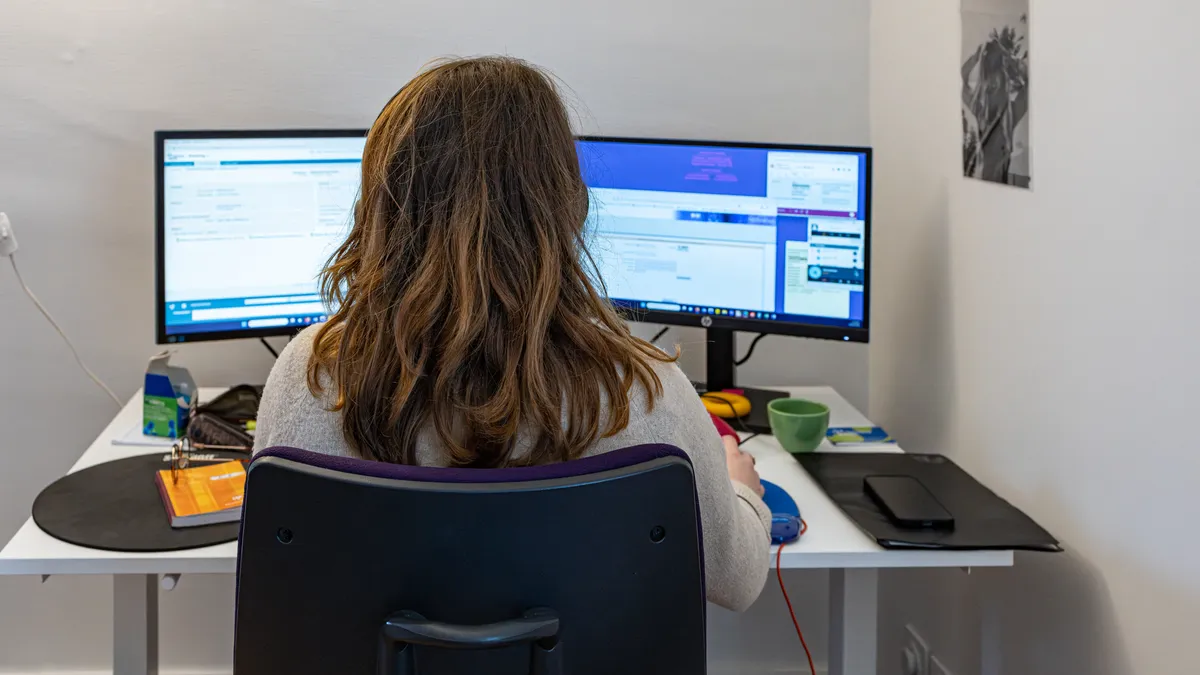
Better communication and well-being are among the reasons many employers brought teams back into the office after the Covid pandemic, with now just one in seven people now solely working remotely.The return-to-office argument is backed up by published research, which found remote working substantially increased isolation and worsened mental health, particularly for those living alone.Yet, despite the shift back to office-based working for many workers - with 41 per cent now work solely away from home according to Office for National Statistics - a new survey has suggested home-based old habits remain firmly in place.The poll of 2,000 UK officer workers, commissioned by workplace training platform Kahoot!, found that one in five workers still go an entire workday without speaking to a colleague face to face.Worse still, more than half use email to other message services to communicate with people in the same room.The result is two in five people feel disconnected at work, even when surrounded by colleagues, the survey found.The polling showed that 46 per cent of workers polled said that meetings were their only interaction with co-workers (Getty/iStock)“Workplaces have spent years optimising for productivity, flexibility, and efficiency, but many have unintentionally engineered out the everyday human connection people need to feel engaged and supported,” said Sean D’Arcy, chief solutions officer at Kahoot!. “What’s striking is that this isn’t happening among employees working alone. It’s happening inside busy offices, surrounded by colleagues. Employees are telling us they want stronger workplace relationships, yet many are simultaneously protecting themselves through distance, boundaries, and emotional masking. The polling also showed that 46 per cent of workers polled said that meetings were their only interaction with co-workers - however, almost two-thirds say they would attend a company office celebration or party, suggesting they do want to form connections.The latest data from the ONS shows that between January and March last year, 14 per cent of people worked from home only. Meanwhile, 41 per cent travelled to work only, and 28 per cent were on a hybrid model.A hybrid-working model, which involves travelling to work part of the time and working at home part of the time, has become the 'new normal' for more than one in four workers (ONS)Those on higher wages and with degree-level qualifications were more like to work on a hybrid model.During the Covid pandemic, levels of remote and hybrid working peaked, but since restrictions have relaxed, more people are returning to the workplace, the ONS data shows. This month, in a paper called Home alone: Remote work isolation and mental health, published by Science, researchers found that although a large proportion of workers want to work remotely, it in fact increased isolation and worsened mental health.More than four out of five people working remotely spend the whole day without social contact, the research found. And it appears that many companies are listening. Last year, Barclays told staff to come into the office for an extra day each week, making it the latest company to tighten its hybrid working policy.PwC, Santander and Asda are among the other companies to have tightened their work-from-home policies.
One in five workers spend day without speaking to a colleague
As workplace communication becomes increasingly digital, many workers appear to be missing the spontaneous interactions even when in the office
515 words~2 min read