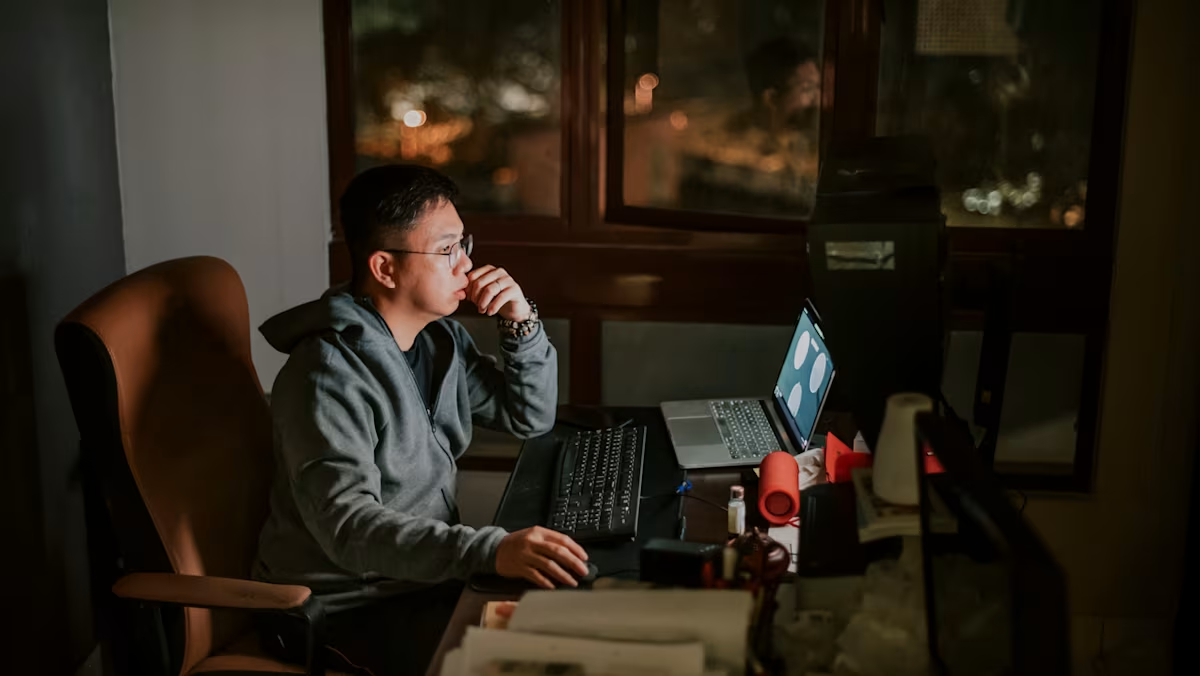
There’s a hidden cost to working from home, said Megan Cerullo in CBSNews.com. “Americans routinely say they relish the ability” to do their job remotely, a perk that’s expanded dramatically since the pandemic. But the often lonely nature of working from home can take a toll on mental health, according to new research from the Federal Reserve Bank of New York. The study found that from 2011 to 2024, remote workers saw “a 58% rise in hours spent alone compared with in-office workers.” They also became “significantly more likely to go a full day without any human contact”—no chats with colleagues, no after-hours socializing with friends. Perhaps because of that isolation, remote workers “visited mental-health-care providers more frequently than non-remote workers and were more likely to rely on prescription psychiatric medication.” Remote work is often credited with “increased job satisfaction and better work-life balance,” but this darker flip side is “worth considering.”Working remotely “isn’t for everyone,” said Kate B. Odell in The Wall Street Journal. But for working moms, it has been “the biggest innovation since the dishwasher.” Blunting the traditional trade-off between paid labor and family has allowed millions of women “to contribute their skills, earn money,” and still “be a primary influence on their children.” The demands on working moms will always be high. And the women working from home now “have to work harder to develop relationships with colleagues,” and often the “laptop is on at night and before dawn.” But “not being in traffic at 5 p.m. on weekdays” may be a worthwhile compromise.
Remote work: Fueling a mental health crisis?
It can be lonely working from home
320 words~1 min read