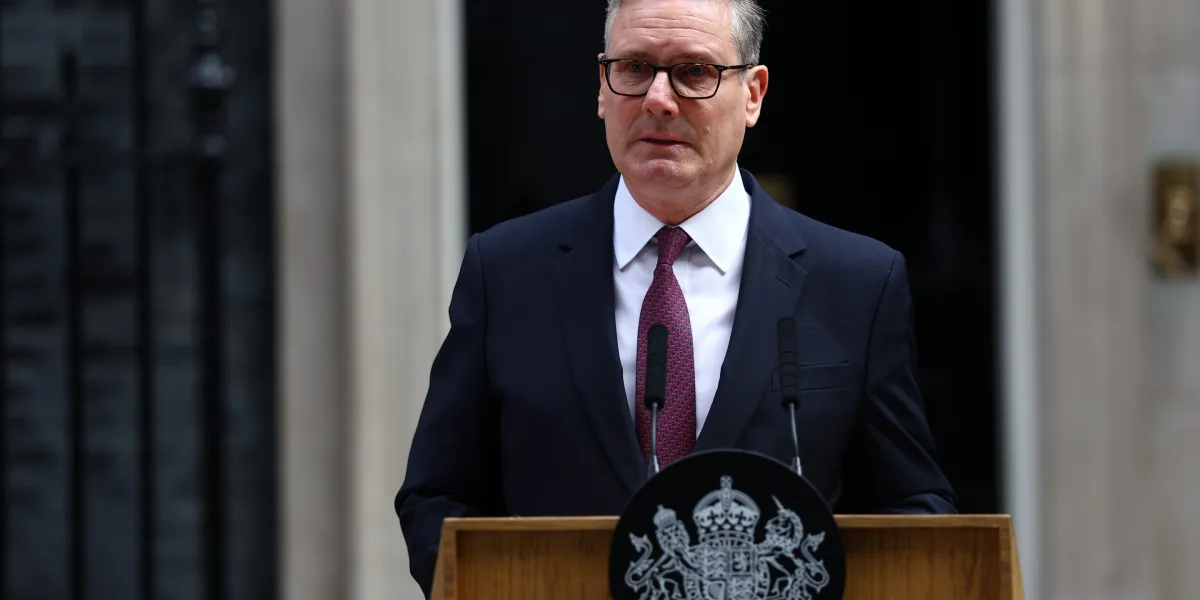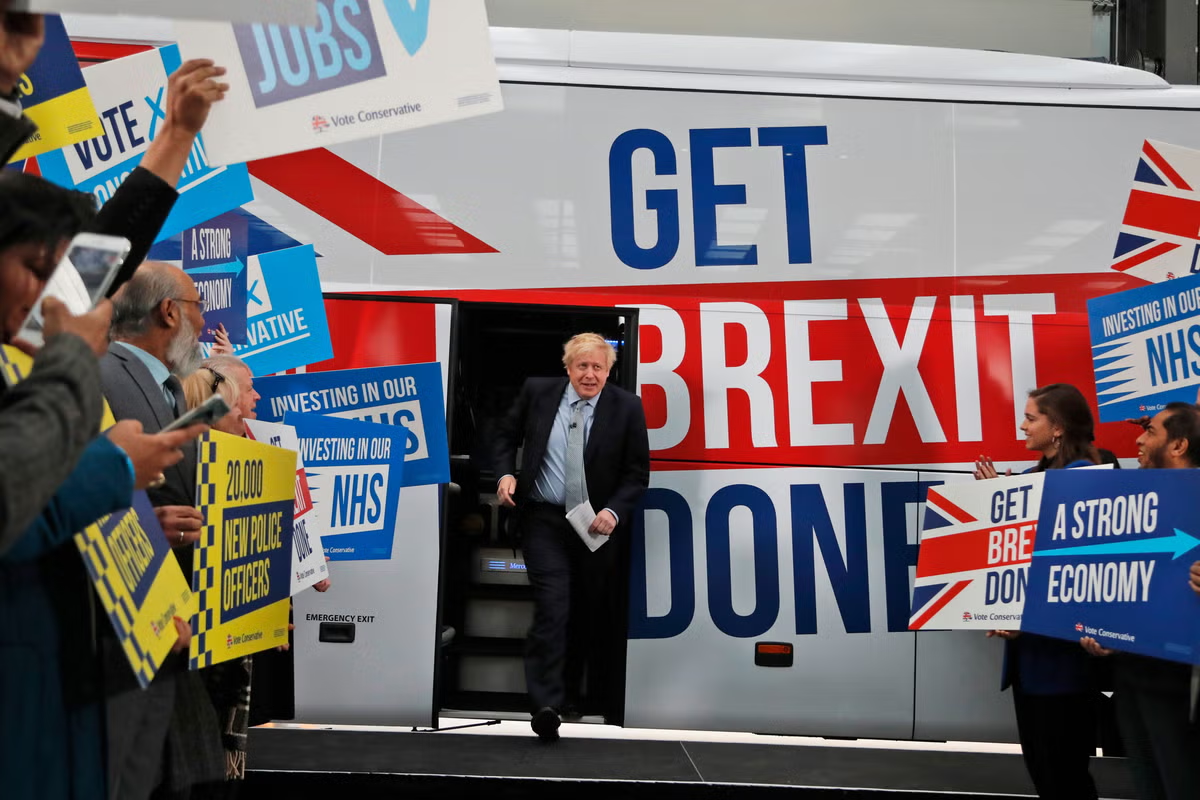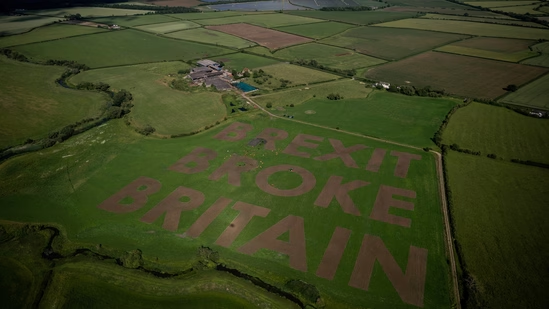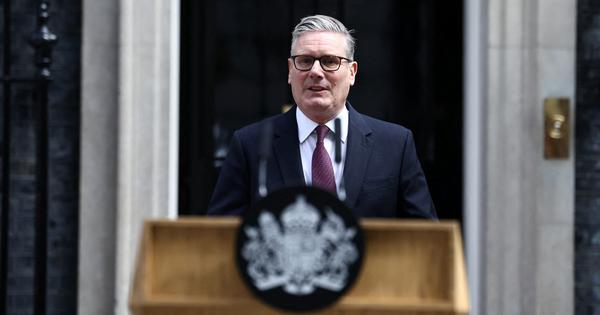
The labels Leave and Remain need little introduction to anyone with even a fleeting interest in British politics. The terms do not simply refer to someone’s position on United Kingdom-European Union relations, they can also provide a shorthand for their broader beliefs and values.The terms emerged as group identities and, to the opposing sides, often as pejorative shorthand for the other camp. That these labels retain potency ten years after the Brexit referendum suggests that identity is the default prism through which many people in the United Kingdom now view politics.My research focuses on continuity and change in political insults, and I try to understand if modern politics is more divided and uncivil than it was in the past. I am particularly interested in how politicians use Aristotle’s key modes of persuasion: ethos (appeals based on the character of the speaker); pathos (appeals to emotion); and logos (appeals to logic).The “Brexit effect” on the rhetoric of British politics is one of the most damaging legacies of the referendum. It has seemingly resulted in a rhetorical culture in which ethos and pathos are of far more value, and so far more prevalent, than logos. This affects you whether you’re a Leaver or Remainer.Uncivil rhetoric was often highlighted throughout the Brexit debate. This was the case both during the referendum campaign and then the battles in parliament between 2016 and 2019 over delivering the result. Journalists at the time even questioned why the discourse felt so toxic. Often, the debate was framed as “the elite” versus “the people”, where the two sides represented irreconcilable identities.The people versus the powerfulThe Leave victory was widely attributed to that side telling the more emotionally resonant story and, in the process, owning the narrative of who the elite really were. Populism is a contested term, but research has found a common feature of this kind of politics is creating a divide between “elites” and “the people”.In this rhetoric, the elite – however they are defined – are always greedy, corrupt, incompetent or just plain evil. On the other hand, “the people” are virtuous, but exploited by the elite. Politics then becomes a contest between these opposing sides where for one to gain the other must lose. And, in this environment, successful politicians are those who can frame themselves as being on the side of the people rather than the elite.The 2020 book Brexitland argued that leaving the European Union represented the first time a major political decision was based not on rational economic self-interest but on feelings of identity. The authors explain that the referendum did not create the divides between those identifying as Leavers and those as Remainers. But, once exposed, those divides could not be unseen.The decisive issue in politics no longer appears to be “the economy, stupid”, but rather “if you’re not one of the people, you are the elite, stupid”."New leader will be in place before Parliament returns in September, I will remain in post until the contest is complete"Keir Starmer announces he will resign as UK prime minister and leader of the Labour PartyFollow live updates and reaction: https://t.co/8HkQf7O9cD pic.twitter.com/oyZPA5C6Yc— BBC Breaking News (@BBCBreaking) June 22, 2026
The Brexit effect: How the politics of grievance devoured British Prime Minister Keir Starmer
Ten years after the vote to quit the European Union, Leave and Remain is the most comprehensive faultline in the United Kingdom.
766 words~3 min read