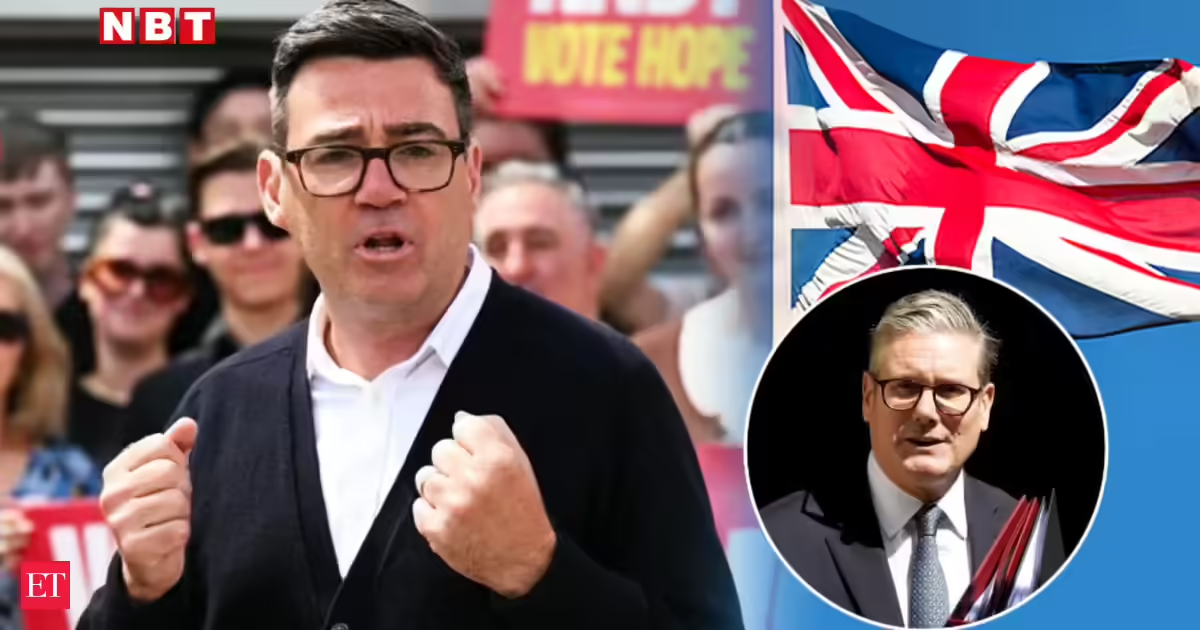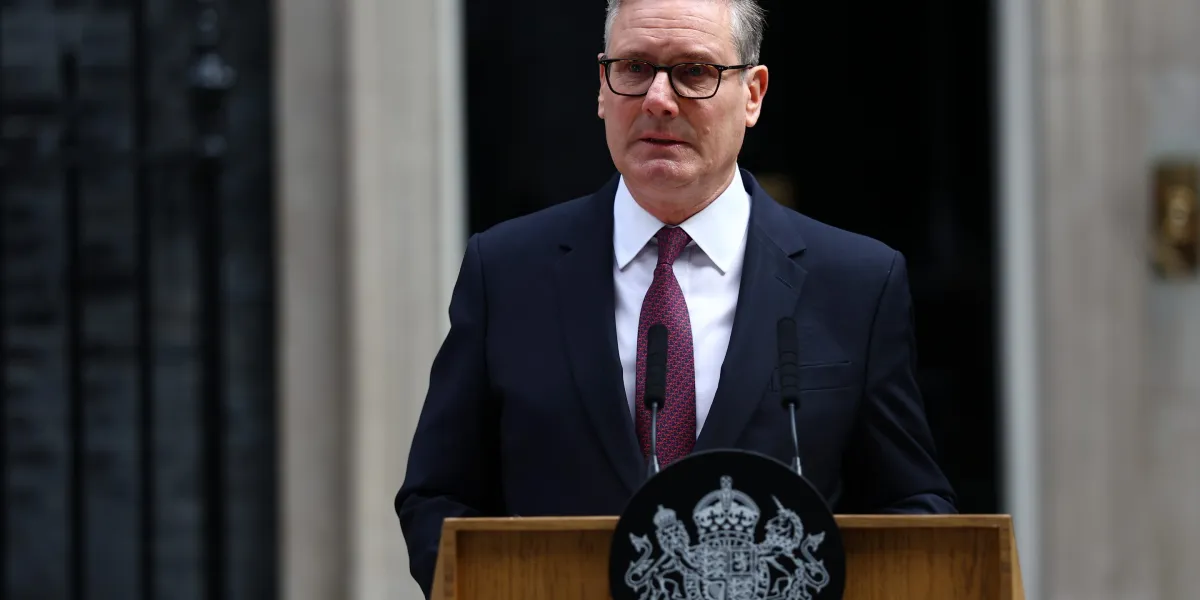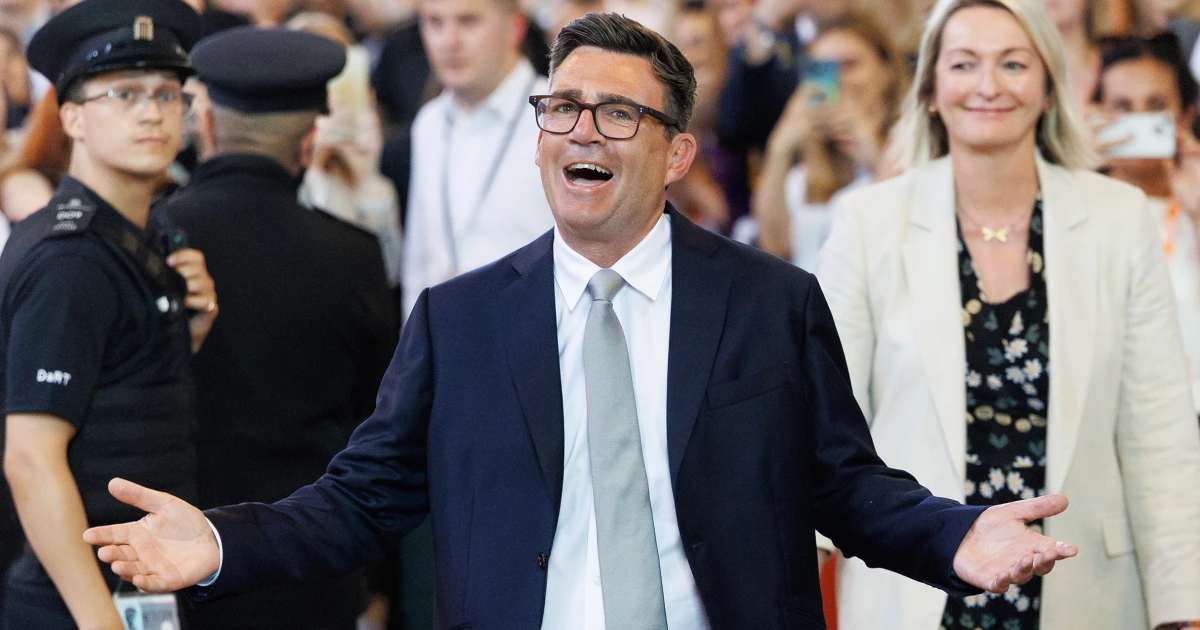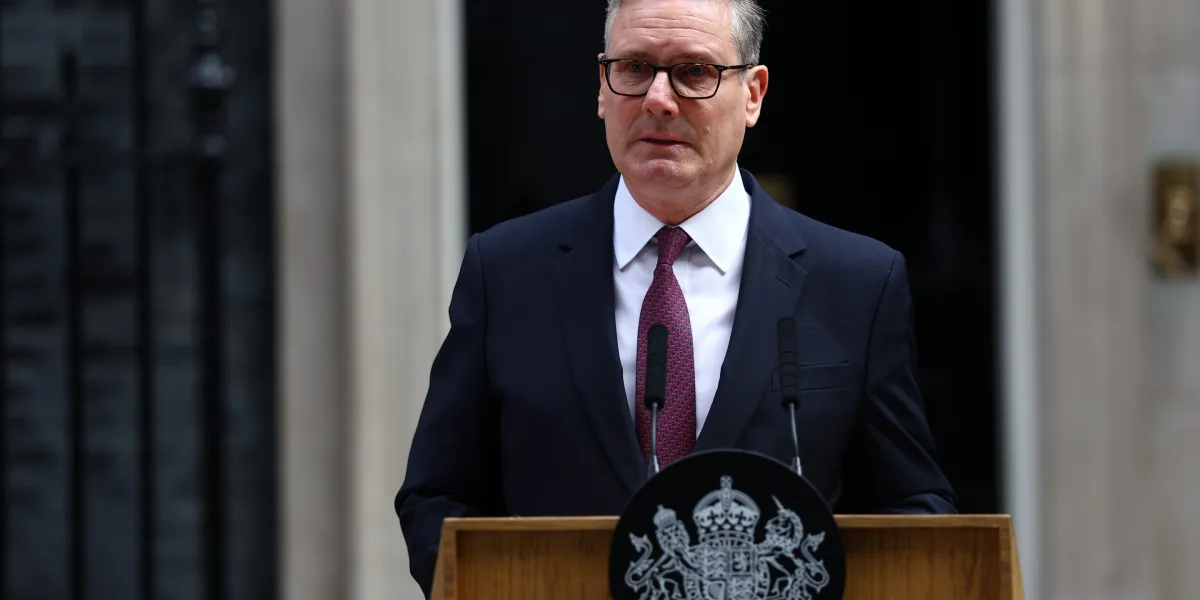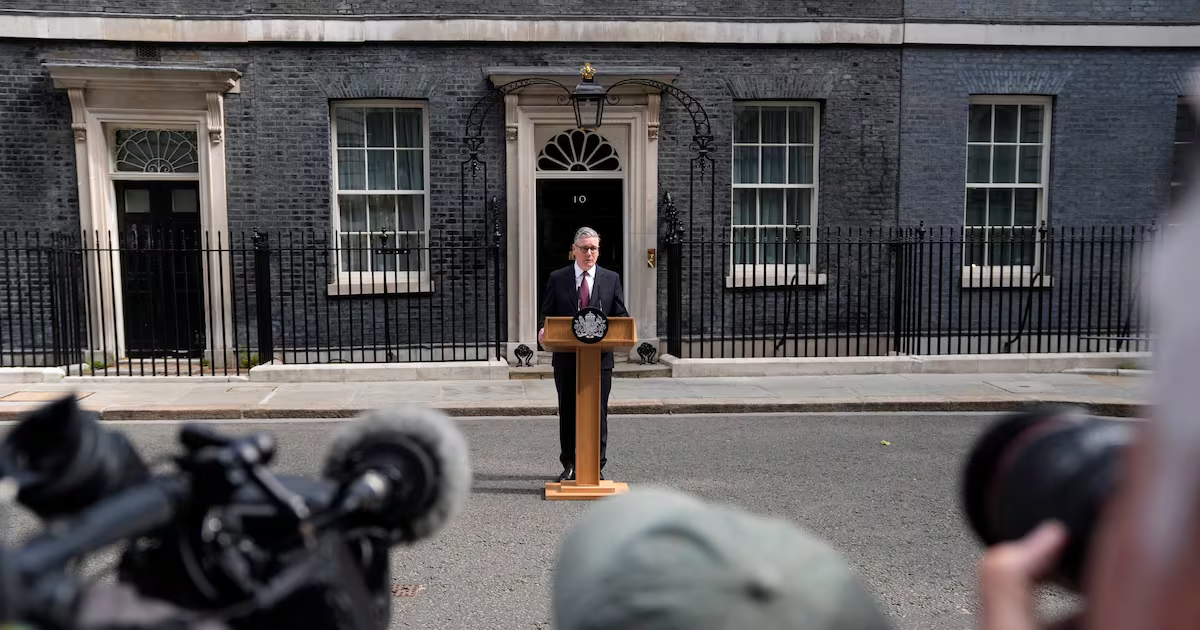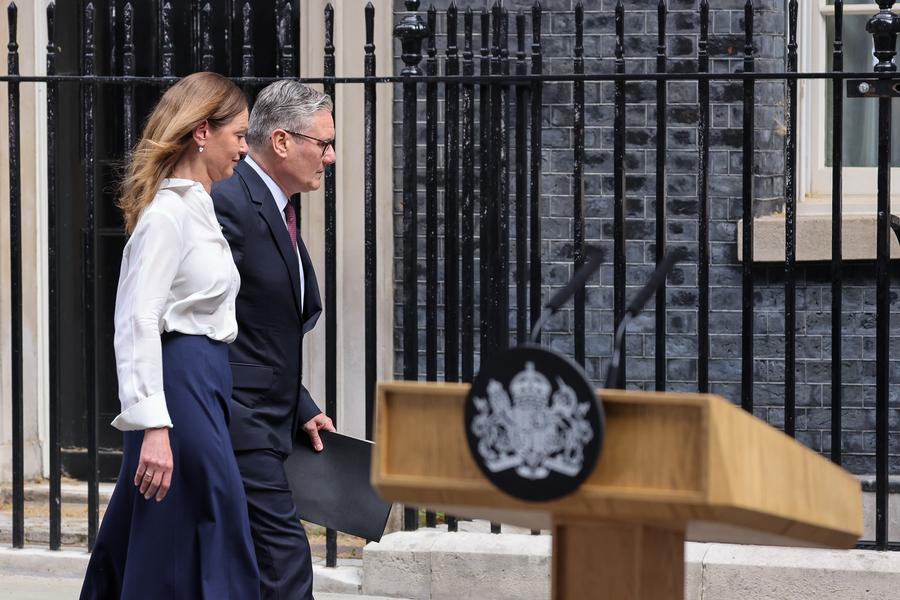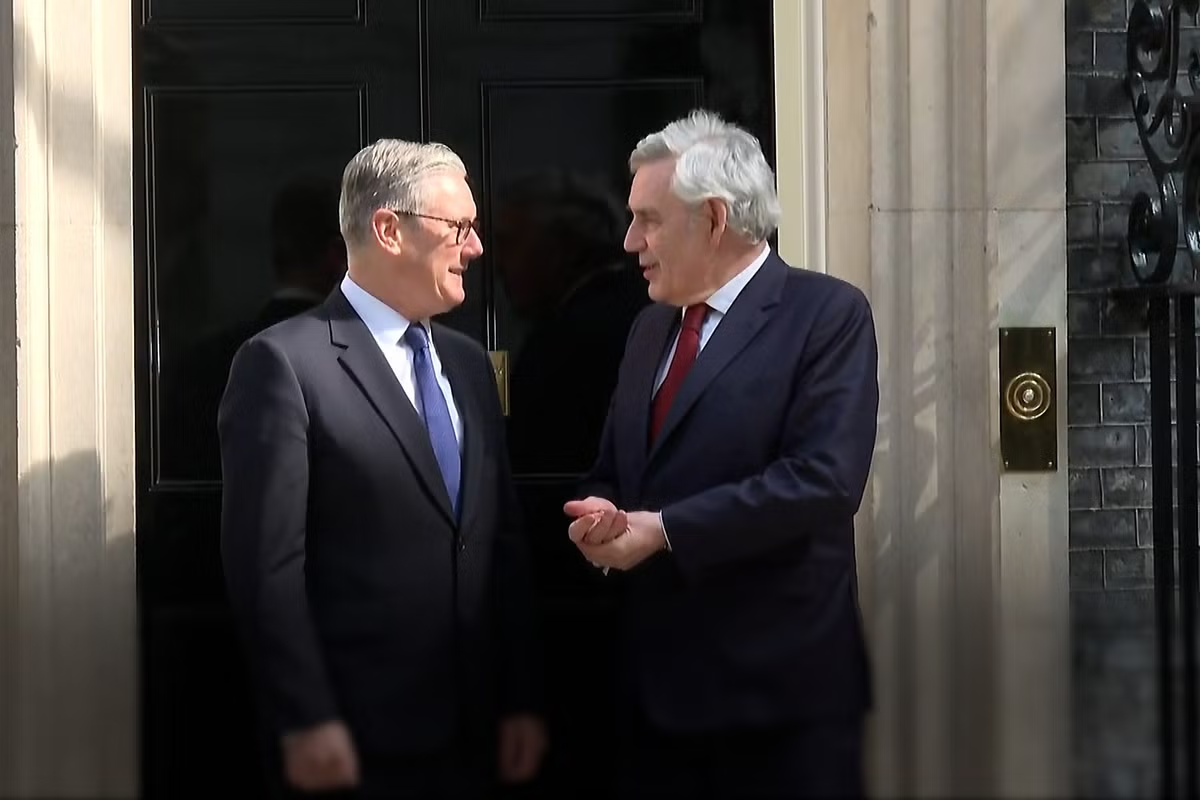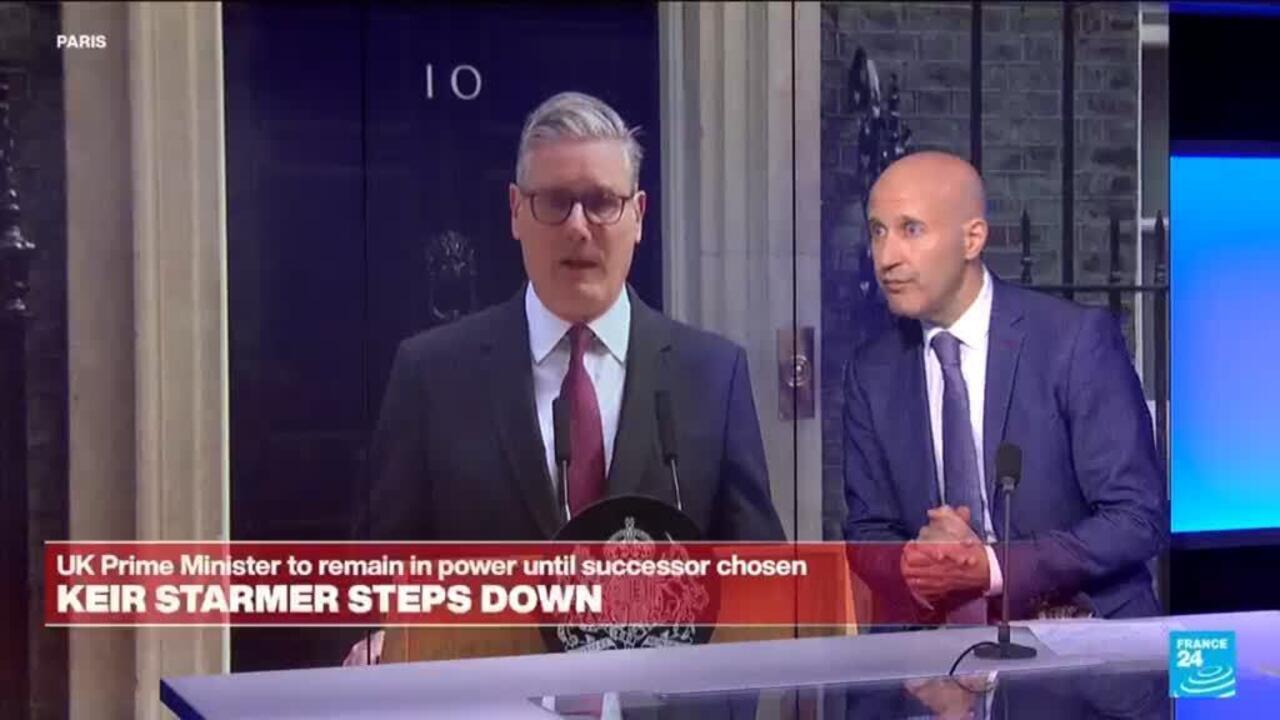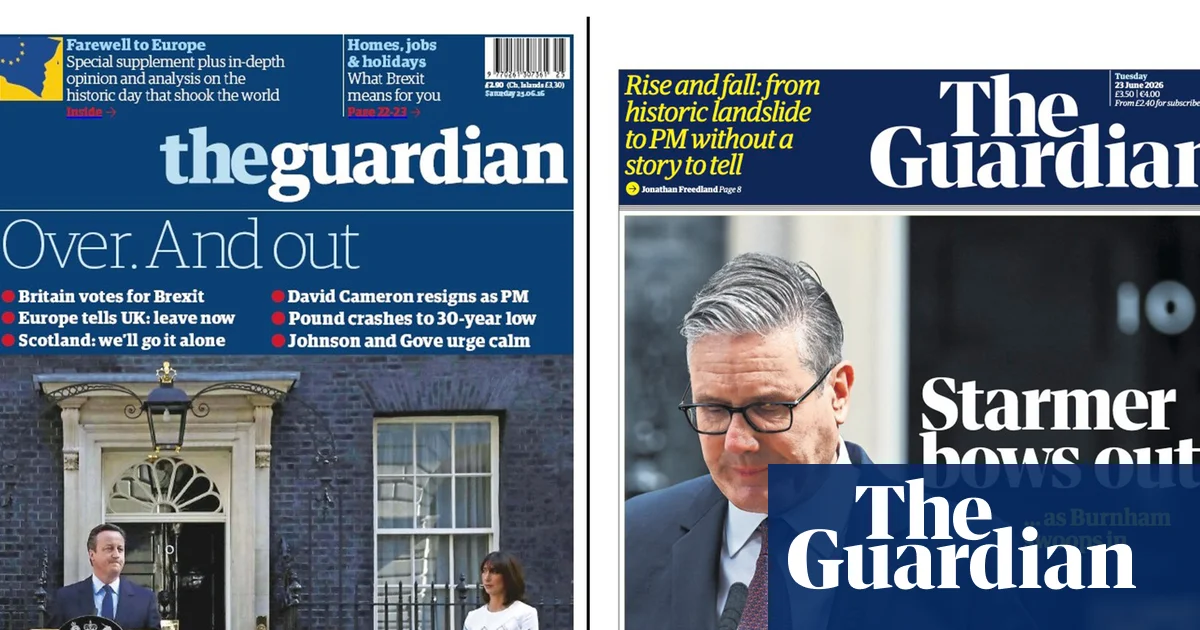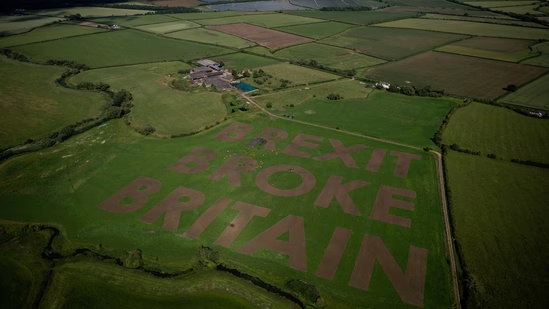
As Keir Starmer announced his resignation, tears in eyes, outside the official home at 10 Downing Street, protesters at nearby Whitehall blared Beethoven's ‘Ode to Joy’, the anthem of the European Union. The timing was not lost on anyone. Starmer quit on June 22, almost to the day, ten years after Britain voted to leave the European Union."Brexit broke Britain": Activists and political campaign group 'Led By Donkeys' mowed this message into a farmer’s field for the 10-year anniversary of Brexit, near Cricklade in Wiltshire. (Reuters Photo)Starmer’s party had at the time opposed Britain’s exit from the EU, but once it was done it had to work around it. That remains a central theme of how popular sentiment and the consequences of Brexit have shaken UK’s politics into an uncertain mess. Starmer is the sixth prime minister to leave office in the decade since the June 23, 2016 referendum, a rate of political turnover described as the highest in almost two centuries of British history.Former Greater Manchester mayor Andy Burnham, who won a parliamentary by-election last week and was sworn in as an MP hours after Starmer announced his exit, is now poised to become the seventh.‘Bregret’ is widespread, but diffusedA majority of Britons now regret Brexit, as a recent Ipsos survey found 52% would like to rejoin the EU against 33% who want to stick to ‘Leave’, news agency AP reported. Yet neither Starmer nor his likely successor Burnham seek to undo Brexit.Because, the “Bregret” majority is diffused across the countries, AP noted. The working-class areas that remain committed to staying out of EU used to be Labour or leftist strongholds, and are now seen as vulnerable to shifting to the right wing instead, driven by insecurities centred around immigration of cheaper workers from poorer countries.A decade of instabilityThe six prime ministers Britain has cycled through since the Brexit vote count from Conservative Party’s David Cameron, who called the referendum and resigned the morning after losing it in 2016. Then came Theresa May, who quit in 2019 after failing to get her Brexit deal, one that would finalise terms of the exit, through Parliament.A mercurial and camera magnet Boris Johnson was ousted by his own party in 2022 amid ethical scandals. Liz Truss lasted 49 days after her budget collapsed financial markets as Brexit was among issues that dogged the economy; hers is the shortest stint in British history.Rishi Sunak came in, and then lost the 2024 general election to the Labour Party, marking the left-liberals’ return to power after almost two decades.And now Labour’s Starmer is gone in less than two years.“If Andy Burnham fails as prime minister, the outlook for Britain is bleak,” historian Anthony Seldon, who has written extensively on British prime ministers, told news agency Reuters. He said the country is in “a very deep hole”.Academic Chris Grey, who has studied the fallout from Britain's EU departure, told AP that the “subterranean trace of Brexit” still runs through Britain's increasingly unruly politics. But the instability did not begin with Brexit alone, according to Jill Rutter, a former finance ministry official and a senior fellow at the think tank Institute for Government. It began with the 2008 global financial crisis, he told Reuters.“There has just been a general sense that we don't see our lives getting better and we don't see the lives of our children getting better,” she said. “And each government since has seemed to be unable to change that.”What Brexit promised, what it deliveredBrexit was sold to British voters in 2016 on three main promises — control over laws, control over immigration, and the economic freedom to strike better trade deals outside the EU.Ten years on, Britain's own fiscal watchdog, the Office for Budget Responsibility, estimates a productivity loss of around 4% as against remaining in the EU, equivalent to roughly £100 billion a year. The National Bureau of Economic Research, using nearly a decade of post-referendum data, put the damage higher, at 6-8% of GDP. It said business investment has gone down between 12% and 18%, employment down 3-4%, and productivity down 3-4%.The immigration paradoxImmigration was the single most powerful issue driving the ‘Leave (EU)’ vote in 2016. Under EU membership, citizens of all 27 member states had an automatic right to live and work in the UK, and EU immigration into the country ran at over 200,000 a year around the time of the referendum.Brexit ended that. But net migration did not fall; it surged and is only now falling.Official figures show immigration to the UK peaked at approximately 944,000 in the year to March 2023, a record high, driven by a wave of arrivals from non-EU countries for work and study. The number has since fallen sharply, to 171,000 for the year ending December 2025, the lowest since early 2021, following successive rounds of visa tightening by both the Conservative and Labour governments.This policy shift is largely driven by popular sentiment against immigration, which has also contributed to the rise of right-wing parties such as Nigel Farage’s Reform UK and far-right activist Tommy Robinson. But since the arrivals are now mostly non-EU, essentially non-white and from developing countries, the politics of racist tropes has risen, analysis shows.The Migration Observatory at the University of Oxford noted that “the composition is now quite different”. That means non-EU net migration is still much larger than it was pre-Brexit, and a higher share of migrants is coming through the asylum system.It is the asylum route — the most politically visible, used by people from Asia or Africa for instance — that has not declined.This has fed directly into the rise of Reform UK, which built its electoral surge on the argument that the post-Brexit immigration system had failed to deliver the control that was promised, says the Oxford analysis. Reform UK won nearly 1,500 council seats in the May 2026 local elections, many in former Labour strongholds, on the back of this argument, AFP reported.What Starmer inherited and what broke himStarmer came to power in July 2024 after Labour's landslide election victory, the party's first win in 14 years. He inherited borrowing that was 5% of GDP, a debt pile approaching 100% of national output, National Health Service (NHS) waiting lists at a record 7.8 million people, and public services in a deteriorated state. Much of it was the accumulated consequence of austerity measures in light of slow growth since the 2008 crisis, the Covid pandemic, and the post-Brexit economic hit.Starmer’s first budget raised £40 billion through taxation, with £25 billion coming from higher rates of employers' national insurance, AFP noted. This taxation move frustrated businesses and contributed to a rise in inflation.Then a scandal broke out over his appointment of Peter Mandelson as UK Ambassador to Washington despite knowledge of Mandelson's ties to convicted sex offender Jeffrey Epstein. Record-low approval ratings followed. Political analyst John Harris argued Starmer's core failure was “a painful lack of clarity… on who he was and what he stood for”.What Burnham inheritsBurnham, 56, won the Makerfield by-election last week with nearly 55% of the vote. He beat Reform UK's candidate in a northwest England seat that the right-wing party had been targeting. The largely white and working-class population there could see immigration as a threat to their jobs — a Trumpian trend seen in many parts of the world — but they still voted Labour Party, not Reform UK.The seat had been vacated by Labour MP Josh Simons specifically to allow Burnham to return to Parliament.Wes Streeting, a potential rival who stood aside for him, said Burnham could win "the fight of our lives against the forces of nationalism”. The content such “nationalism” of Reform UK and other right wingers is mainly three things — hostility to immigration, opposition to closer EU ties (thus still sticking to Brexit), and a populist “anti-establishment” posture that pits “the people” against a “uniparty” meaning all mainstream politicians.Labour had officially campaigned for Remain in the 2016 referendum. And the party is much more pro-EU than the Conservatives. Under Jeremy Corbyn, who has since been ousted, it even demanded a second referendum in 2019. Starmer himself championed that position for a possibility to return to the EU.What next on Brexit and its aftermathBut after a heavy 2019 defeat in the general election, Labour and Starmer pivoted to treating Brexit as done. Labour's 2024 manifesto explicitly ruled out rejoining the single EU market or freedom of movement between the member countries.Likely next PM Burnham was once critical of Brexit, but his stance has narrowed, AP noted in its report. He has gone from calls to nationalise industries and rejoin the EU, towards a more constrained centre. And he has since even ruled out any imminent EU return.In simpler terms, the Labour Party moved from opposing Brexit, to accepting it for electoral survival; and Burnham embodies that same journey.Olivia O'Sullivan of the think tank Chatham House think tank told AP that Burnham is now the frontrunner because Labour sees him as best placed to defeat a rising right-wing Reform UK. But, she added, “This is not the same thing as offering a radically different set of policies or even a particularly clear policy program.”That means the popular sentiment with mainstream parties or politicians could further help Reform UK — the kind of sentiment Donald Trump channeled for his more inward-looking ‘America First’ pitch that got him elected.Hannah White, director of the Institute for Government, told AP the deeper structural problem facing any incoming prime minister remained unchanged.“We just haven't had politicians who've been upfront with the public about the fact that when they get into power, they won't be able to have no increases in taxes, no increases in debt, and better public services all in the same breath. And so people are disappointed,” White said.Nominations to succeed Starmer open on July 9 and close on July 16, with any contest decided by September 1. If Burnham stands unopposed, he could become PM as soon as July 17.
Starmer's exit marks Brexit anniversary: Is ‘Bregret’ behind UK losing sixth PM in 10 years?
Andy Burnham is poised to become seventh PM since Brexit referendum as UK marks decade of political turbulence tied, in part, to its leaving the European Union | World News
1,663 words~8 min read