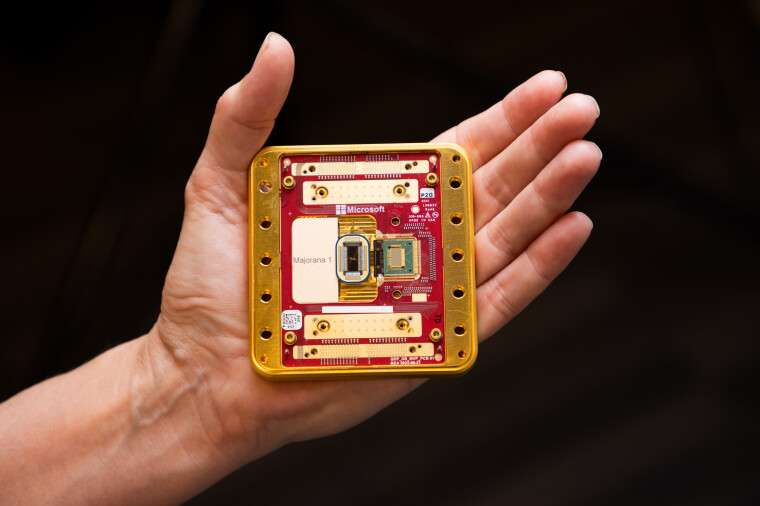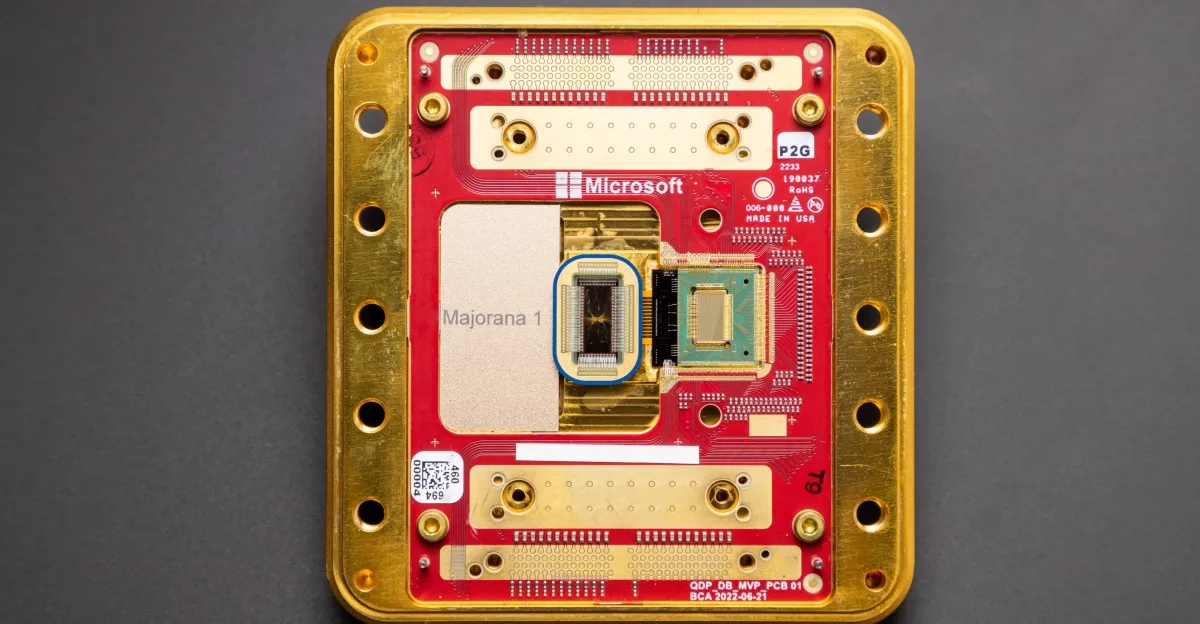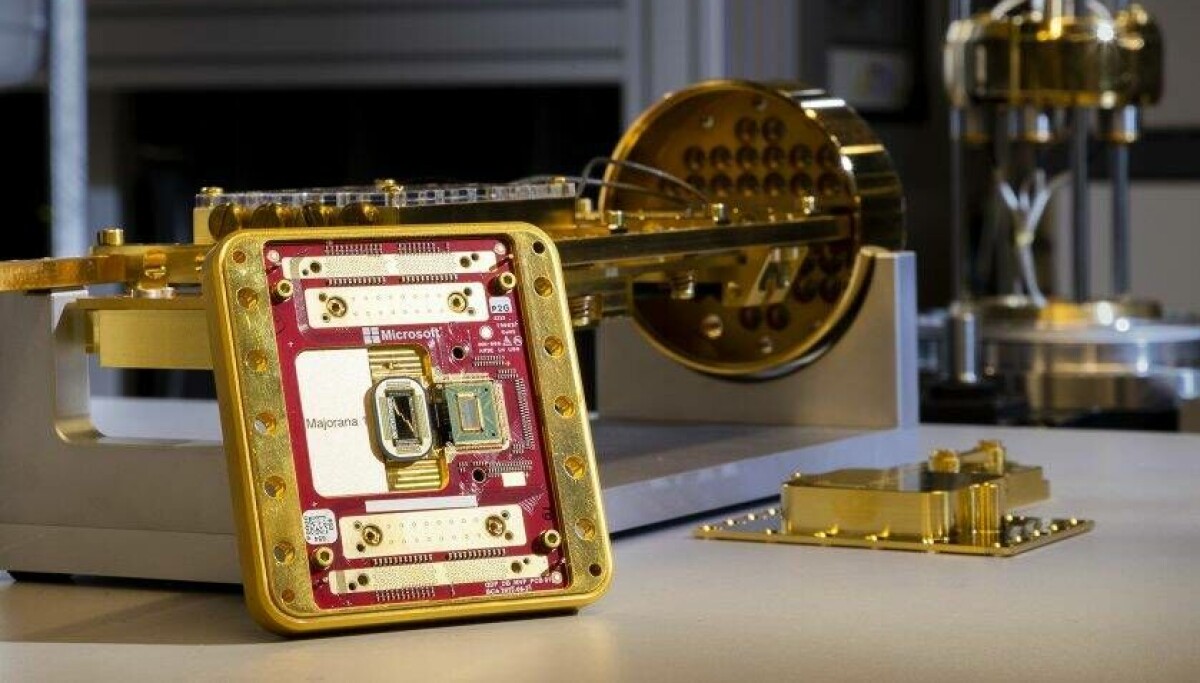
Prestigious journal Nature has published a peer-reviewed critique of Microsoft's claims to have made quantum computing breakthroughs – and the scientist who wrote the paper has essentially said Redmond got it wrong.Microsoft made its claims of a quantum breakthrough in February 2025 when it revealed tech called Majorana and predicted "this breakthrough will allow us to create a truly meaningful quantum computer not in decades, as some have predicted, but in years."The software giant's approach to quantum computing involves Majorana particles, subatomic particles that scientists have not observed directly. The company has pursued this approach for years, but experienced reversals that led to the retraction of some papers. Last year, however, Microsoft claimed it had both observed Majorana particles and harnessed them in a quantum computer.
Criticism of that claim was swift and sharp: we reported boffins willing to go on the record as describing Microsoft's work as "unreliable" and perhaps even "fraudulent."
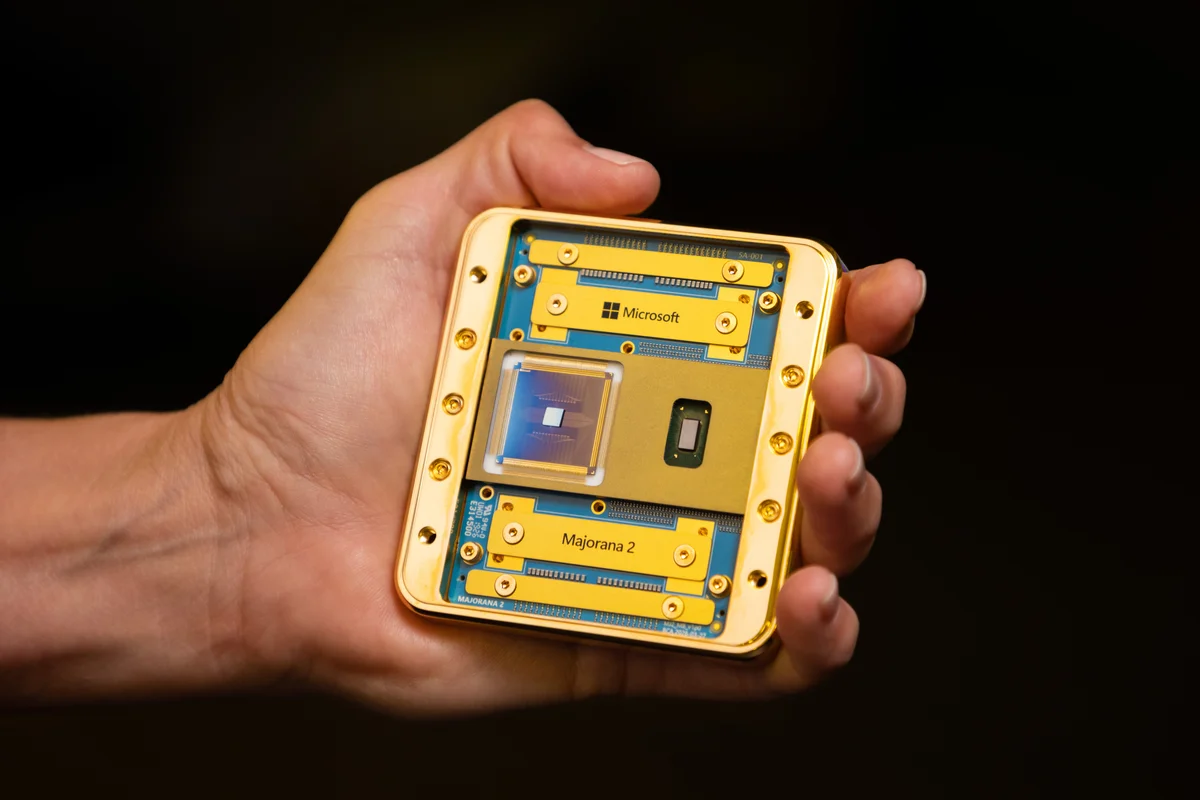
Microsoft insisted its work is sound and in early June 2026 announced Majorana 2, a "next-generation topological quantum chip" it developed with the help of its own agentic AI.The Windows giant revealed that work after being given a right to reply to a critique of its 2025 Majorana announcement by Dr Henry Legg, a lecturer at the University of St Andrews. Nature accepted Legg's paper on April 20 and scheduled it for publication on June 24.Titled "On the robustness of topological gap detection via transport," Legg's analysis suggests Microsoft got it wrong."Last year they claimed to be years, not decades from a 'topological quantum supercomputer,'" Legg told The Register in an email. "My feeling is that they are centuries, not decades away. If it works at all – and, based on what I have seen, the most likely scenario is that it doesn't work."Based on his analysis of the research Microsoft published in 2025, Legg argues that the company's claims about finding and being able to control the elusive Majorana particle to build a topological superconductor do not withstand scrutiny."I demonstrate that Microsoft's tune-up software is flawed and that coding errors resulted in incorrect statements to peer reviewers," said Legg. "Raw data, which was omitted from the original paper, also appears to indicate Microsoft's devices contain considerable disorder and are not compatible with the existence of a topological gap. In other words, the prerequisites for Microsoft's claims do not appear to be met, but this was obscured because this data did not appear in the original publication."Essentially, Microsoft has proposed a Topological Gap Protocol (TGP) that can be used to detect the phase transition deemed to be a prerequisite for conducting quantum calculations using Majorana particles.Legg argues that based on his analysis of underlying transport data (measurements of particle change) – omitted from the original publication – Microsoft chose to focus on results that supported its thesis and ignored data that could be interpreted as a negative result.