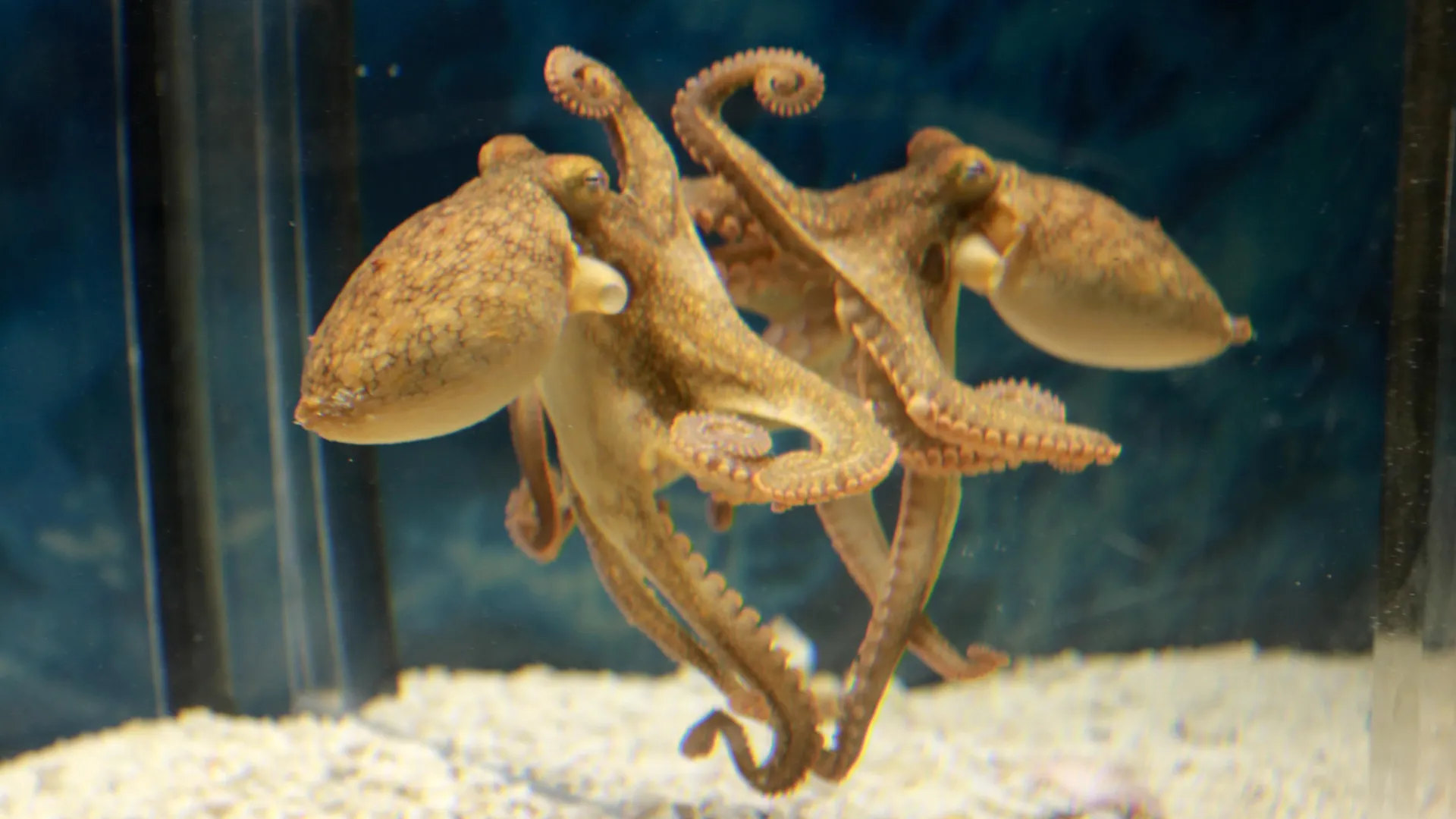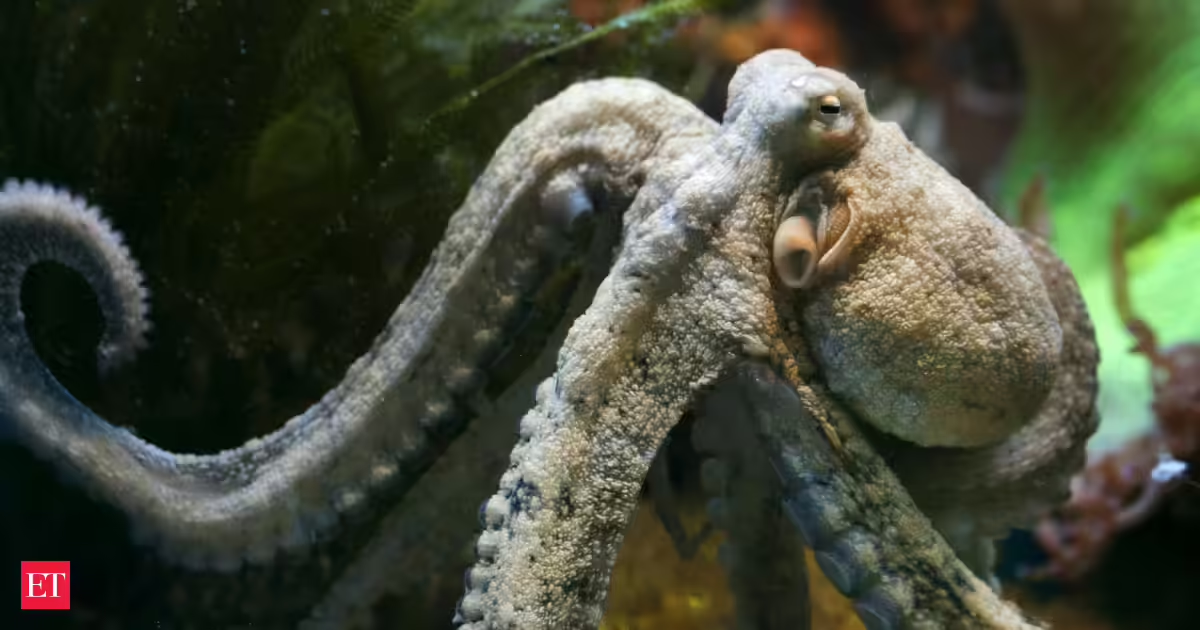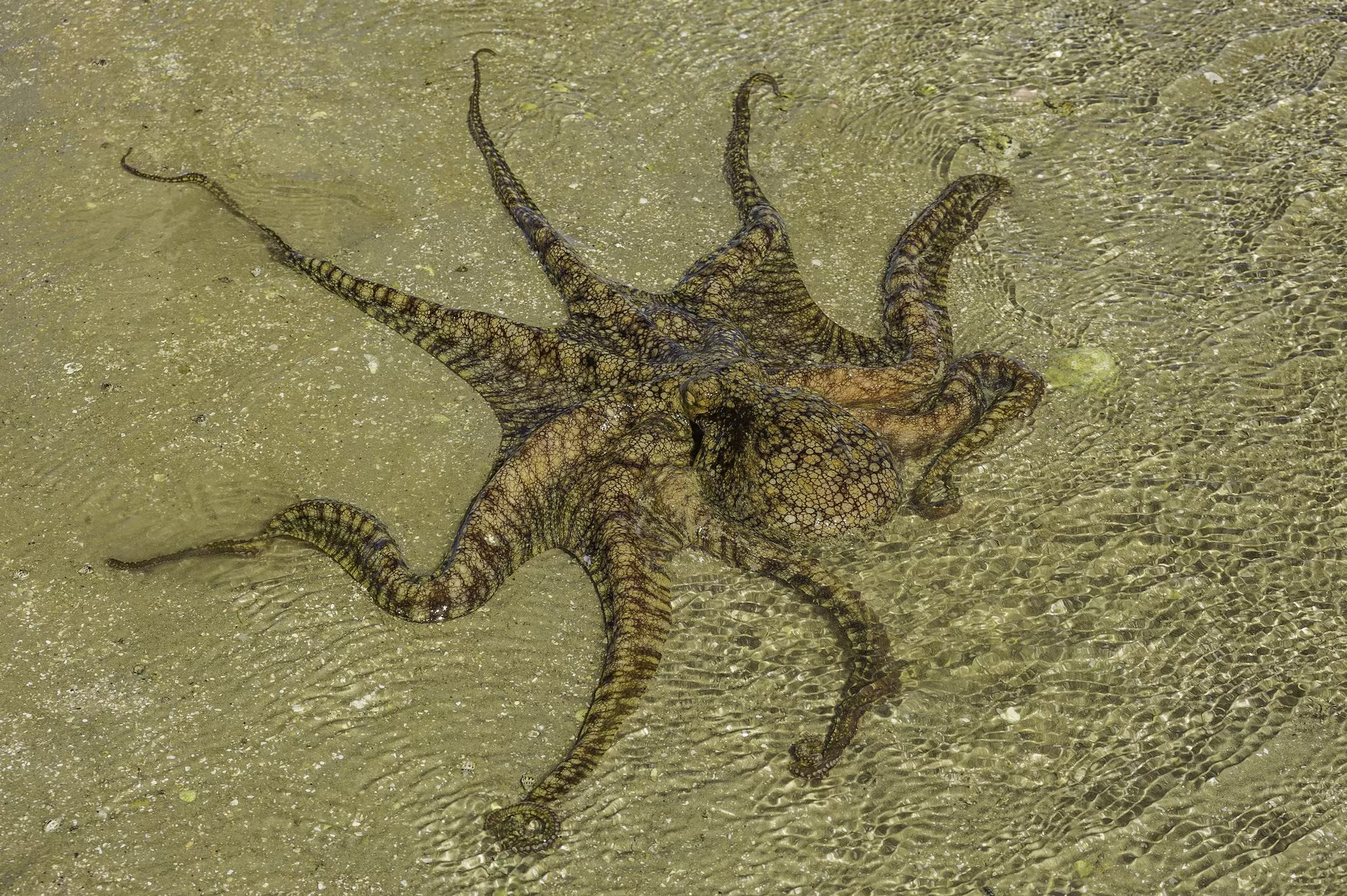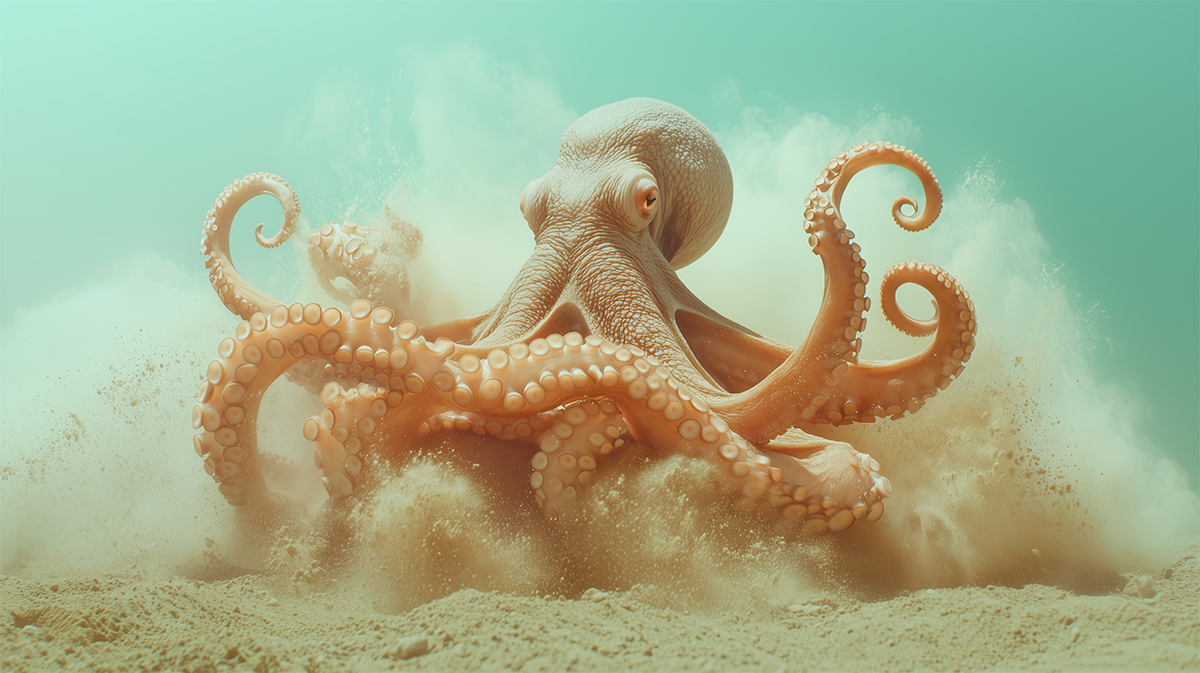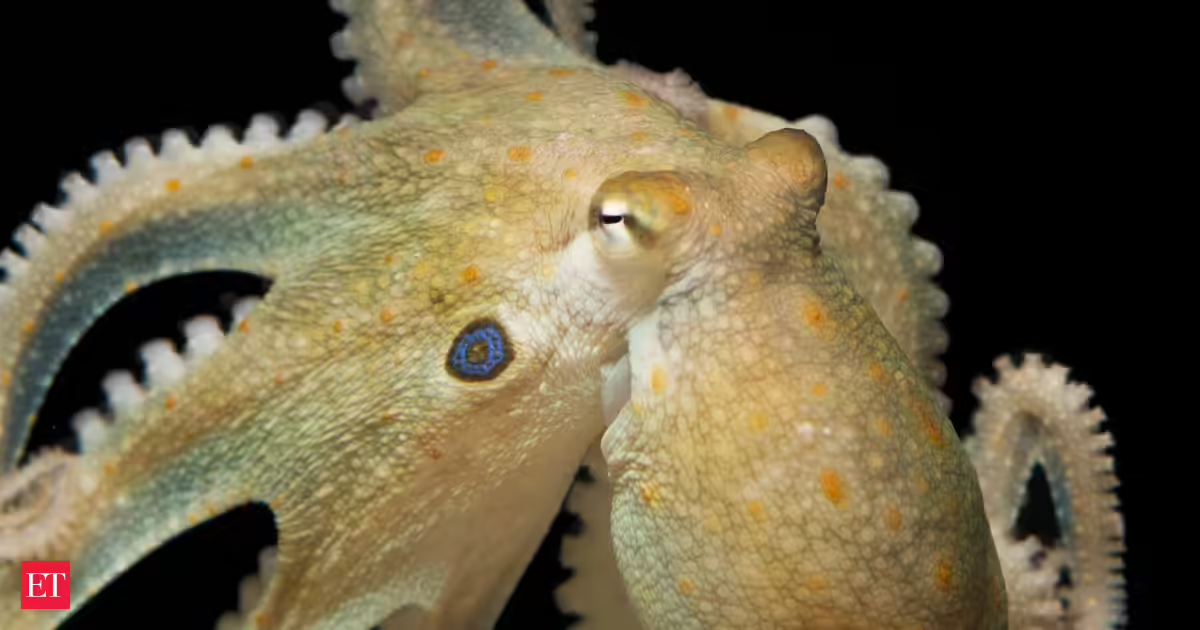
You've probably heard that octopuses are smart, right? They can open jars, solve puzzles, and even identify individual human faces. But a new study suggests their brains are wired in ways much stranger and more impressive than anyone expected.According to a study, ‘Octopus bimaculoides can learn to utilize a mirror to localize a reward outside the line of sight,’ published in Current Biology by researchers at Dartmouth College, three California two-spot octopuses (Octopus bimaculoides) learned to use a mirror to find a hidden food reward they could not see directly.This is the first demonstration of mirror-mediated navigation in an invertebrate (including insects, worms, crustaceans, and others). Until now, this ability was thought to be restricted to vertebrates such as primates, elephants, dogs, and some birds.In short, octopuses have just entered a cognitive realm that scientists didn't think invertebrates could enter.What the researchers actually didIt was a clever setup. According to the Current Biology study, scientists put each octopus into a small starting chamber at the back of a tank. A mirror ran the length of the tank in front of them. A virtual crab, projected as a moving white silhouette, appeared on a screen on either the left or right side of the back wall behind them. The octopus could not see the crab from inside the chamber. The only way to tell where it was? Look in the mirror.All three octopuses learned to do just that. In the base dataset, the octopuses selected the correct side, where the crab was actually projected, in roughly 73 percent of the trials, according to the Current Biology study. That is well above chance, and the results held up across multiple statistical tests, including Fisher's combined probability test and binomial simulation.Octopus bimaculoides successfully located hidden prey using only a mirror reflection in 73% of trials. Image Credits: Wikimedia CommonsThe octopuses didn't just follow the reflectionIn 59% of their correct trials, the octopuses did not walk around the wall of the chamber to get to the crab. They climbed over. According to the same Current Biology study, climbing over the wall meant moving away from the mirror reflection, away from the only visible cue, towards a location they could not directly see. For that, they had to mentally map where the reflection pointed in the tank's real, physical space.That's not an easy connection. It suggests that the octopuses were building some kind of internal spatial model of their surroundings, using the mirror as a reference point.Why this is such a big evolutionary dealAccording to research titled ‘Grow Smart and Die Young: Why Did Cephalopods Evolve Intelligence?’ published in Trends in Ecology & Evolution, octopuses and their cephalopod relatives have independently evolved sophisticated cognitive abilities such as learning, memory and problem-solving, despite having almost no evolutionary history with vertebrates. Their most recent common ancestor with mammals lived more than 520 million years ago. And here they are doing something that, until now, we only thought vertebrates could do.That's the concept of convergent evolution at work. Two completely separate lineages develop similar cognitive solutions, not because they have inherited the same traits, but because those solutions seem to work.The California two-spot octopus showed it could mentally map mirror cues onto real tank space. Image Credits: Wikimedia CommonsWhy mirror use matters beyond the tankThe use of mirrors in animals is more than a fascinating quirk. A study, ‘Chimpanzee (Pan troglodytes) spatial problem solving with the use of mirrors and televised equivalents of mirrors,’ published in the Journal of Comparative Psychology, found that the ability to use a mirror to find a hidden object is a form of mediated perception, the brain’s ability to connect something visible (a reflection) with something that is physically located elsewhere. Some researchers think it might be a cognitive stepping stone towards self-recognition.The Dartmouth researchers are careful not to claim that octopuses are close to recognizing themselves in mirrors. Rather, the results suggest that the cognitive architecture necessary for mirror-guided navigation may not be unique to animals with backbones or vertebrate-style brains: a major finding in the field of comparative cognition.What comes nextThe study’s authors are upfront about its limitations. Only three octopuses finished the entire experiment, partly because of resource constraints and the fact that octopuses naturally have short life spans. The variability of behavior across trials means that results, although statistically significant, will need to be followed up with larger sample sizes.Future research will likely test whether octopuses can apply this skill in entirely new mirror configurations and whether what’s going on is true spatial reasoning or a sophisticated form of associative learning. Either way, the answer will tell us something important about the evolution of intelligence, and the many different shapes a mind can take.
Octopuses just passed a mirror challenge few expected: Scientists found they could use reflections to locate hidden prey in 73% of trials
A new study reveals that octopuses can use mirrors to locate hidden prey, demonstrating advanced cognitive abilities previously thought exclusive to vertebrates. Their remarkable learning ability offers insights into the evolution of intelligence in invertebrates.
785 words~4 min read