By
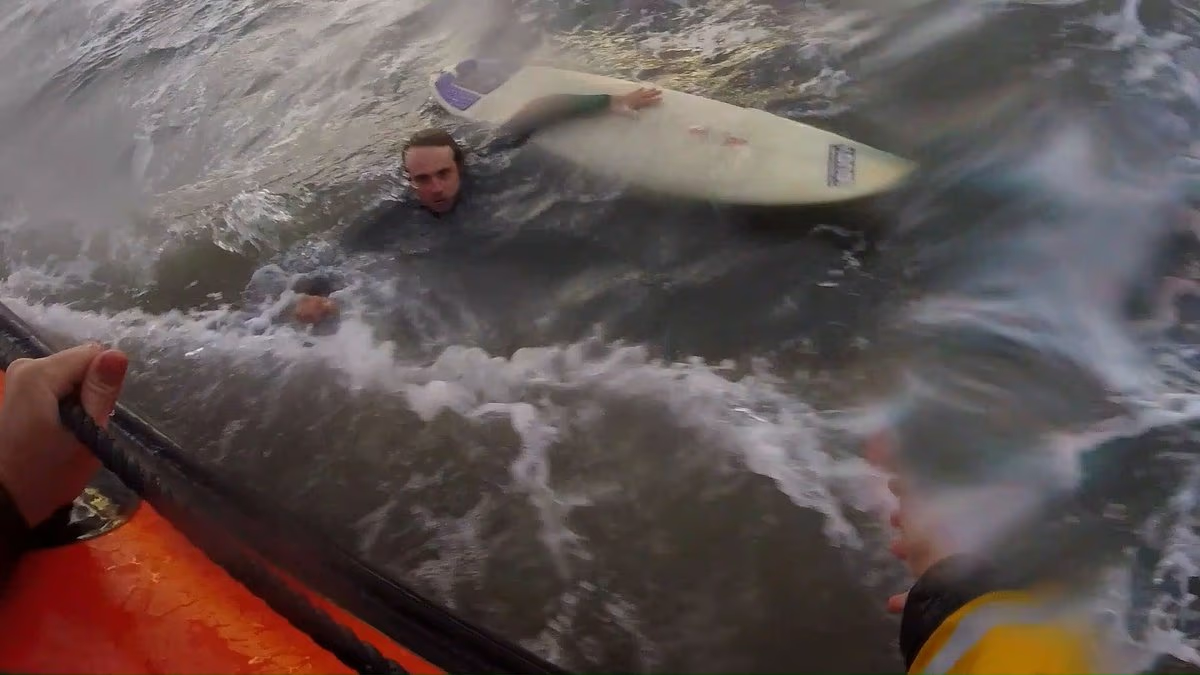
SAN DIEGO (AP) — To someone who is getting sucked out to sea by a rip current, “Don’t panic!” may be difficult to heed, even if that’s exactly what you should do. But lifeguards say to not only relax but flip over and float out of the danger.Rip currents are one of the coast’s greatest dangers and account for the most beach rescues every year. About 100 people drown from rip currents along U.S. beaches each year, according to the United States Lifesaving Association. And more than 80% of beach rescues annually involve rip currents.Already this year, there have been at least 21 people killed from rip currents in U.S. waters, according to the National Weather Service.Here are some things to know about rip currents:
This article is part of AP’s Be Well coverage, focusing on wellness, fitness, diet and mental health. Read more Be Well.
Rip currents can be hard to spotRip currents are narrow columns of water flowing rapidly away from the beach. They don’t pull swimmers under water, but can carry them out a fair distance from shore.“A rip current is like a river that pulls out to sea,” said San Diego Lifeguard Marine Safety Lt. Charlie Knight. “So when the waves come into the beach, it needs somewhere to go. And so it takes these little channels out that we call rip currents to put all that water back into the ocean.”Low spots along the beach, or areas near jetties or piers, are often where rip currents form. They can be connected to stormy weather but also sometimes occur during sunny days. They can be hard to detect because the surface water often appears calm.The current can flow as fast as 8 feet (3.2 meters) per second, faster than even a strong swimmer can overcome, according to the National Oceanic and Atmospheric Administration.