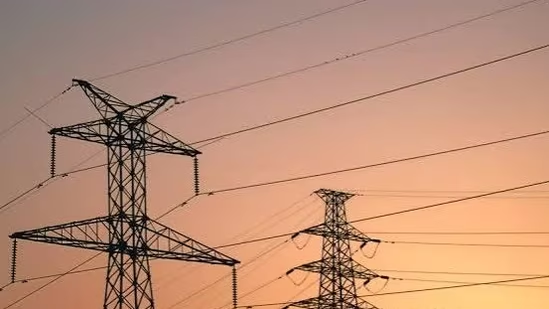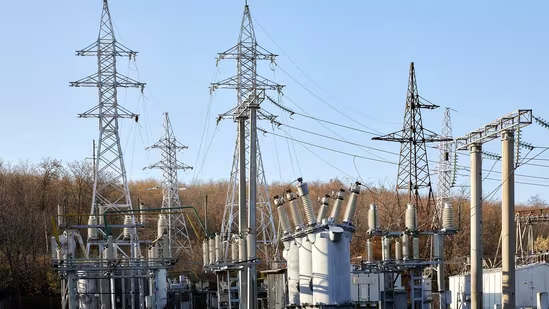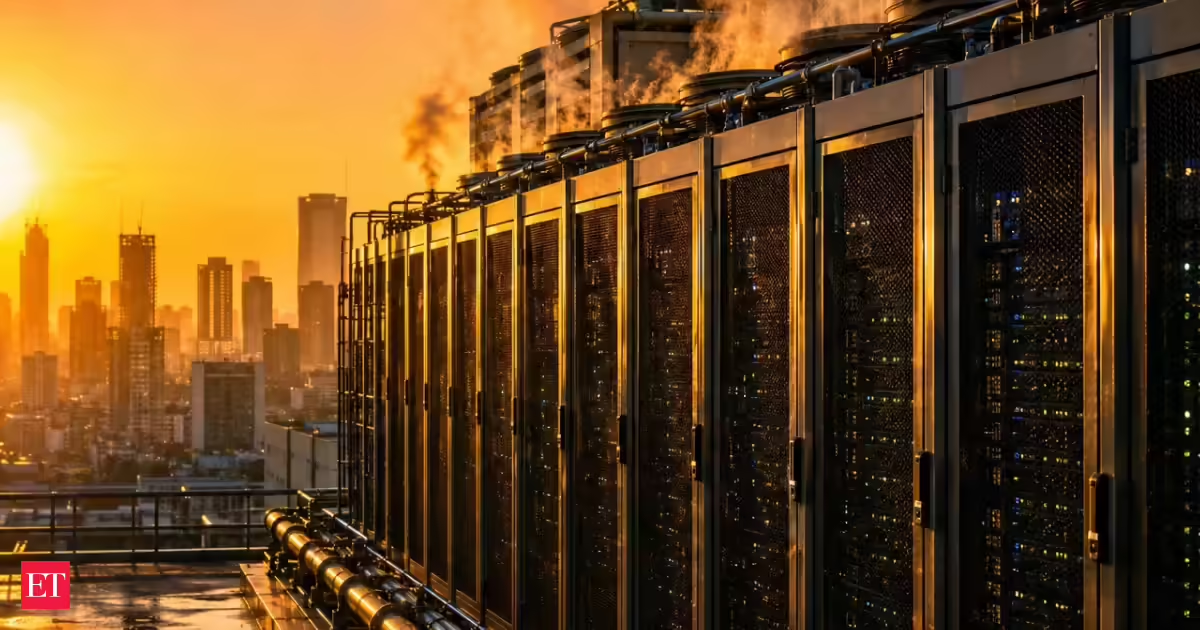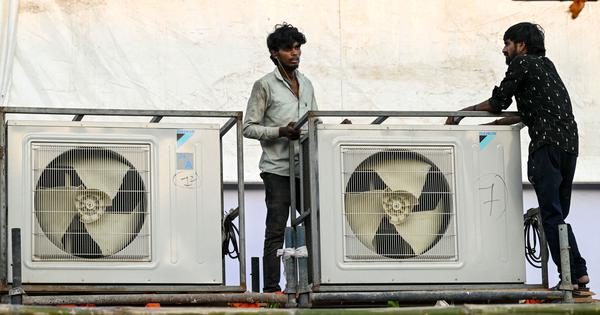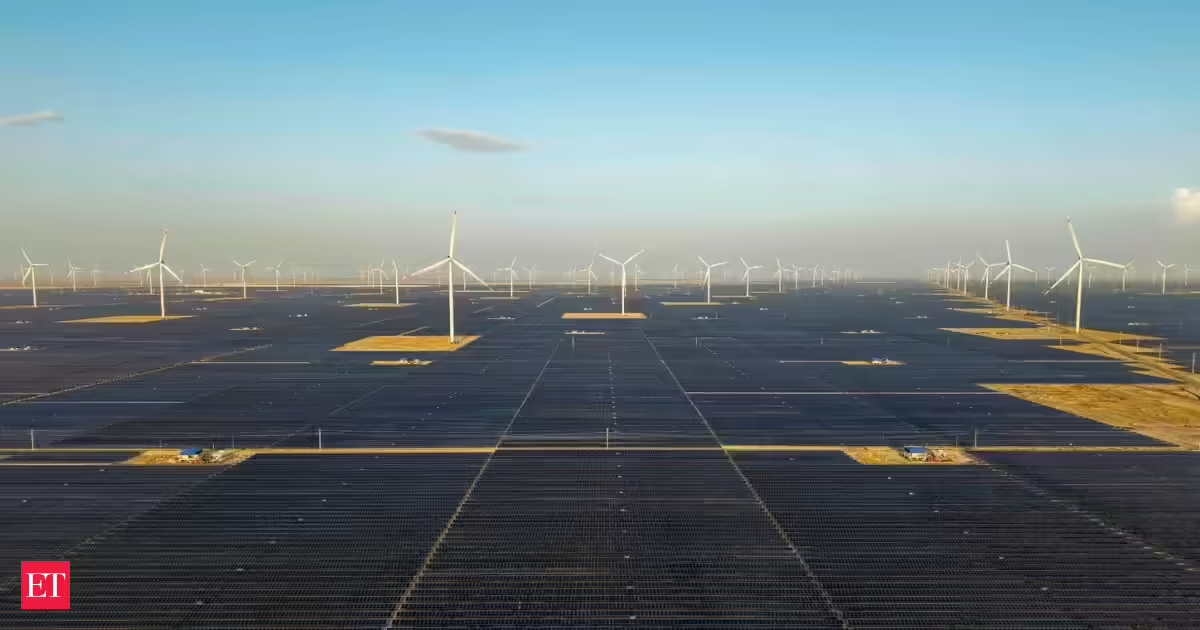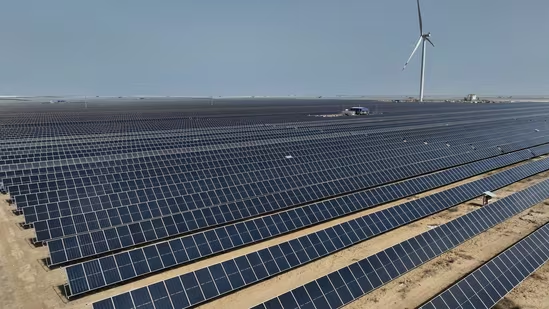
India’s energy story is entering its next, more complicated chapter. For the past decade, the mission was capacity addition – put up as much as solar and wind as we can. That mission is from over, but the nature of demand is changing faster than many of plans, The next surge will not be driven by only factories, homes or electric vehicles. It will come from two quieter, but voracious, forces: The need to keep India cool and the need to process the its data. Renewable Energy (ANI)The number tell the story. India’s cumulative renewable capacity bas reached 279.26 GW as of April 2026--154 GW from solar, 56.44 from wind. In April alone, we added nearly 4,000 MW of solar and 342 MW of wind. That is impressive by any global standard. But demand is running a race its own. A single year’s sale of 15 million room air-conditioners can translate into 15-22.5 GW of potential connected load, and roughly 16.5 GW of additional peak stress on the grid. And on the digital side India now generate about 20% of the world’s data, yet hosts only around 3% of the global data-centre capacity. We create the data, but much of it is processed and powered thousands of kilometres away.This is not just an energy problem: It is an economic and strategic one. India’s next energy challenge is not merely to generate more power, but to deliver firm, reliable and green power for cooling, data and AI. If we build the right mix of renewable energy, storage, grid infrastructure and intelligent forecasting, we can power India’s digital future with India energy- and reduce our dependence on the world. That, perhaps, is the task that will define the country’s next decade.The implication is significant. A large share of India’s digital exhaust—consumer transactions, enterprise workloads, AI training data, video, payments and platform activity—is processed or stored outside the country on offshore cloud infrastructure, largely across North America, Singapore and Europe. This creates not only a digital dependency, but also an energy dependency: India generates the data, but much of the compute, storage and electricity demand linked to that data is monetised and powered elsewhere.That imbalance is unlikely to last.As India pushes data localisation, AI adoption, cloud migration and domestic digital infrastructure, the country will need a massive expansion in data-centre capacity. These facilities are among the most power-intensive assets in the modern economy. They require electricity that is not only cheap and green, but also firm, reliable and available round the clock.This is where the power-sector story changes.Traditional renewable procurement—solar during the day, wind when available—will not be enough for hyperscale data centres, AI compute clusters or mission-critical digital infrastructure. They will require thermal-mimic renewable power: Solar, wind and storage configured to deliver a stable supply profile similar to conventional thermal power.India cannot build generation, data centres and cooling demand in silos. Transmission, storage and flexible demand must be planned together.Diesel generators remain another part of the equation. India is estimated to add 5–6 GW of diesel genset capacity annually, with a cumulative operational base that may be around 100 GW. Data centres, commercial buildings, housing complexes and factories still depend on diesel backup despite improving grid reliability.The opportunity, therefore, is larger than renewable capacity addition. It is to replace diesel, support cooling, power AI and anchor India’s digital sovereignty through firm green power. India’s first energy-transition chapter was about installing solar and wind. The next chapter will be about dispatchability. The country will need renewable energy that can behave like baseload, storage that can absorb surplus and discharge during peaks, and AI-enabled systems that can forecast demand across cooling, data centres and industry.For policymakers and investors, the message is clear: India’s next great infrastructure race will sit at the intersection of energy, data and sovereignty. The country already produces one-fifth of the world’s data. The strategic question now is whether that data will continue to be stored, processed and powered abroad—or whether India will build the green digital backbone to host it at home. (The views expressed are personal)This article is authored by Vineet Mittal, chairman, Avaada Group.
Cooling India, powering data: Next frontier of energy security
This article is authored by Vineet Mittal, chairman, Avaada Group.
686 words~3 min read