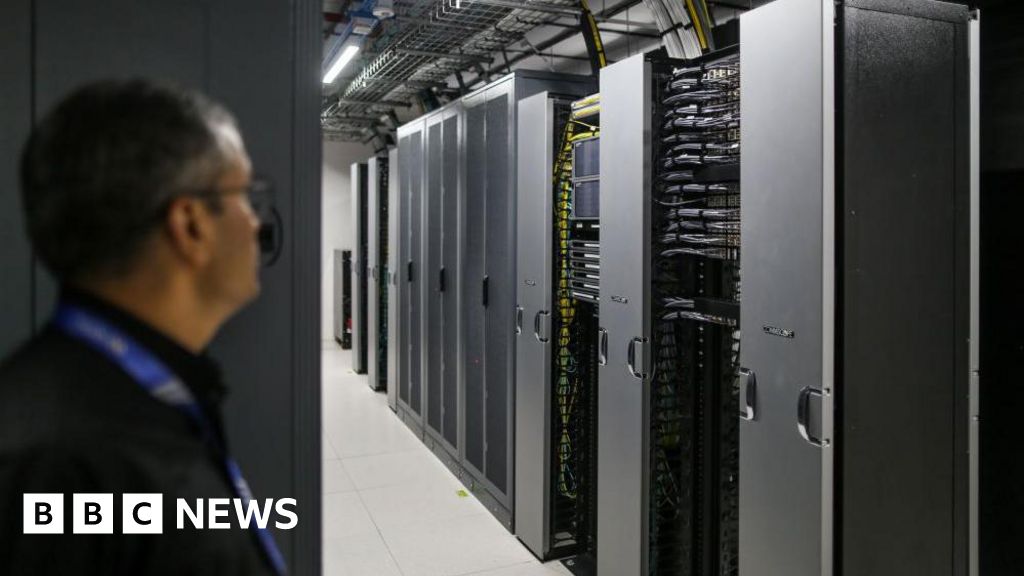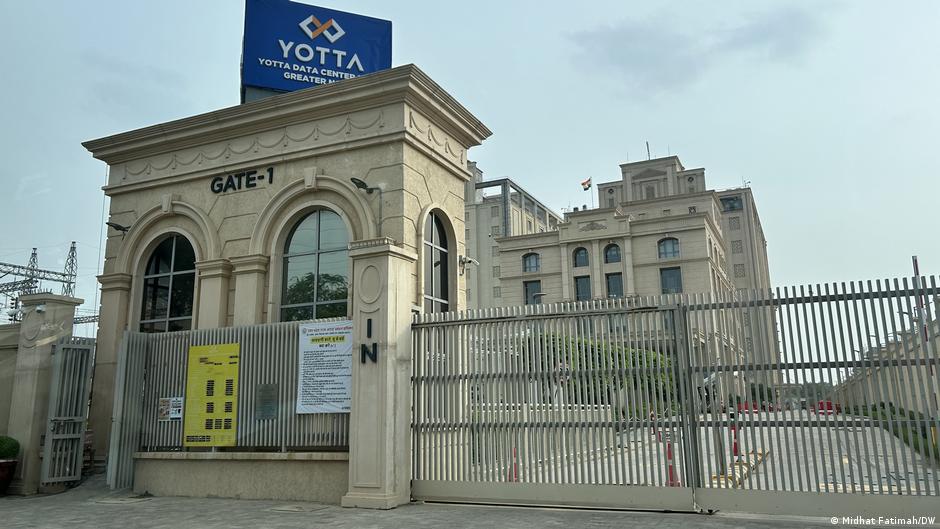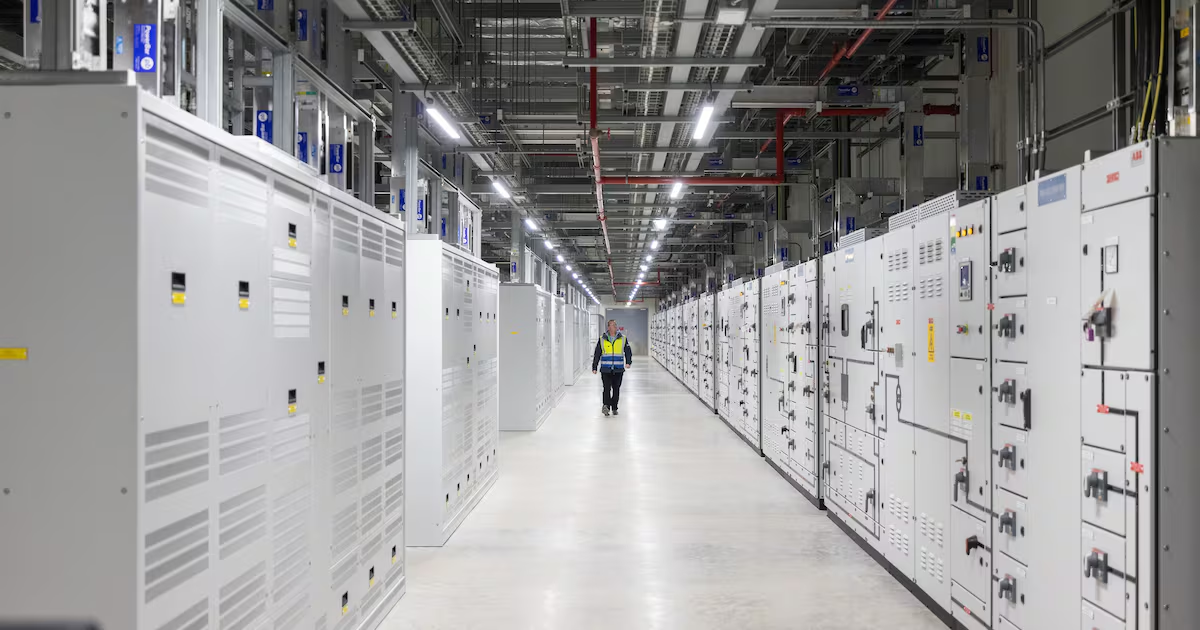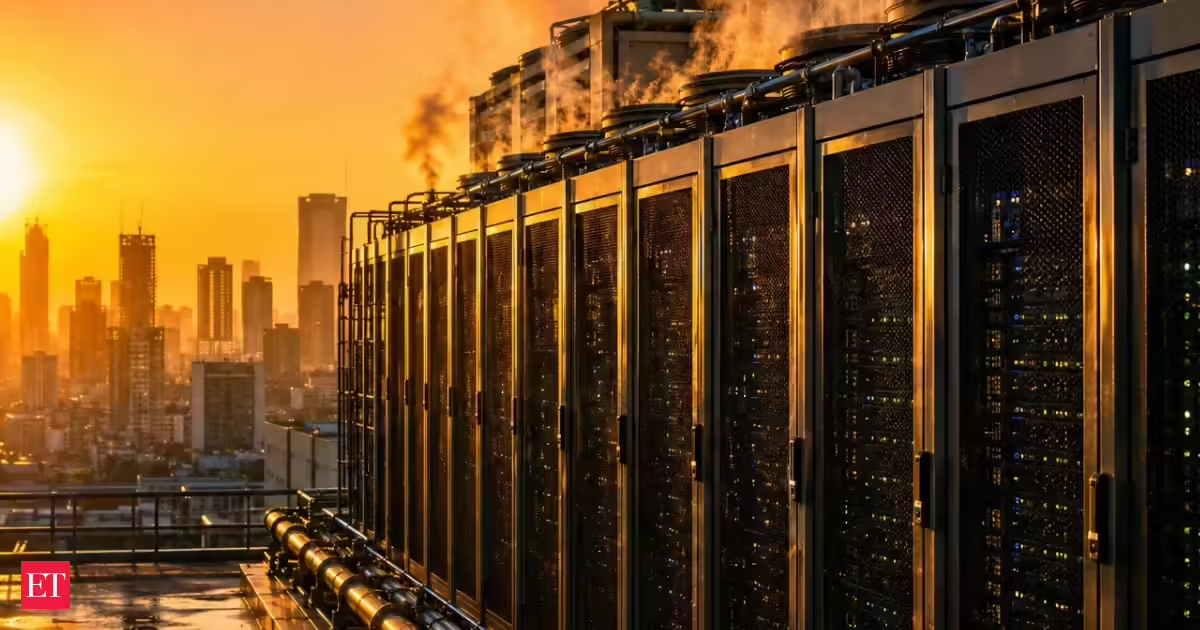
Artificial intelligence, cloud computing, fintech, e-commerce, digital governance and streaming services — India’s digital economy is racing. But even as the nation positions itself as a global digital infrastructure hub, its technological backbone, the data centres, might begin to sweat, quite literally, from extreme heat.Mango orchards and coconut stalls are no longer the lush, green and tropical reality of Indian summers — they are turning brutal. Heatwaves nearing the 50°C mark are arriving earlier, lingering longer and striking harder with each passing year. Also Read | India generates record power as demand surges in severe heatwaveIn 2024 alone, India recorded 554 heatwave days across different regions — more than double the 230 reported in 2023, Union Minister Jitendra Singh said in Parliament on December 4, that year. The summer of 2025 offered little respite. Heatwave conditions set in unusually early, parts of Rajasthan neared 48°C, more than 30 weather stations crossed 43°C in April alone, and the IMD warned of an “above-normal number of heatwave days” across large parts of the country.And for India’s rapidly expanding data centre ecosystem, an industry built on uninterrupted cooling, it is troubling news. The concern is stark: every additional degree of heat outside a data centre forces cooling systems to work harder inside. That means higher electricity consumption, rising water demand and mounting operational costs. Also Read | US firms commit over $60 billion investment for data centres in last 6 months: Piyush GoyalIndustry experts now warn that India’s trillion-dollar digital ambitions may increasingly collide with the physical realities of this warming climate.According to a Press Information Bureau release from March, India’s data centre capacity has already expanded more than 1,500 MW by 2025, and is projected to touch nearly 6.5 GW by 2030.At the same time, climate researchers are warning that much of this infrastructure is being built in regions already vulnerable to severe heat stress.“More than half of India’s existing data centres already experience temperatures above 35°C for over 90 days a year, and projections suggest that by 2040, nearly 90% could face such conditions,” said Dr Vishwas Chitale, Fellow at the Council on Energy, Environment and Water.The hidden cost of heatData centres are essentially giant warehouses filled with servers that must operate continuously without overheating. The systems themselves generate enormous heat even under normal conditions. A perfectly efficient data centre would have all electricity going directly toward computing. But in reality, a large portion of electricity is consumed by cooling systems, backup infrastructure and power management. Extreme heat can tip this out of balance.When outside temperatures rise dramatically, maintaining stable internal conditions becomes far more difficult — cooling systems must run longer and at higher intensities.Dr Chitale warned that “cooling systems in data centres will need to work harder and longer, increasing electricity demand, operational costs, and dependence on water-intensive cooling technologies.”He added that this becomes particularly concerning for India because “many facilities are concentrated in already heat-stressed and water-stressed urban regions.”Currently, the country’s major data centre hubs — Mumbai, Hyderabad, Chennai, Bengaluru and Noida — are located in densely populated urban regions already facing rising temperatures, stressed electricity grids and growing water scarcity.Shailesh Tyagi, Partner and Sustainability & Climate Leader at Deloitte South Asia, said that global estimates suggest “extreme heat, drought, and related climate hazards could significantly increase operating costs for data centres over the coming decades.”He added that “cooling and thermal management are increasingly becoming central to infrastructure planning and investment discussions.”Meanwhile, the scale of future energy demand could be enormous. India’s AI push is expected to significantly increase computing workloads in the coming years, particularly through hyperscale facilities and GPU-intensive AI training infrastructure. Such systems generate far more heat than conventional cloud storage operations, further intensifying cooling requirements, noted a Deloitte report from 2024.A Council on Energy, Environment and Water report on India’s data centre infrastructure and resource use has highlighted how digital infrastructure growth is becoming deeply linked to questions of power and water sustainability. Tyagi, meanwhile, said the current financing ecosystem still largely treats cooling “as a capital expenditure requirement rather than climate resilience as a long-term operational risk.”That distinction matters.Investors may currently be funding cooling systems as part of basic infrastructure costs. But as climate conditions worsen, the industry may increasingly need to rethink the economics of where and how digital infrastructure gets built.ET OnlineIndia’s AI push is expected to significantly increase computing workloads in the coming years, particularly through hyperscale facilities and GPU-intensive AI training infrastructure.Competing for waterElectricity is only one side of the story. Water may become an equally serious flashpoint.Many advanced cooling systems depend heavily on fresh water. In a country that houses nearly 18% of the world’s population but possesses only around 4% of global freshwater resources, the implications are profound.The challenge is especially visible in urban clusters where municipal systems are already struggling to meet residential demand.As temperatures rise, conventional cooling systems consume more water through evaporation-based processes. AI-driven infrastructure expansion could further accelerate this demand.According to Tyagi, “major data centre clusters continue to expand across cities such as Mumbai, Hyderabad, Chennai, Bengaluru, and Noida, where urban water demand is already significant and cooling requirements are expected to increase further with rising temperatures and growing AI-driven computing workloads.”The emerging debate can be framed as one of “cooling versus quenching” — whether cities can sustainably support both massive digital infrastructure and growing urban populations under worsening climate stress.Tyagi argued that a sustainable roadmap would require integrating digital infrastructure planning with “water governance, urban planning, and climate resilience.”He outlined several technologies that could help reduce pressure on freshwater systems, including direct-to-chip liquid cooling, immersion cooling, adiabatic cooling and closed-loop cooling systems.One major solution could involve treated wastewater.“Greater adoption of treated wastewater reuse and closed-loop cooling systems could also help reduce long-term dependence on freshwater resources,” Tyagi said.Where freshwater alternatives fall short, geographical and natural advantages offer radical new pathways. A 2025 study by IIT Bombay highlights Deep Seawater Cooling (DSWC) systems as a highly viable, energy-efficient, and water-neutral alternative to conventional systems. By harnessing the naturally available, stable low temperatures of deep seawater, DSWC eliminates the reliance on precious municipal freshwater resources entirely. The study notes that the feasibility of DSWC hinges on comprehensive sequential planning—incorporating seabed profiles, pipeline strength, erosion/deposition velocity limits, and diameter optimisation.The sector may also increasingly face stricter regulatory scrutiny around water consumption.Tyagi suggested that future government frameworks may eventually require mandatory water-stress mapping for large data centre projects, especially in highly stressed urban regions.The broader concern is that India’s digital expansion cannot continue as an isolated infrastructure story disconnected from environmental realities.Dr Chitale stressed that “planning data centres alongside energy, water, and land-use systems” would become critical if India wants its digital ambitions to strengthen resilience “rather than create new points of stress.”ET OnlineInvestors are currently be funding cooling systems as part of basic infrastructure costs.The geography factorThe climate crisis may not only change how data centres operate. It could also reshape where they are built.Traditionally, India’s data centre industry has clustered around major metros because of fibre connectivity, enterprise demand, skilled workforce availability and proximity to consumers.But rising temperatures are beginning to influence location strategies.Tyagi said “ambient temperature is becoming an increasingly important consideration in infrastructure planning because it directly influences cooling loads, energy use, and water consumption.”That could trigger gradual geographic diversification over time.Cooler regions at higher elevations offer lower ambient temperatures, potentially reducing cooling intensity for large parts of the year. Coastal locations also present advantages through seawater cooling opportunities and submarine cable connectivity.Tyagi pointed to the growing focus on coastal locations such as Visakhapatnam as evidence that “thermal economics and infrastructure efficiency are increasingly influencing site-selection strategies.”Still, he cautioned against assumptions of a dramatic migration away from existing hubs.Tyagi warned that Himalayan regions themselves are not climate-proof solutions. They carry risks linked to seismic activity, landslides, extreme weather and fragile ecosystems.“The more likely scenario is not a singular ‘northward migration,’ but a gradual geographic diversification of digital infrastructure across multiple climate zones and emerging tier-2 and tier-3 locations,” he said.This means India’s digital future may evolve into a more distributed architecture rather than one dominated exclusively by traditional metropolitan clusters.For now, however, the country's data centre boom continues at full speed.India wants to become a global digital infrastructure powerhouse. AI adoption is accelerating. Cloud investments are surging. And demand for data storage continues to explode.
Beating the Heat: India’s data centre dream and the 50°C reality in its path
India's digital economy is expanding rapidly. However, extreme heat is straining its data centers. Rising temperatures increase cooling needs, leading to higher electricity and water consumption. This poses a challenge to India's trillion-dollar digital ambitions. Experts warn of increased operational costs and potential water scarcity. Future planning must integrate digital infrastructure with climate resilience.
1,393 words~6 min read