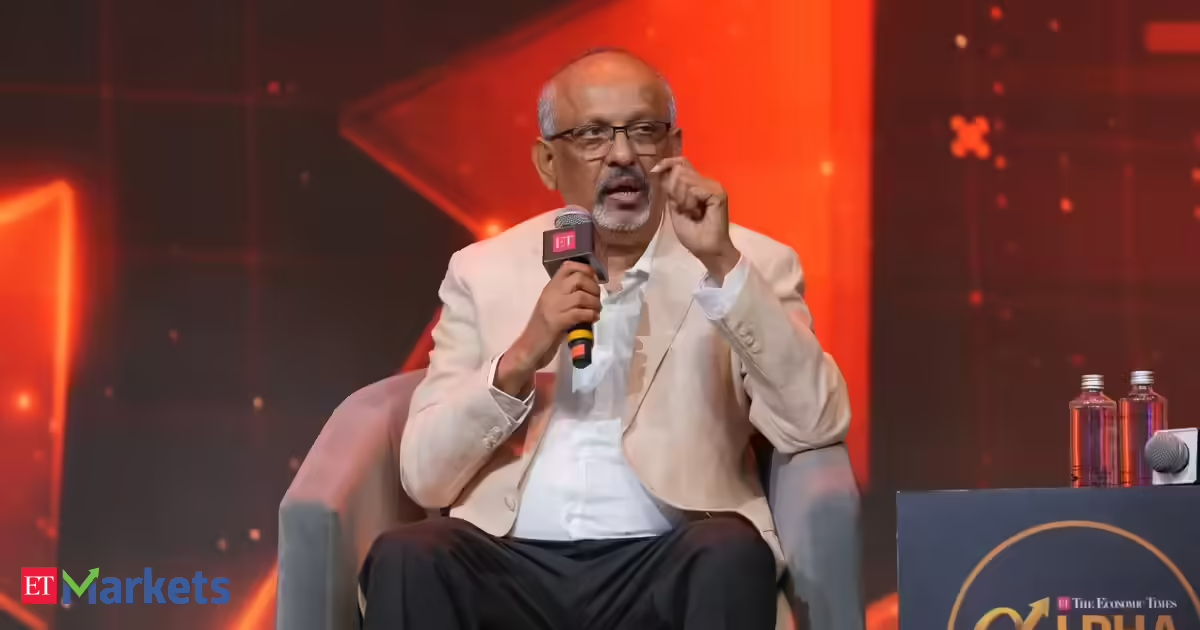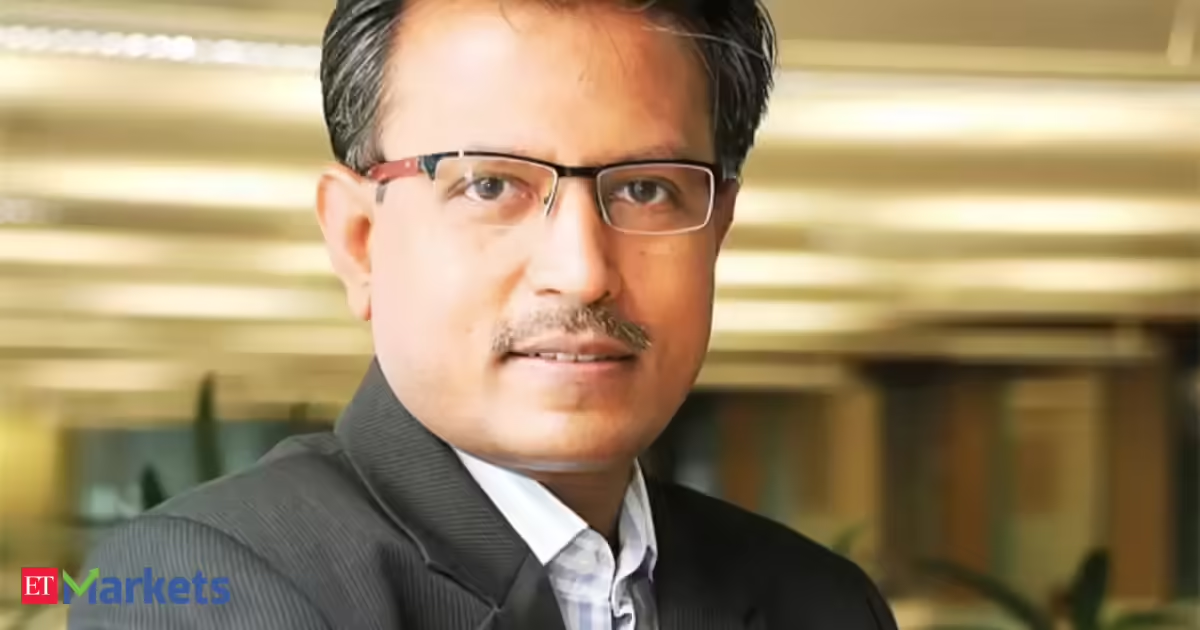
SynopsisIndia's energy self-sufficiency is a decade-long investment theme, driven by aggressive electrification to reduce import dependence. Experts highlight solar, storage, and nuclear power, alongside transmission infrastructure. The shift to EVs faces rare-earth bottlenecks, prompting domestic innovation. AI offers another significant, albeit different, growth avenue. Investors should manage thematic risks by scrutinizing receivables and diversifying across value chains.ETMarkets.comIndia's push toward energy self-sufficiency will be one of the defining investment themes of the next decade, according to Nilesh Shah, Group President and Managing Director at Kotak Mahindra Asset Management, who told a wealth summit panel that the recent oil price shock has exposed vulnerabilities the country must now address through aggressive electrification.Speaking at ET Alpha Wealth Summit panel discussion on the topic 'Global or Local? The New Allocation Reality', Shah said the current energy crisis, while painful, is far less severe than the 1990 crisis that forced India to pledge its gold reserves. But the episode has reinforced the case for reducing import dependence — and that, he argued, is a multi-year theme rather than a one-or-two-year trade.Other than Shah, Rajeev Thakkar, Chief Investment Officer and Director at PPFAS Asset Management and Rajesh Saluja, Co-Founder, CEO & MD, ASK Private Wealth were also part of the panel discussion.Solar, storage and the power mixShah laid out a roadmap built around four power sources where India is largely self-sufficient: solar, solar rooftop, thermal and nuclear. He noted that India already produces more power than it needs during daytime hours, meaning further solar capacity will require complementary investment in pump storage and battery storage solutions to manage the surplus.Geography adds another layer, he said. Because most solar generation is concentrated in western India, the buildout will also require significant investment in transmission infrastructure and transformers to move that power across the country, while nuclear and thermal energy continue to rely on their own established vendor ecosystems.You Might Also Like:The rare-earth bottleneckGenerating power is only half the equation, Shah said — using it efficiently is the other. He pointed to the shift from petrol and diesel engines to electric and hybrid vehicles as a critical next step, but flagged a strategic risk: replacing oil dependence on the West with a new dependence on the North, given that rare earth materials needed for electric motors are concentrated there.In response, he said, Indian companies are pursuing two parallel paths — developing rare-earth-free electric motor technology, with three domestic companies already working on it, and exploring mining options. Shah also pointed to the gradual shift from LPG to piped natural gas (PNG) and induction cooking, while cautioning that induction technology will need further refinement to address health hazard concerns before wider adoption.AI as the other side of the coinAlongside electrification, Shah highlighted artificial intelligence as a starkly different but equally significant opportunity, even though India currently has relatively few pure-play AI companies. He recounted a conversation with an entrepreneur who described AI as democratizing access to knowledge once confined to institutions like MIT, Stanford and Harvard — compressing R&D timelines and accelerating product development for companies that previously couldn't compete with global players holding dominant market share.Shah was candid that such ambitions may or may not succeed, but said the willingness of entrepreneurs to think at that scale is itself a signal worth watching. He framed electrification and AI as opposite ends of the same opportunity spectrum — one driven by large-scale infrastructure buildout, the other by bottom-up technological leapfrogging — and said investors have meaningful opportunities across both.You Might Also Like:Handling the drawdownsPressed by moderator Sonia Shenoy on the risks of direct stock investing within thematic plays — citing 30-40% drawdowns in solar pump companies tied to receivables issues — Shah said investors shouldn't hesitate to cut losses when the original thesis breaks down. He advised closely scrutinizing the quality of receivables, particularly when payments depend on cash-strapped state governments, and assigning a realistic probability to recovery before deciding whether to hold or exit.He added that thematic investing should rarely be approached through a single stock. Instead, he said, investors are better served by looking at the entire value chain within a theme, which can offer more resilience than betting on any one company's execution.You Might Also Like:Read More News on(What's moving Sensex and Nifty Track latest market news, stock tips, Budget 2025, Share Market on Budget 2025 and expert advice, on ETMarkets. Also, ETMarkets.com is now on Telegram. For fastest news alerts on financial markets, investment strategies and stocks alerts, subscribe to our Telegram feeds .) Subscribe to ET Prime and read the Economic Times ePaper Online.and Sensex Today. Top Trending Stocks: SBI Share Price, Axis Bank Share Price, HDFC Bank Share Price, Infosys Share Price, Wipro Share Price, NTPC Share Price...moreless(You can now subscribe to our ETMarkets WhatsApp channel)Read More News on(What's moving Sensex and Nifty Track latest market news, stock tips, Budget 2025, Share Market on Budget 2025 and expert advice, on ETMarkets. Also, ETMarkets.com is now on Telegram. For fastest news alerts on financial markets, investment strategies and stocks alerts, subscribe to our Telegram feeds .) Subscribe to ET Prime and read the Economic Times ePaper Online.and Sensex Today. Top Trending Stocks: SBI Share Price, Axis Bank Share Price, HDFC Bank Share Price, Infosys Share Price, Wipro Share Price, NTPC Share Price...moreless
ET Alpha Wealth Summit | Kotak's Nilesh Shah bets on India's electrification story over next decade; flags AI as the wildcard
India's energy self-sufficiency is a decade-long investment theme, driven by aggressive electrification to reduce import dependence. Experts highlight solar, storage, and nuclear power, alongside transmission infrastructure. The shift to EVs faces rare-earth bottlenecks, prompting domestic innovation. AI offers another significant, albeit different, growth avenue. Investors should manage thematic risks by scrutinizing receivables and diversifying across value chains.
878 words~4 min read