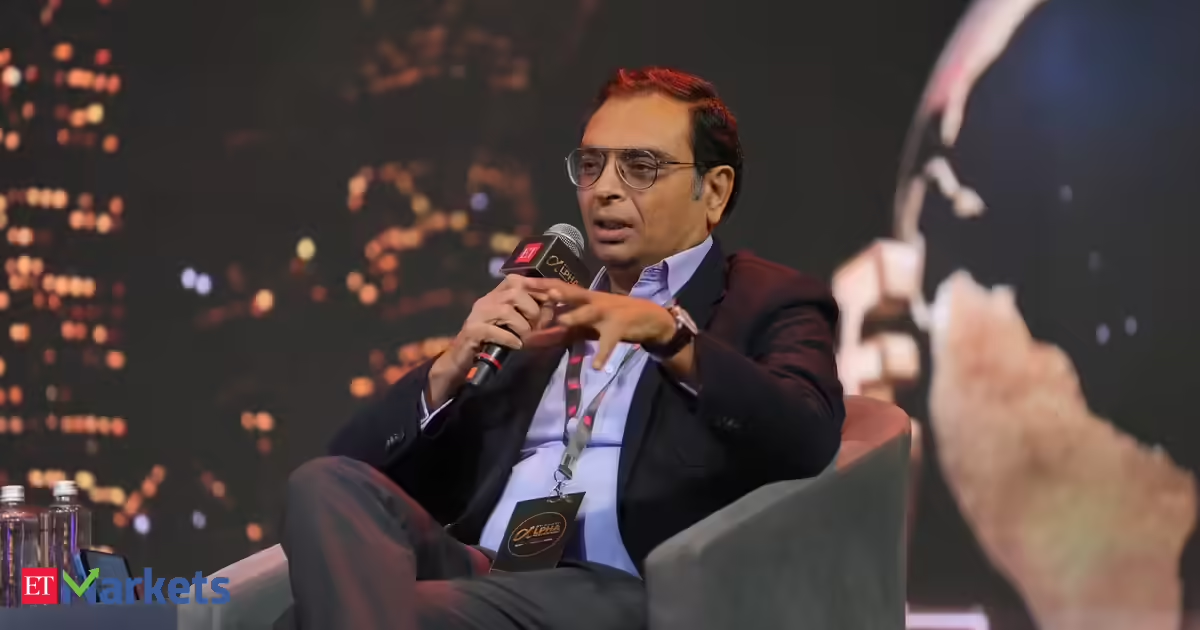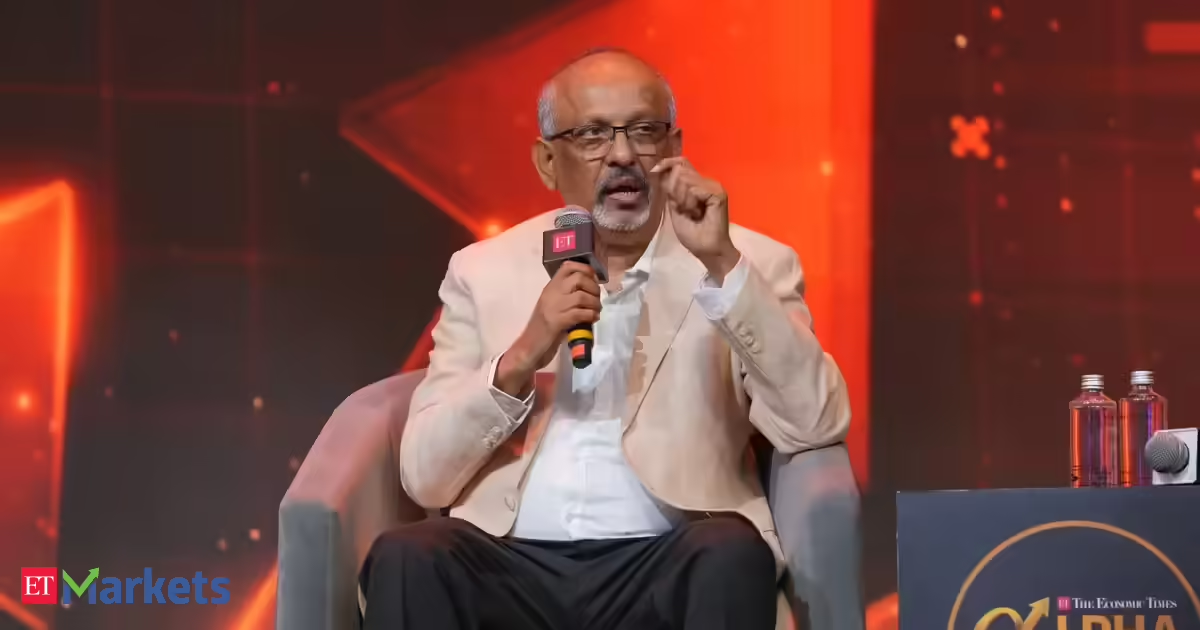
India is no longer a one-sector story. That was the central message from a high-profile panel at the ET Alpha Wealth Summit, where top fund managers gathered to debate on the forces shaping the next ten years of Indian growth, from trade deals and manufacturing exports to mutual fund expansion and the role of artificial intelligence."While we lose out in certain areas because of AI, I think there are enough and more opportunities and AI is an enablement at the end of the day," said Kailash Kulkarni, CEO, HSBC Mutual Fund.At the ET Alpha Wealth Summit, held in Mumbai last week, Kailash Kulkarni along with leading fund managers, Vikas Khemani, Founder & Chief Investment Officer, Carnelian Asset Management & Advisors, Saurabh Mukherjea, Founder & Chief Investment Officer, Marcellus, and Hiren Ved, Director & CIO, Alchemy Capital Management debated on 'India, Amritkaal or AI-Kaal? India's Next Decade'. Kshitij Anand, Editor-Markets & Finance, ET Digital, moderated the panel discussionFrom one sector to six: why India is more resilient todayKulkarni drew a sharp contrast between India's past boom cycles and its current position. "In 1998–2000, we were running on one sector, IT. In 2005–2008, it was infrastructure. Today, we are running on five or six different sectors," he said, adding that even if one stumbles, India can still outpace every other large growing economy in the world.Trade diversification was flagged as a key structural tailwind. India has now signed 10–11 Free Trade Agreements, covering nearly 70–75% of global trade, a dramatic shift from just two years ago when the US was India's dominant trade partner. Mukherjea highlighted manufacturing exports as one of the clearest emerging opportunities.You Might Also Like:"If you do not relearn, we will all become prehistoric animals - that is the amount of change which is happening," said the HSBC Mutual Fund India CEO.AI: A tool, not a threatRather than sounding alarms about AI displacing workers, the panellists framed it as an enabler. Kulkarni argued that Indians have historically excelled at spotting "the next gold rush," and AI fits squarely into that tradition. The key, he said, is agility, people must be willing to reinvent themselves and, crucially, to relearn continuously.For retail investors specifically, Kulkarni sees AI's greatest value in delivering financial information in simple, vernacular language — making markets more accessible to India's vast new investor base rather than threatening it.The mutual fund surge, and a reality check on returnsYou Might Also Like:The financialisation of Indian savings is accelerating rapidly. Even in a subdued year for Indian markets, the mutual fund industry added nearly 8 lakh new investors. With momentum building, Kulkarni projected that a one-to-two year strong run could bring in as many as 2 crore new investors.Historical avg equity return~15%Tax-free return today6.5%Realistic alpha target~12%However, Kulkarni sounded a note of caution on inflated return expectations, which he identified as the single biggest risk in the market today. He noted that when tax-free returns averaged 10–11%, the market's 15% return represented a 50% premium. Today, with the tax-free rate at 6.5%, a 50% premium gets investors to just 10%. A well-managed portfolio delivering 12% should be considered an excellent result, he said, anything above that is a bonus.You Might Also Like:"India is still a growth story and will continue to be a growth story," Kulkarni concluded. The panel's verdict: the next decade belongs to those who stay agile, keep learning, and reset their benchmarks for what strong returns actually look like.
ET Alpha Wealth Summit | India's next decade: AI is an enabler, not a threat; investor expectations the real risk: Kailash Kulkarni
India's growth is diversifying beyond single sectors, with trade deals and manufacturing exports emerging as key drivers. Experts at the ET Alpha Wealth Summit emphasized AI as an enabler, not a threat, and highlighted the rapid financialization of savings. However, a caution was issued against inflated return expectations, with a realistic alpha target of 12% deemed excellent.
571 words~3 min read