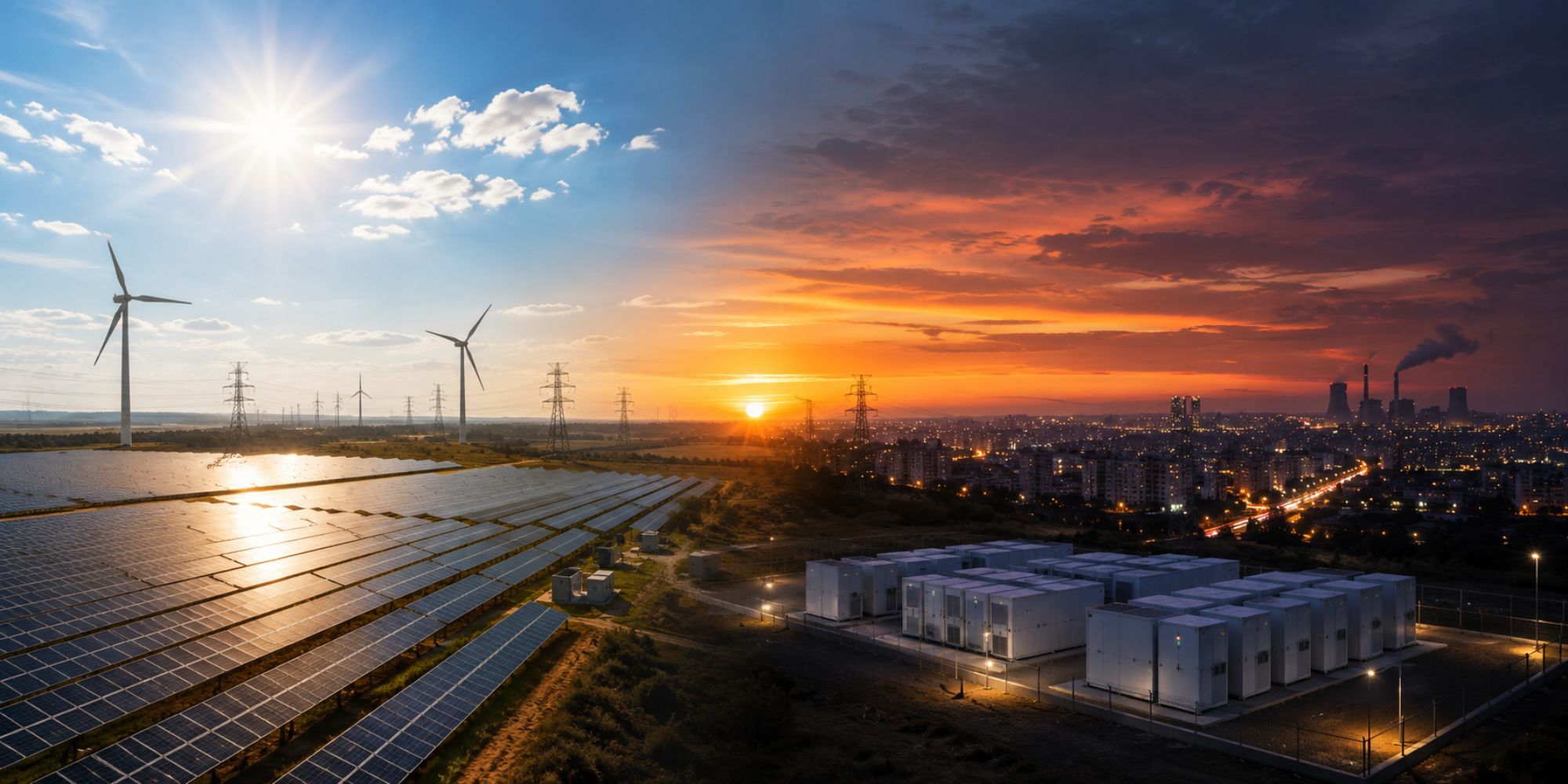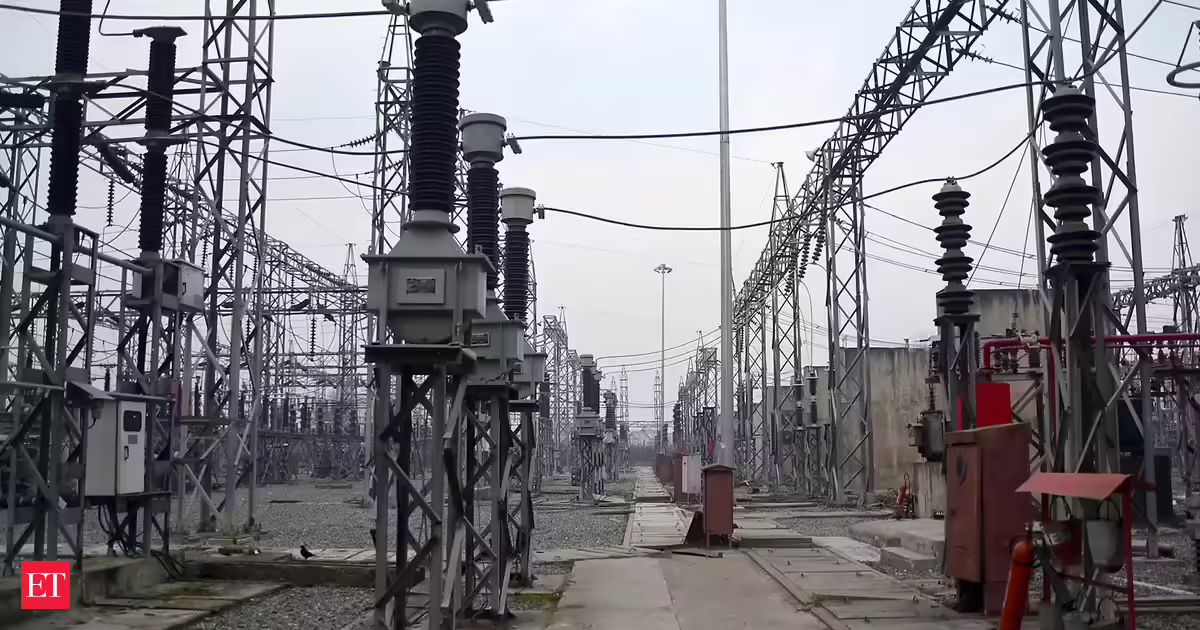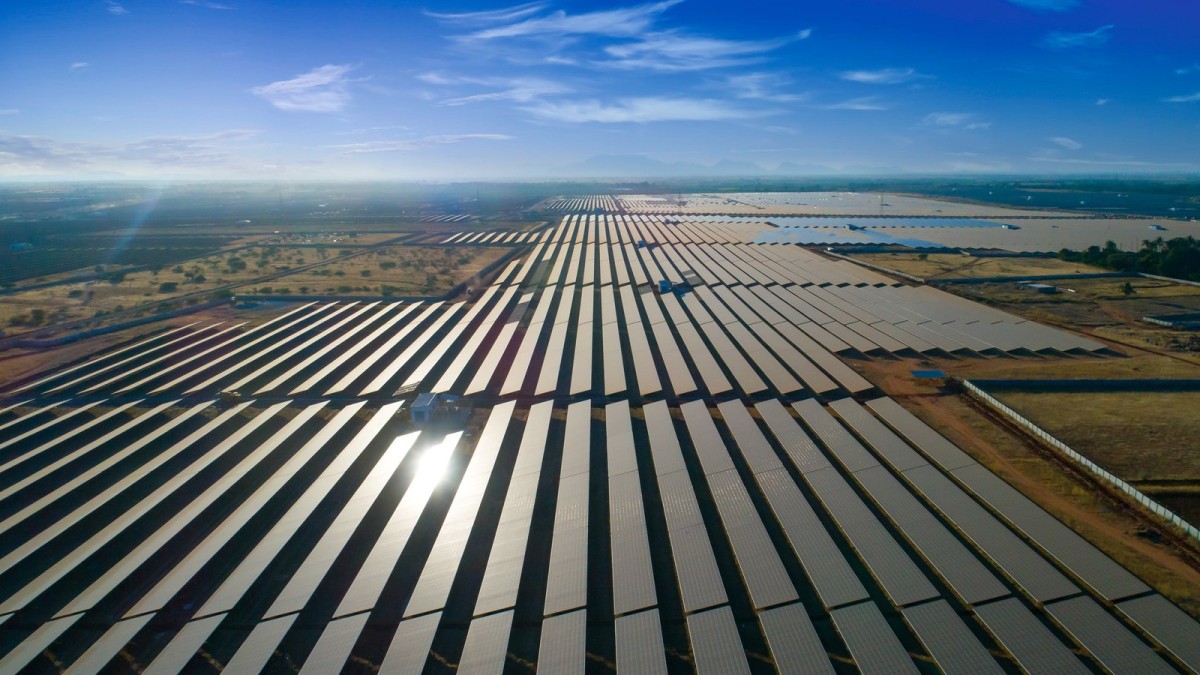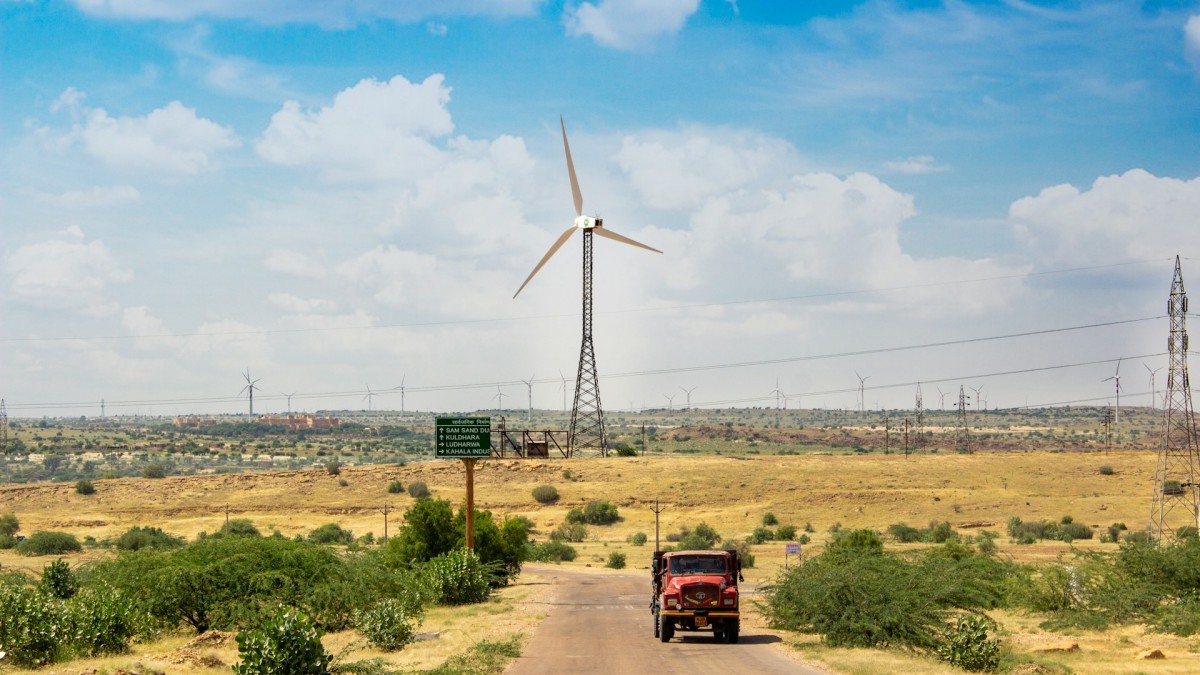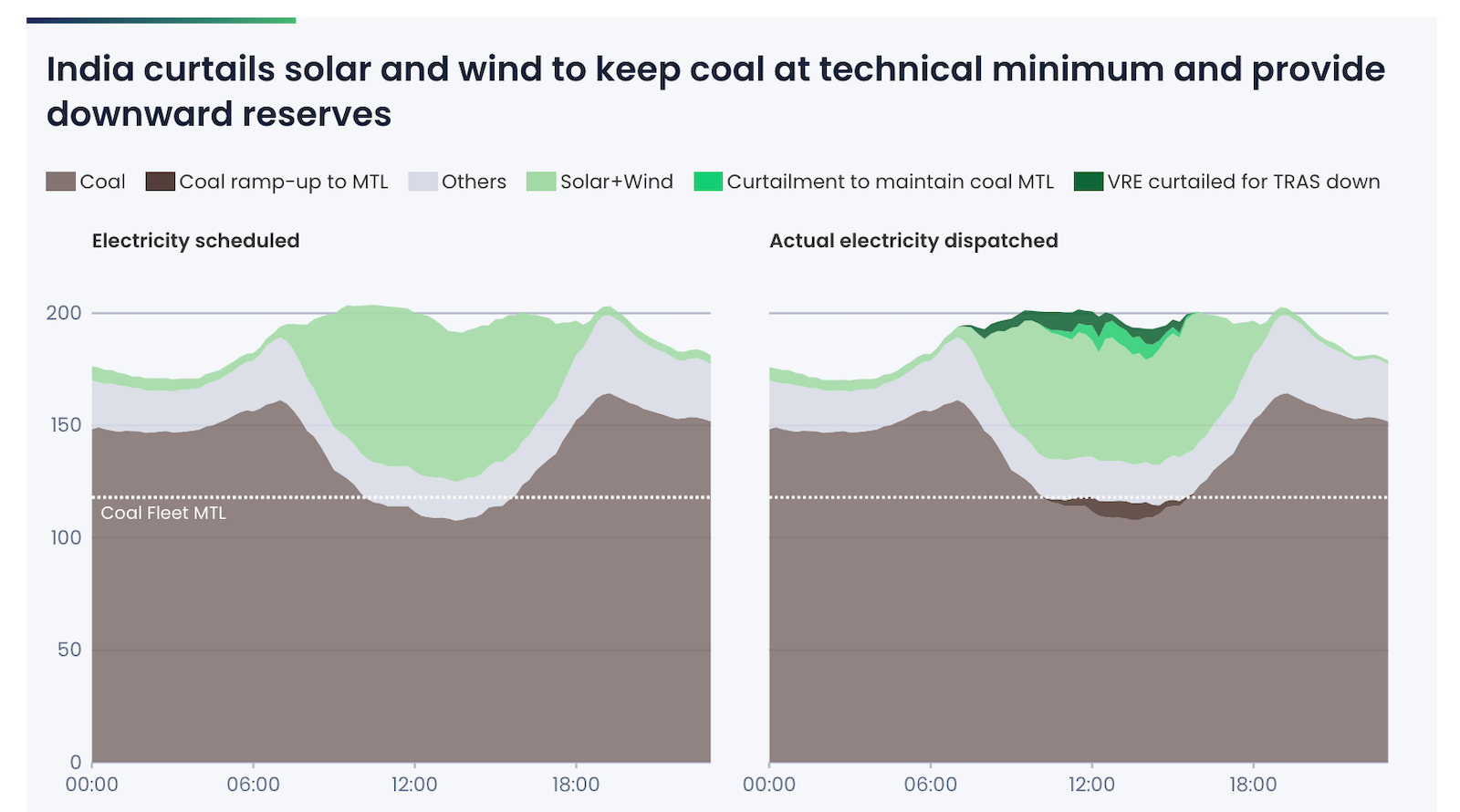
India is leaving tens of gigawatts (GW) of cheap solar and wind power stranded — not because the projects are not ready, but because the grid is not. Upgrading the existing grid with advanced technologies and adding storage at key nodes can unlock 1,000 GW of new clean energy, without acquiring any additional land for transmission.India is on the verge of a major shift in its electricity system. Solar and wind are now the country’s cheapest power sources, and deployment is accelerating, with over 45 GW added in 2025, roughly matching the United States. Paired with some of the world’s lowest battery costs, India can now deliver firm clean power at about ₹3.5 per kWh.Yet, just as technology and prices have aligned, transmission has become the defining constraint. More than 50 GW of clean capacity is already stranded because projects can come online in 12 to 18 months, but transmission takes three to five years to build, slowed by land acquisition, multi-agency approvals, and restrictions on new corridors. Without faster and smarter grid expansion, the benefits of low-cost clean energy will remain out of reach.India has about 250 GW of renewables today, 100 GW under construction, and will need about 2,000 GW by 2050 to meet rising demand and electrify industry and transport. This implies one of the largest transmission build-outs anywhere in the world. The question is no longer whether India must build more lines — it must —but whether new lines alone will suffice. They will not. India needs both major new transmission and far better use of the network it already has.Creating clean-energy superhighwaysIndia can unlock the equivalent of nearly 1,000 GW of renewable energy far faster than building new lines by tapping the vast potential of its existing grid. Much of this potential is hidden in plain sight. Four opportunities stand out.Storage unlocks more from the same wires. First, most renewable plants today use their transmission connections only about 25% of the time. For example, solar energy fills the transmission line during the day, but the same connection sits idle during evening peaks and at night. It is a bit like a highway used only during rush hour — busy for a few hours, empty the rest of the day. Adding batteries at the same locations allows power to be stored and delivered during evening peaks and at night, raising utilisation two to three times without new corridors or land. This directly enables the equivalent of 400 GW of additional clean energy.Coal corridors can also carry clean power. Second, power lines connected to coal-based power plants offer another major opportunity. Many high-cost or old coal plants, totalling about 100 GW, operate at low output for long periods despite having valuable transmission connections. Locating solar and wind near these stations allows clean power to use this underused capacity whenever coal units are not fully loaded. In many hours it is cheaper to transmit renewable power than to run the coal plant, giving developers access to scarce grid connection and providing coal plant owners new revenue from underutilised assets. This approach can enable the equivalent of 100 GW of additional clean energy.Using existing substations. A third opportunity sits at existing transmission substations. Many of these locations can take on new grid connections, letting more renewable projects plug straight into the system. Coupling these nodes with batteries can further support peak-demand supply and help manage power flows. Nationally, this could support around 100 GW of additional clean energy.Modern wires can carry double the power. And fourth, much of India’s grid still uses older wires or conductors that sag under heat and restrict flow. Replacing them with high-temperature, low-sag conductors — manufactured domestically — can nearly double transfer capacity on the same towers and rights-of-way. It is like upgrading the engines on a train so it can haul twice as many goods on the same track — no new land, just better technology. This added headroom allows reconductoring to double the clean energy enabled by storage and shared transmission connections — raising the total potential to over 1,000 GW within the current transmission footprint and effectively transforming today’s corridors into clean-energy superhighways.A rapid pathCrucially, these solutions can be deployed within months, not years. They require no new land for transmission, minimal permitting, and far fewer approvals than building new corridors. They can relieve bottlenecks immediately, connect stranded clean power, and let new renewable projects advance while new lines catch up. They also improve grid utilisation and lower the average cost of using the grid.New renewable energy projects will still require significant land, but locating them near coal plants, renewable energy hubs, or substations — where some land and grid access already exist — offers a practical, lower-conflict pathway as suitable land becomes increasingly difficult to secure.India must build new transmission, but it must build it smart. A new line built with advanced conductors and designed to work with storage can carry four to five times more clean power for only a modest additional cost. And with India planning a 40% expansion of its grid over the next decade, costing well over $100 billion and ranking among the world’s largest buildouts, every kilometre must be future-proofed from the start.India will need both approaches. Upgrading and optimising the existing grid offers the fastest relief to today’s bottlenecks, while smarter, higher-capacity new transmission infrastructure will be essential to support the massive renewable energy expansion required in the coming decades.The policy shifts that will determine successIndia already enjoys structural advantages: a unified national grid and a track record of adding transmission capacity faster than many developed countries. In the U.S. and parts of Europe, the inability to connect low-cost renewable energy to the grid has become the most severe bottleneck in the energy transition. As India accelerates renewable deployment, it can avoid this trap through forward-looking policy.Three shifts matter most. First, India’s national electricity regulator has already created enabling rules that require solar plants to make better use of their grid access by pairing with storage. This approach now needs to be implemented and expanded at the State level, with regulators and utilities actively incorporating it into planning and procurement decisions.Second, regulation and procurement norms should reward the use of advanced transmission technologies that cost slightly more upfront but deliver greater system-wide benefits over their lifetime by expanding capacity without the need for new corridors.Third, the coordinated development of large renewable energy zones and optimised transmission corridors is essential to overcome site-selection, planning, and timing challenges, and to enable the efficient movement of vast volumes of low-cost clean energy.These measures will help India sustain its lead in low-cost clean power at a time when industries such as steel, aluminium, cement, data centres and chemicals are increasingly demanding reliable 24X7 electricity at predictable prices. The path ahead is clear: build all the transmission India can — and get far more out of every line. The grid is no longer background infrastructure. It is India’s next engine of growth, and a cornerstone of a low-cost, high-productivity future.Amol Phadke is faculty at the Goldman School of Public Policy at the University of California, Berkeley; U.S. Nikit Abhyankar is faculty at the Goldman School of Public Policy at the University of California, Berkeley, U.S.
India’s cheapest power is here, the grid must catch up
Without faster and smarter grid expansion, the benefits of low-cost clean energy will remain out of reach in India
1,206 words~5 min read