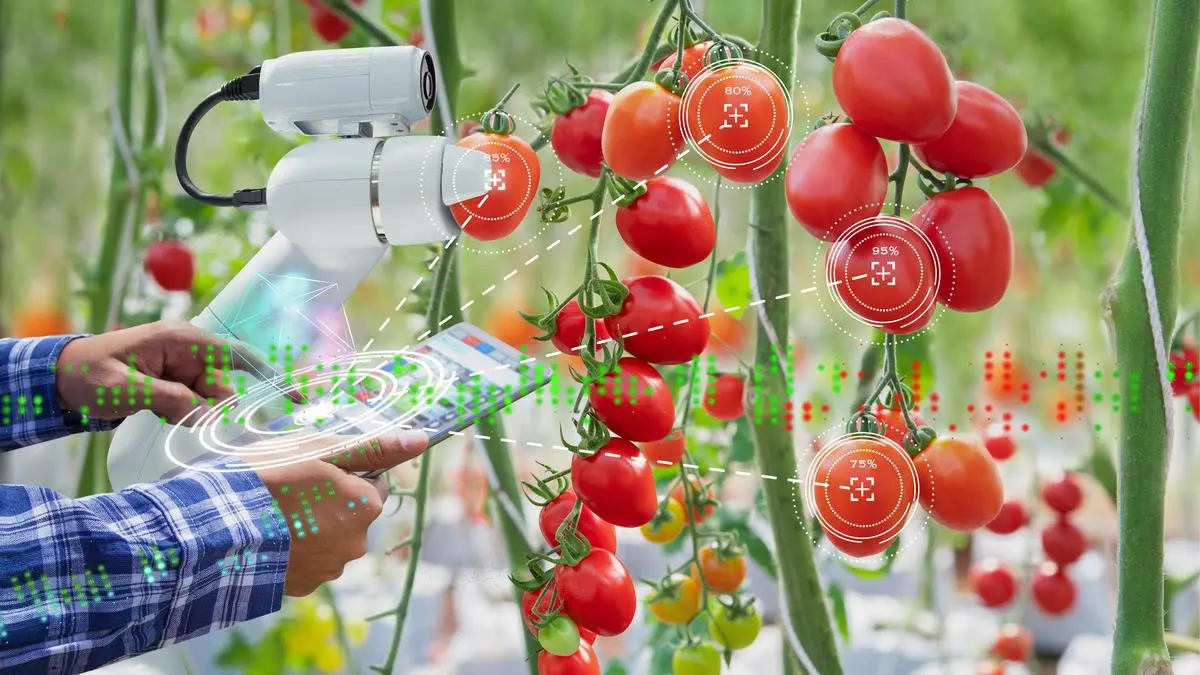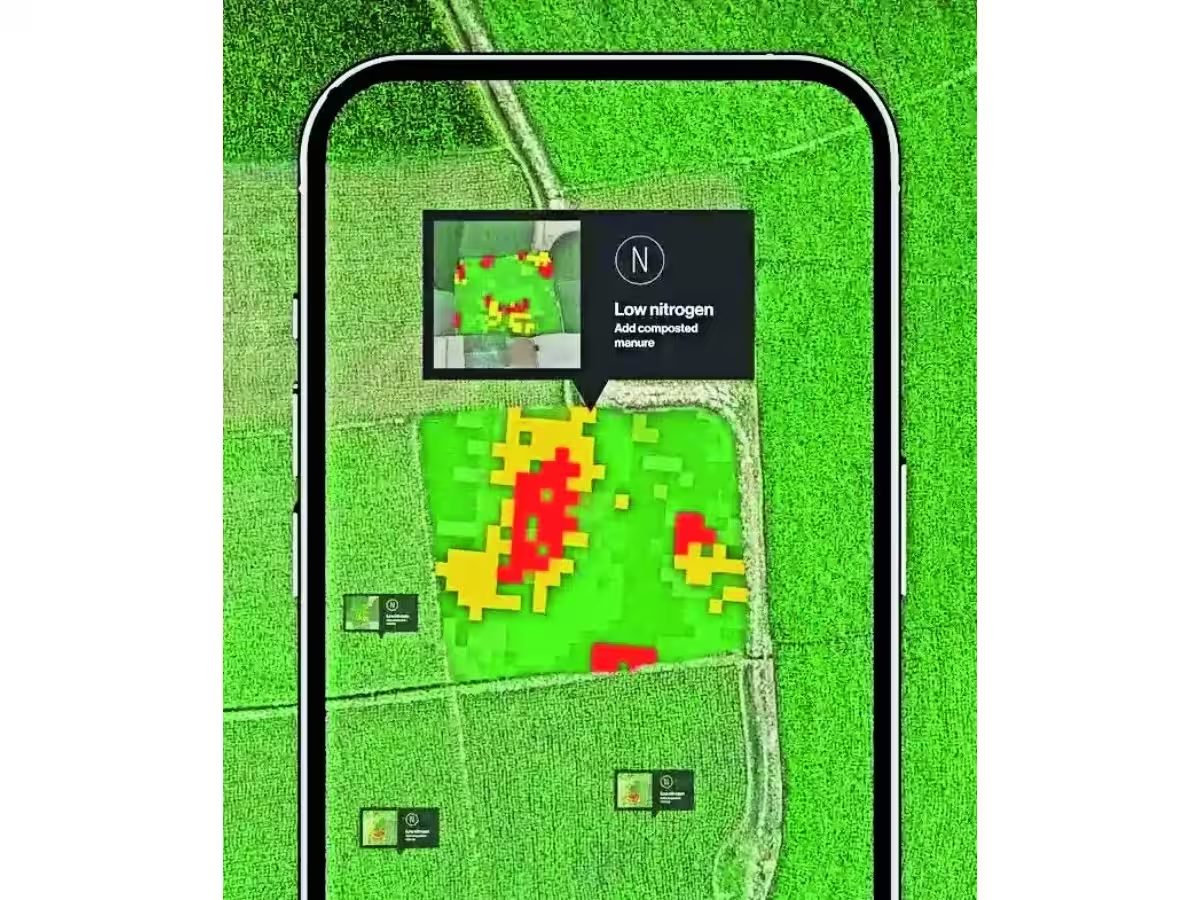
Bharat-Vistaar, an AI-enabled agro-advisory tool was launched in February 2026, with an allocation of Rs. 150 crores in the Union Budget 2026-27. It is one among a growing list of initiatives of the Government of India (GoI), and many State Governments to promote digital agriculture. However, the promise of digital agriculture to improve resource use, bring transparency in service delivery and rural governance, and improve living standards of farmers depends on access to digital infrastructure and digital literacy. We argue that these basic prerequisites to digital agriculture are missing in rural India.Digital agriculture entails continuous and extensive collection, processing, analysis, and maintenance of digital data on all aspects of agriculture, as well as the development and deployment of a range of digital tools and applications across the agricultural value chain. For almost a decade, it has been promoted as a transformatory approach by multilateral organisations, research institutions, and agri-businesses around the world.The Indian policy framework seems to echo this understanding. In 2024, GoI launched the Digital Agriculture Mission with the objective of developing a ‘farmer-centric digital and space ecosystem’, and allocated Rs. 2817 crores. Some State governments including Maharashtra, Telangana, Andhra Pradesh, Uttar Pradesh, have followed suit.Indian agri-tech companies too are investing in developing products and services that employ digital tools across the agricultural value chain – such as seed traceability tools, online trading platform for agri-related products, smart and sensor-based irrigation, AI-enabled agro-advisory services, use of robots and drones for agricultural operations.We use unit-level data from the recently conducted Comprehensive Modular Survey on Telecom (CMST) by National Statistical Office (NSO) in 2025 to examine the reach of digital infrastructure and digital literacy in rural India across social groups and gender. The survey covered 34,950 households and 1,42,065 individuals across India, with rural areas accounting for 19,071 households and 82,573 individuals.Access to digital infrastructureWhile there has been a big rise in number of mobile telephones in rural India in the last two decades, there remain regional differences. As per the Telecom Regulatory Authority of India, in 2025, Kerala was the only state that had achieved a rural mobile tele-density (defined as number of mobile phones per 100 rural population) of more than 100. Tele-density was less than 50 in Madhya Pradesh, Bihar, Uttar Pradesh, Jharkhand, and Chhattisgarh.Our analysis of the unit level data from CMST is revealing. First, we found that 80 per cent of rural households reported access to the internet, but only 8 per cent availed a broadband connection. In short, most households gained internet access through mobile networks.Secondly, at the individual level, around one-half of the rural adult population (51 per cent) said they owned a smartphone and had access to internet in their household. This number was only 37 per cent for adult women in rural areas. Given the increasing role of women in agricultural production, the gender gap in access to smart phones and internet is of concern. Further, ownership of smartphones and internet access varied across social groups. While 57 per cent of the Other Caste individuals owned a smartphone and had access to internet, it was only 44 per cent and 47 per cent respectively among Scheduled Tribe and Scheduled Caste population.Digital literacyWe turn now to the question of digital literacy in rural India. Data from CMST, underlines that 96 per cent of all rural households had at least one member (aged five or above) who had used either a mobile, smart phone or a computer (ICT device). And 90 per cent of these households reported at least one member with the ability to use the internet.The critical feature is the ability to use the internet for informational use and not just for entertainment and communication. In this regard, in 27 per cent of these households no person had the ability to use internet for informational purposes – defined in the CMST as activities such as gaining knowledge, studying or job-related purposes, making digital payment, ticket booking etc. This points to the low levels of digital literacy, which becomes evident when we look at the data at the level of individuals.More than 80 per cent of the rural adult population had used an ICT device in the last three months from the date of the survey. But 48 per cent of them were unable to use the internet for informational purposes. To put it differently, at least 39 per cent of rural adults can be regarded as digitally illiterate, and the number would be even higher if the criterion was ability to use computers instead of mobile phones.The survey also explored levels of proficiency in the use of ICT tools. Only 55 per cent of rural adults with access to smartphones were able to send messages with an attachment, a basic digital task. Only 40 per cent of rural adults with access to smartphones were able to execute online transactions. And with a more complex task, that of reporting cybercrime, the figure drops to just 12 per cent for men and 8 per cent for women.Way forwardThe CMST data clearly shows that the prerequisites for a digital transformation of agriculture – reliable internet, ownership or access to smartphones, digital literacy, and proficiency in executing basic ICT tasks, are far from satisfactory. Even though access to smartphones and the internet has risen sharply, significant sections of the rural population including women and persons from marginalised social groups have limited access to the digital world.What have been the policy efforts to address the observed inequalities in access to digital infrastructure and high levels of digital illiteracy?Kerala has shown the way. It was the first state to recognise access to internet as a basic right in 2019, and in 2025, the State reported universal digital literacy. This was accompanied by public investment of Rs 1500 crores to set up the Kerala Fibre Optic Network (K-FON) to improve the infrastructure for fibre optic network and ensure universal and equitable access to the internet.The experience at the national level, however, leaves a lot to be desired. The Government of India established a Universal Service Obligation Fund (USOF), now renamed as Digital Bharat Nidhi to support the expansion of telecommunication and digital infrastructure in underserved remote and rural areas. Set up in 2002, this fund is financed by a Universal Access Levy (UAL) on the gross revenue of telecom operators.While ₹1,87,036 crore have thus far been collected through the UAL, only around half the amount has been disbursed, and today, the consolidated fund has accumulated more than ₹94,000 crore. Seeing the unspent funds in the corpus of USOF, telecom operators have called for a suspension or abolition of the levy. In a similar vein, the Pradhan Mantri Gramin Digital Saksharta Abhiyan (PMGDISHA) launched in 2017 to improve digital literacy in rural areas, was discontinued in 2024.There is an urgent need to prioritise investments in digital infrastructure and the development of digital skills, particularly among women and disadvantaged social groups in rural areas. This is a foundational requirement to harness the productive potential of digital agriculture – in terms of economic and environmental sustainability. It is critical that the Indian government address gaps and exclusion in access to digital infrastructure, and digital literacy. Even more so because private investment is unlikely to fill these deficits in rural and remote areas (particularly broadband network).Baksi is Director; Kotu is Researcher and Modak is Joint Director, Foundation for Agrarian StudiesPublished on June 24, 2026
Digital agriculture in India: Problems of inclusion
Digital literacy must improve for farm schemes to succeed
1,231 words~6 min read