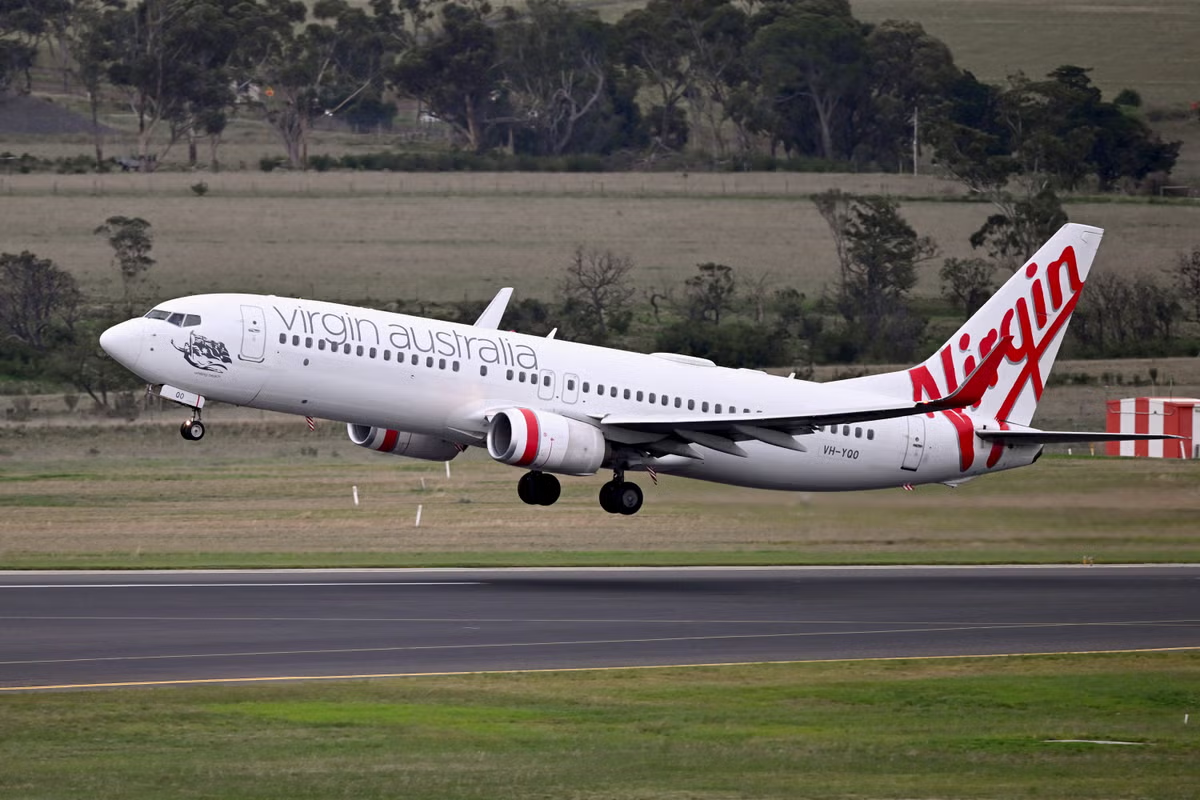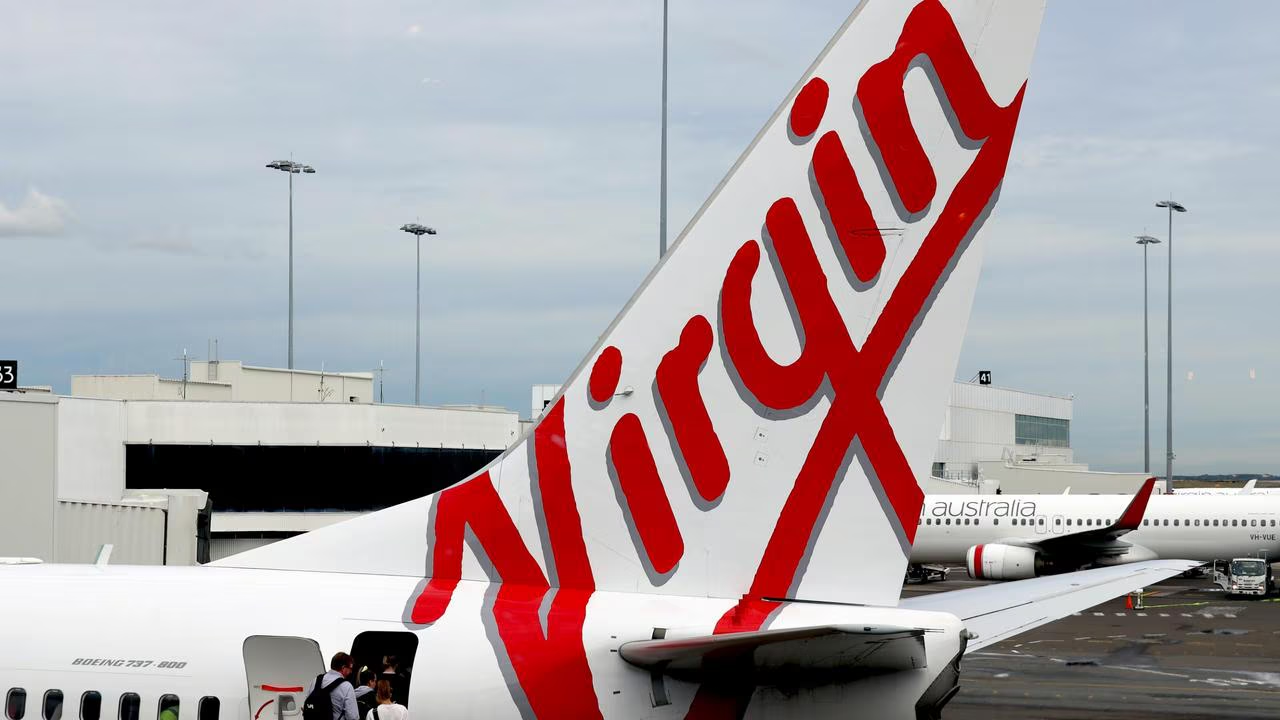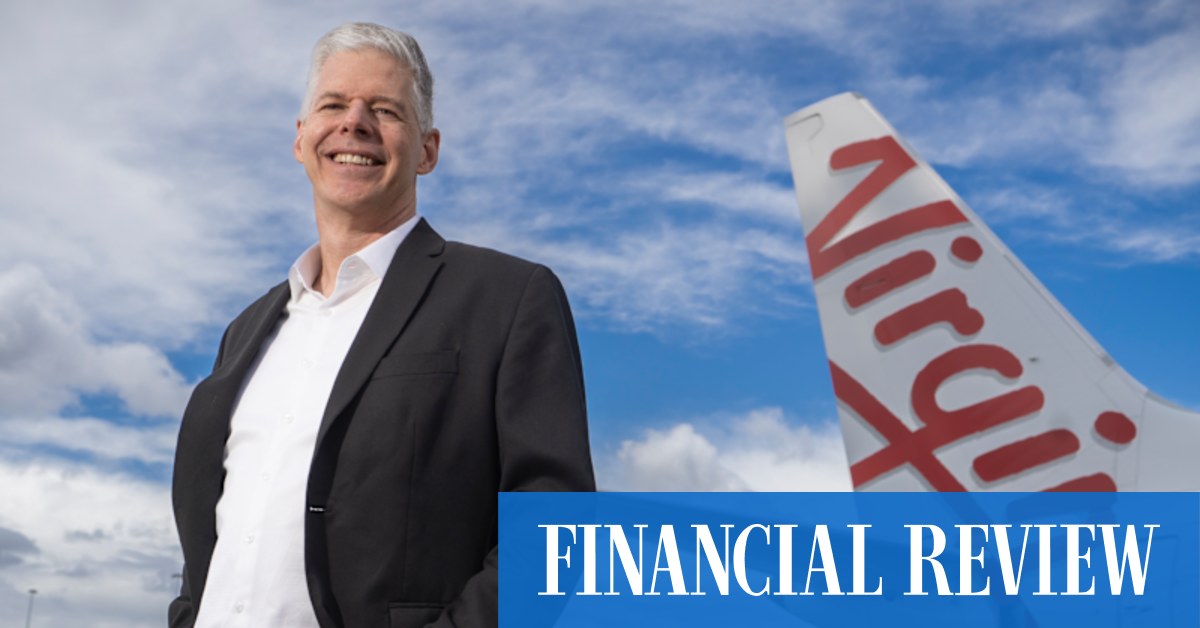
June 24, 2026 — 5:00amVirgin Australia is on the cusp of pocketing the balance of $93 million in travel credits issued during the COVID pandemic that remain unused by its customers, in a move that triggered fury for Qantas three years ago.Passengers have until June 30 to redeem credits issued by Virgin between April 21, 2020 and July 31, 2022, a period when COVID disruptions left many passengers uncertain about flying.Virgin Australia is on the cusp of pocketing the balance of $93 million in COVID credits that remain unused by its customers.APVirgin requires passengers to book by the end of the month – but has extended the period for travel from June 2026 through to May 2027.“Around 90 per cent of all COVID credits have already been redeemed. For customers who still hold a remaining balance, this extension provides additional flexibility to plan and take future travel,” said Virgin CEO Dave Emerson.“We’re extending the travel period for COVID credits and stepping up our customer outreach and awareness efforts to encourage customers to check their balances and use any remaining value for a booking before 30 June.”At its latest results in February, Virgin said it had $93 million in unused travel credits.According to the airline, the vast majority of the remaining accounts with the credits have had no activity in the past three years.The Champagne Mile founder Adele Eliseo believes the credits should be converted to refunds.“It’s difficult to see how a final week of reminders will suddenly solve a $93 million problem,” said Eliseo.“COVID credits represent real money, so it’s reasonable to ask what recovery pathway exists when the original customer is no longer able to use them,” she said.Virgin’s handling of the COVID-era flight credits has come under scrutiny following the saga that created substantial ill will towards Qantas and former CEO Alan Joyce. Qantas initially decided to issue COVID-era travel credits with a hard 12-month window for use, before extending the timeline for expiration on the credits three times. The airline was criticised for making it deliberately difficult for customers to use the credits as the pandemic continued to disrupt air travel.Qantas faced a customer backlash over how it handled COVID-era flight credits.Brook MitchellIn late 2023, amid intense public pressure, Qantas announced it would scrap the expiry date on $570 million in remaining travel credits, allowing Qantas and Jetstar customers to access a cash refund.In March 2026, Qantas agreed to pay $105 million, with no admission of liability, in a class action settlement regarding its flight credits during COVID.The fracas over COVID credits helped spur the government to review consumer rights for passengers, beginning with its Aviation White Paper in 2023.Australia’s consumer aviation reform, which will establish a framework for customer rights and protections, is being debated in parliament this week, before it is passed through to the Senate.The proposed reforms will enshrine the expectations of minimum levels of service from airlines and airports, and create a separate Aviation Consumer Protections Charter.The charter, part of a series of bills designed to enshrine passengers’ rights, sets out the minimum standards that aviation consumers can expect from airlines and airports: an ombudsman scheme to resolve individual consumer complaints, and an Aviation Consumer Protection Authority to enforce the charter.Eliseo said that most Australians “would reasonably expect” these credits to remain recoverable, and “will be watching closely” as aviation consumer protection reforms come into existence, whether they can deliver “meaningful outcomes” for passengers.Even as Australia’s airlines argue the reforms will be a burden to profitable operations, consumer advocates complain that there is no compensation scheme that would give Qantas, Jetstar and Virgin a financial incentive to provide better customer service, like with Europe’s model.‘COVID credits represent real money, so it’s reasonable to ask what recovery pathway exists when the original customer is no longer able to use them.’The Champagne Mile founder Adele Eliseo“Passengers should be entitled to compensation for unreasonable delay within the airline’s control,” Victoria Roy, chair of the travel law special interest group, within the Australian Lawyers Alliance, wrote in a submission on the proposed legislation. The ombudsman should also “have power to make binding determinations awarding such compensation,” she said.European regulation applies penalties to airlines when passengers are delayed at the fault of the carriers.This month the EU flagged plans to simplify and enhance consumer protections for passengers.A three-hour delay caused by an airline would entitle passengers to €250 ($410) for all flights of 1500 kilometres or less, €400 for all intra-EU flights or flights between 1500 kilometres and 3500 kilometres, and €600 for all other flights.Australian passengers leaving from European ports are also covered by these rights.The EU changes will also protect passengers from having their return flight cancelled if they miss an outbound flight.Under the changes, European airlines must display the ticket price including one piece of carry-on baggage at the start of the booking process, making it easier for passengers to compare fares across different airlines.The Business Briefing newsletter delivers major stories, exclusive coverage and expert opinion. Sign up to get it every weekday morning.Chris Zappone is a senior reporter covering aviation and business. He is former digital foreign editor.Connect via X, Facebook or email.From our partners
Virgin set to pocket up to $93m as customers run out of time to cash in COVID credits
Unlike Qantas which, under pressure, removed all expiration dates from credits, Virgin is giving passengers only until the end of this month to book flights.
861 words~4 min read