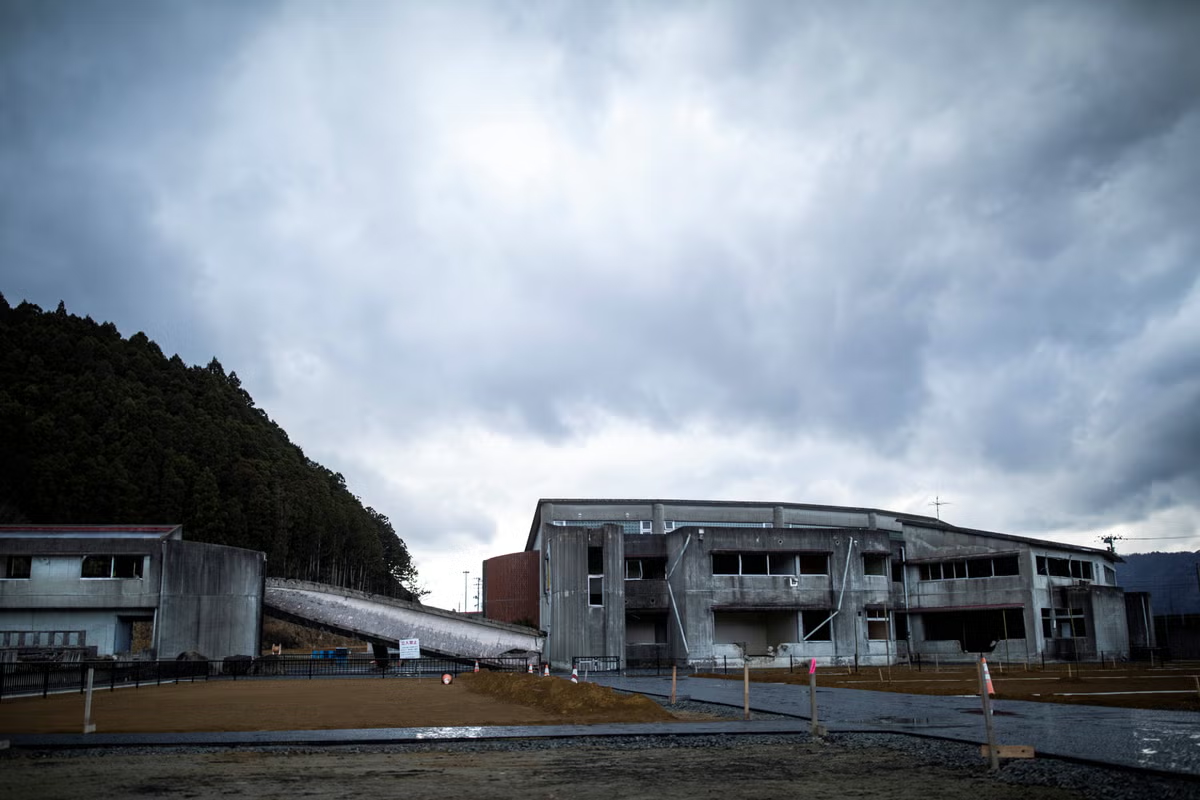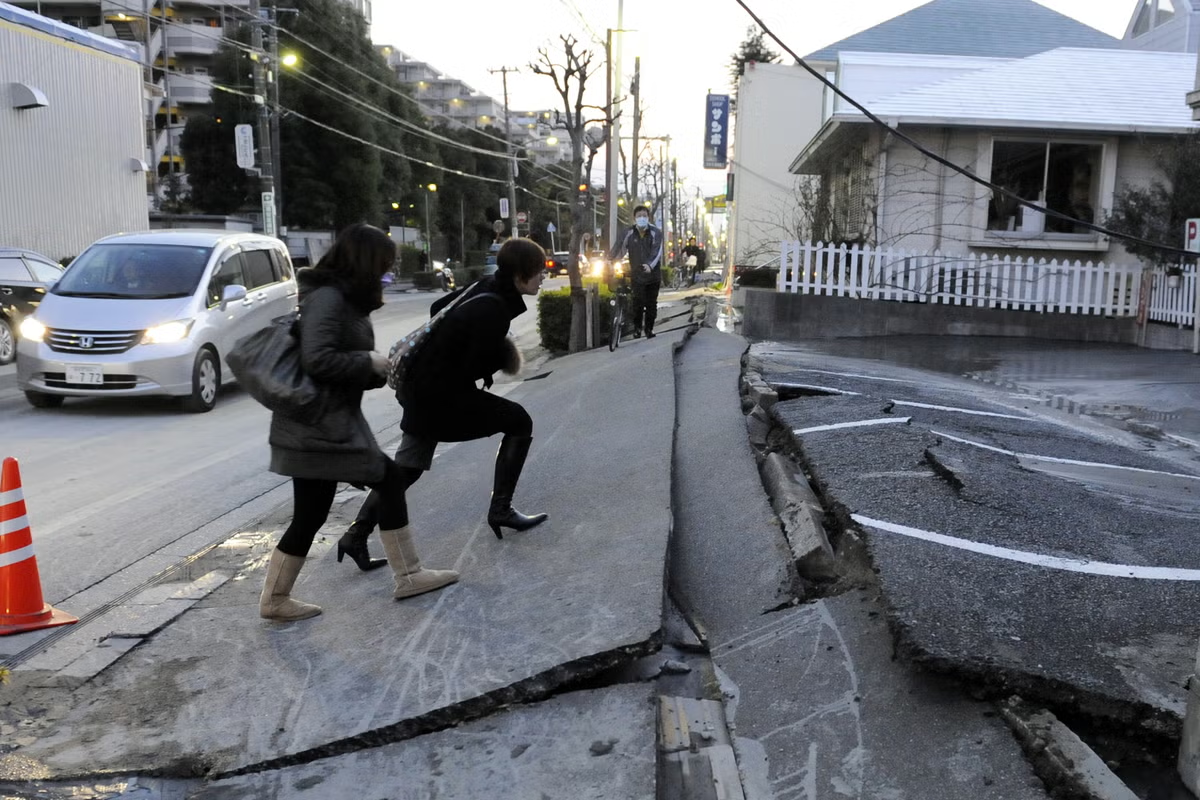
When massive 9.0 magnitude earthquake shook Japan on March 11, 2011, the ground also made a more lasting move. About 15 minutes after the event began at 2:46 p.m. local time, nearly the entire country shifted eastward, according to GPS station measurements.
The lurch was small — 5 to 6 millimeters, or 0.20 to 0.24 inches — but permanent and at the time went largely unnoticed or was passed off as a data glitch. However, University of Chicago geophysicist Sunyoung Park felt the recorded signals that indicated a shift pointed to something tangible. In fact, the ground movement reflected an “extraordinary” and previously undocumented seismic phenomenon, according to a new study.
“What was unusual about this movement is basically the whole of Japan was moving nearly uniformly at the same time,” said Park, who led the research.
She added that the movement, which affected mainland Japan — Hokkaido to Kyushu — an area approximately 1,800 miles (3,000 kilometers) in length, did not match the timing of the initial earthquake, and it happened before any significant aftershocks.
After years of analyzing GPS and seismic data, Park and her colleagues found that waves from the earthquake had traveled down to Earth’s core and then rebounded to the crust, displacing four major tectonic plates.