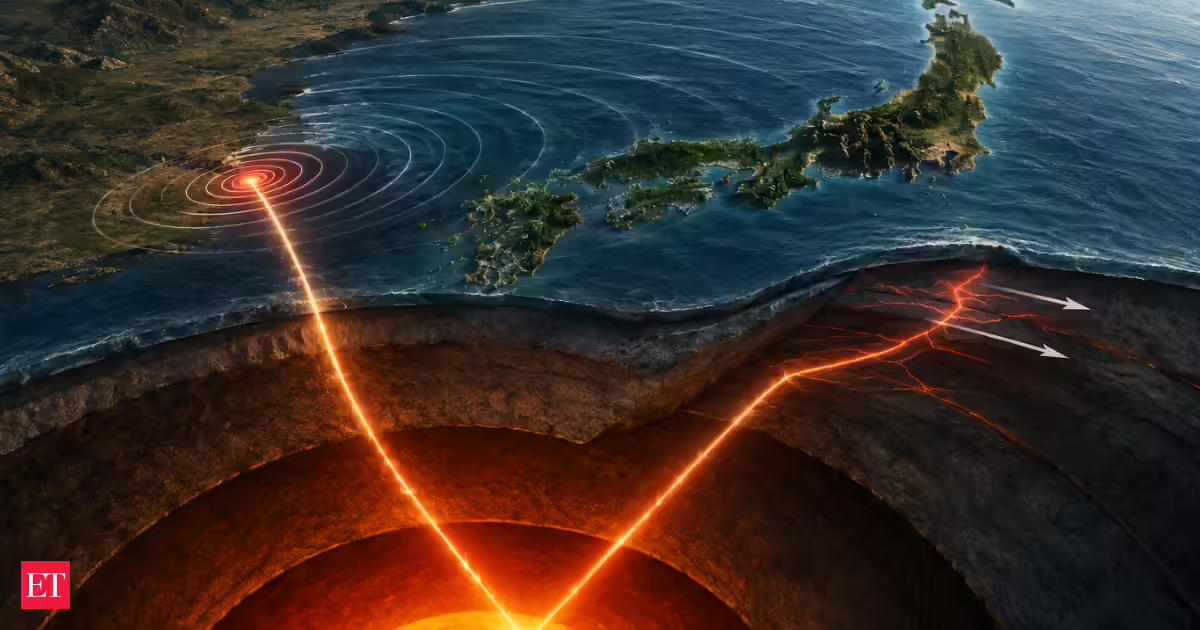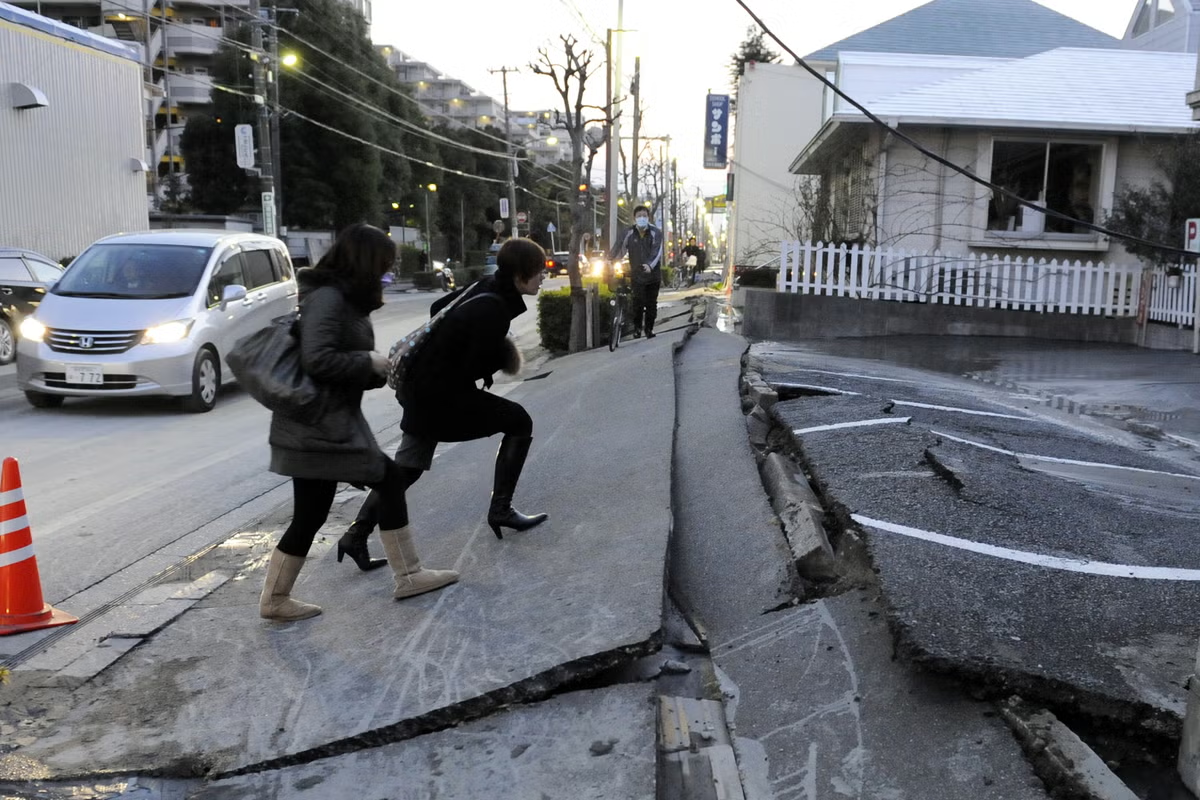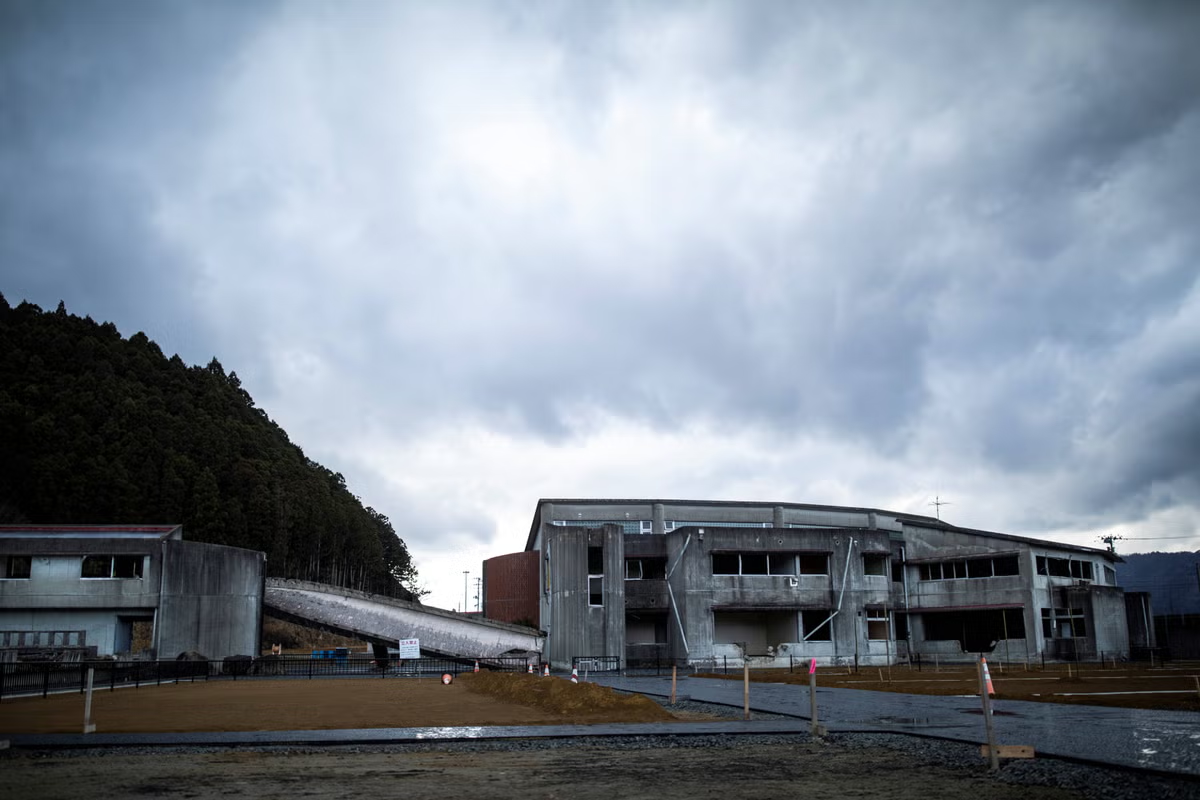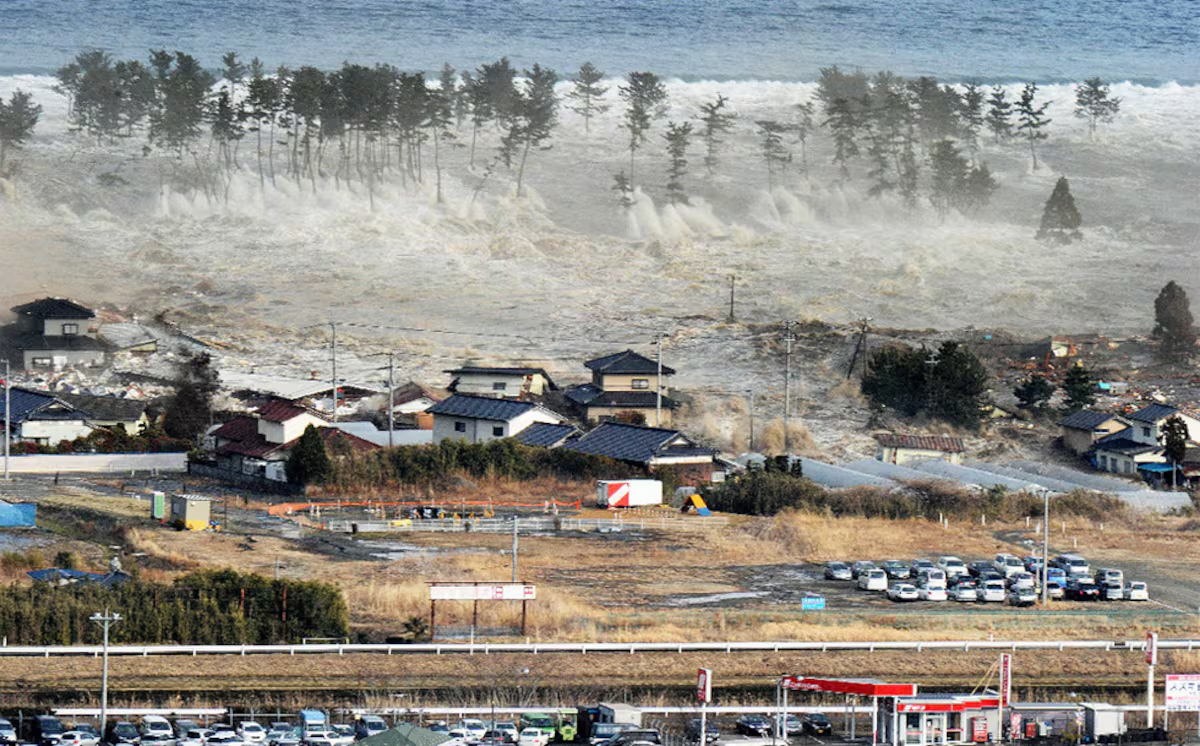
In March 2011, the magnitude 9 Tohoku earthquake struck off the northeast coast of Honshu, Japan. Violent ground shaking lasted for about six minutes and triggered a massive tsunami, ultimately killing more than 18,000 people. But 15 minutes after the main shock, something strange happened. Researchers led by Sunyoung Park, an assistant professor in the Department of Geophysical Sciences at the University of Chicago, were examining GPS records of the Tohoku earthquake when they noticed an eastward, step-like ground shift of up to 6 millimeters throughout the entirety of Japan. “We were quite puzzled because usually these offset signals are seen when there’s an earthquake, but there was no known earthquake corresponding to this timing,” Park told Gizmodo. What was also unusual, she said, was that the shift occurred uniformly across the entire country all at once and occurred at multiple plate boundaries. In a study published today in the journal Science, Park and her colleagues analyzed this shift and offer a possible explanation for it. Their findings suggest that the Tohoku quake generated a huge seismic wave that traveled deep underground, bounced off Earth’s core, and returned to the surface 13 minutes after the main shock, causing the entire country to shift eastward toward the Japan trench. To their knowledge, it is the first known observation of a seismic event triggered by this type of wave.
Massive Tohoku Earthquake Sent a Seismic Wave That Shifted All of Japan
Researchers discovered an unusual, nationwide shift when examining GPS records of the Tohoku earthquake.
630 words~3 min read