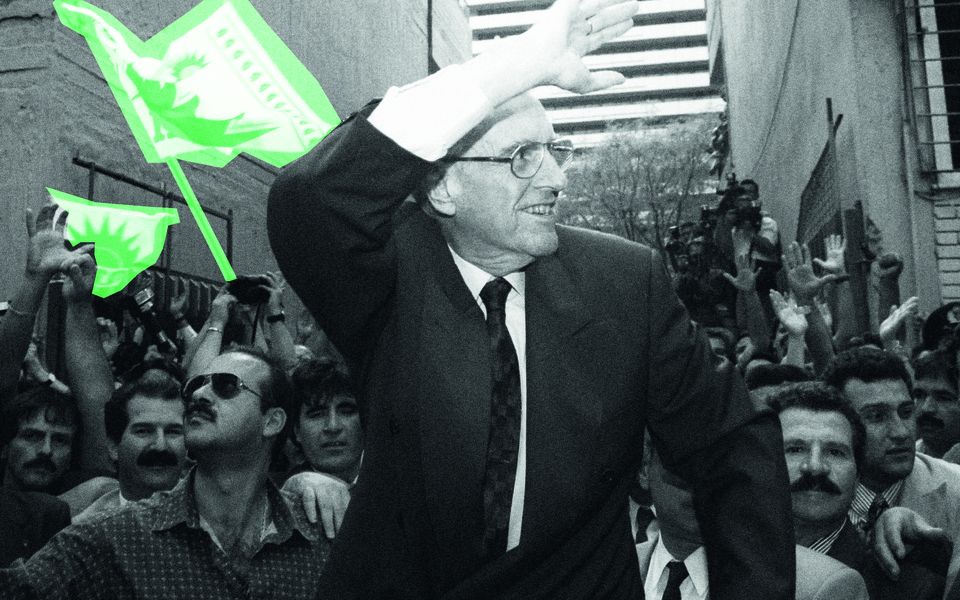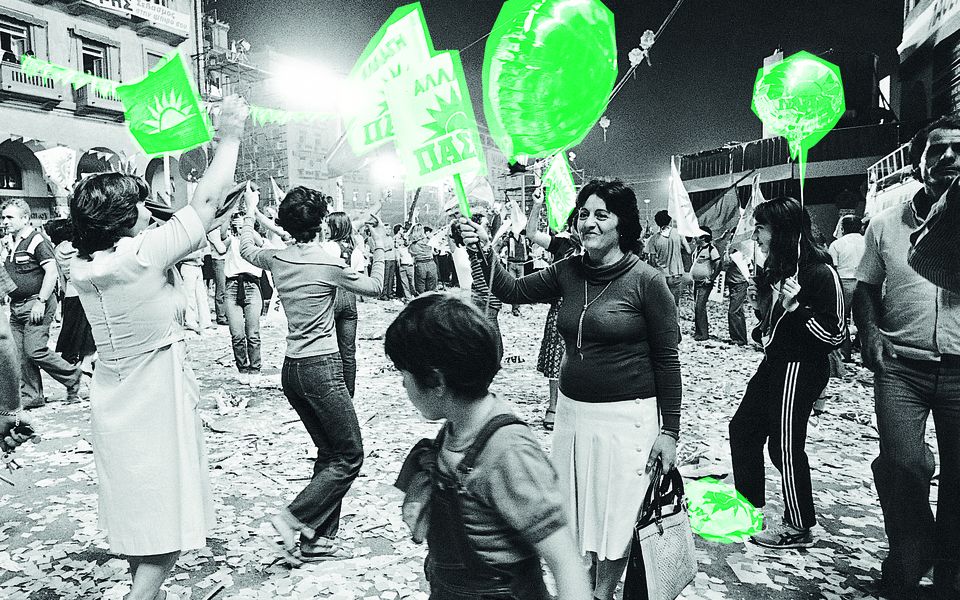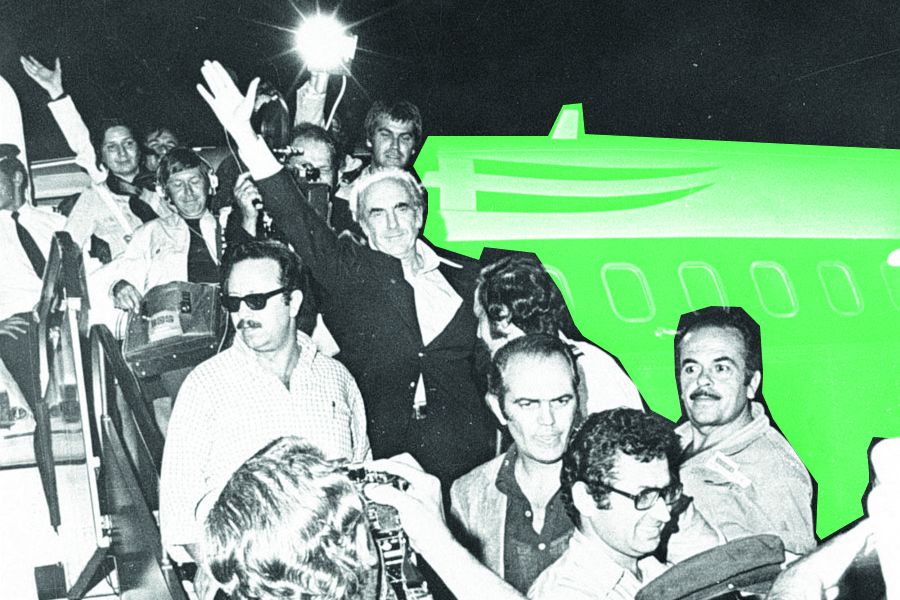
The celebratory reception of Andreas Papandreou at the Elliniko airport on August 16, 1974, upon his return to Greece after the fall of the military junta. [A.G. Papandreou Foundation Archive]
On August 9, 1939, the Athenian newspapers recorded yet another success of the prosecuting authorities in combating the communist threat: the arrest of a student group associated with the “banned” publication “Proletarios” (Proletarian). In one of the suspects’ homes police found a typewriter and a mimeograph – the sacred instrument of illegality. This man was Andreas Papandreou. The 20-year-old law student signed a statement of repentance, named his comrades and left for the United States. The case was archived.
However, Papandreou’s meteoric rise in Greek political life resulted in its “rediscovery.” In 1964, Konstantinos Maniadakis, a former Greek army officer and head of the internal security services during the Metaxas regime, brought out the “Papandreou dossier,” revealing both his communist past and his confession. This was not the last time his past was dug up. Two decades later, right-wing newspaper Eleftheros Typos responded to the fabricated “revelations” by populist Avriani newspaper against the then leader of New Democracy, Konstantinos Mitsotakis, with a similar attack: “Andreas was a snitch during the dictatorship.”