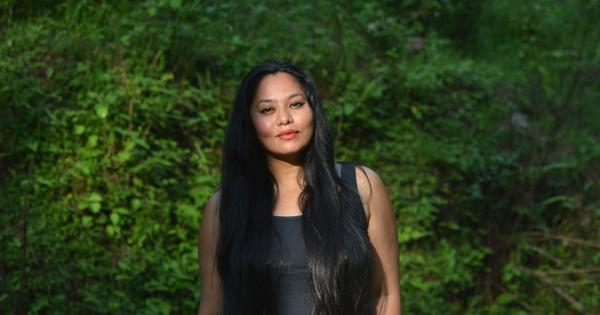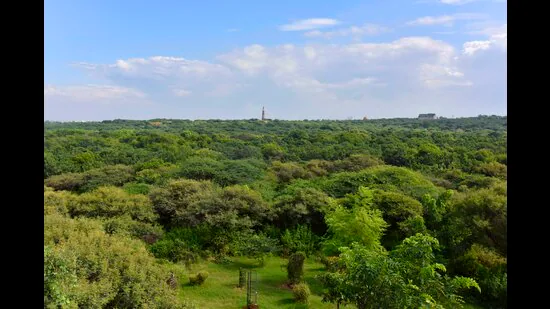
What are some surprising facts about the wild flora and fauna in Delhi?Author Neha Sinha (Courtesy Jaipur Literature Festival)Delhi’s oldest fort, Lal Kot is in Sanjay Van, which is part of the Delhi Ridge Forest. I climbed the fort one night and found a six-spotted ground beetle there. It’s very big and squirts acid if you get too close. I found it fascinating that the oldest fort in Delhi is now colonized by beetles; the beetles were actually there way before forts were ever made. So, in a sense, there are some old places in Delhi which are the same as they were thousands of years ago.There are places that still have native wildlife, native vegetation. Mangar Bani, just at the outskirts of Delhi, is another such place. There are places in the Central Ridge which have very old trees which are part of the Aravalli or the local vegetation and it’s really interesting that you have such old places in a city which is known as the cradle of many empires. So, while we have this built heritage, which is our monuments and our forts and our parliament, you also have this natural heritage. Delhi has more than 400 bird species and every year migratory birds surprise me because every year I see birds that come from Europe and Central Asia. I basically see a tiny bird that has travelled so far and it manages to come to the same place every year. So, sometimes it might be the same bird I see in the same place, year after year; like clockwork, it’s coming. There are a lot of people in Delhi who care deeply about nature and their voices are in the book.So, you have this ancient ridge forest on the Aravallis, you have these migratory birds and you have these big trees. We have an embarrassment of riches in Delhi really and you just have to look. It’s all there. We just have to pay attention.The fact that we still have these big old trees in Delhi is a huge plus. I also found mahua trees in the center of Delhi. It’s an iconic central Indian tree and there are bats that feed on that mahua at one time of the year. So, there are so many bats up in the trees and people are just going about their lives below. I just find it fascinating.The capital is a recurring feature throughout your works. Did growing up here influence your life as a conservationist and author? Absolutely. Many things that were there in my childhood are not there today. Where are the fireflies? Where are the vultures? Where are the plants and trees that I used to see, which I don’t see anymore? Because you have this manicured imagination where everything has to look the same and I really feel everything should look hyper-local. Everything should look hyper-native to that place. No two forests are the same. No two lawns or no two gardens should be the same either. So, it started from a feeling of loss, but it also evolved into a feeling of, what is it that I can do? I grew up in North Delhi and jackals used to call just as the sun went down. There were vultures that would nest opposite my school. There were vultures that would bask on the terrace of my school building in Central Delhi. And then one day, they were gone. What happened? Where did they go? We often talk about how an animal leaving, an animal going extinct, is impacting the environment. I think it also impacts us. Because if you’re growing up without fireflies, or if you’ve never known what a firefly is, perhaps your life is a little less rich.And if you have had the firefly, and then it’s gone, how does it change you? How does it impact our life and our process of living? … It’s not just about Delhi. Most cities will say this today, whether it’s Kolkata trying to save the East Calcutta wetlands, whether it’s Mumbai that’s trying to save the coastline, whether it’s Bengaluru or Pune. People have a right to decide what kind of place they want to live in, they have a right to decide what they see outside their window, they have a right to decide how much nature they want in their lives.So, it’s both a sense of loss, and a sense of what can I do? And maybe if I lived in a place with perfect nature, I wouldn’t be a conservationist. But the fact that I lived in a place that’s always changing, definitely pushed me into conservation.What are the lessons have learnt from your work as a conservationist?The first is that even a little time in nature is good time. It’s okay even if it’s just 10 minutes. It really restores steadiness in our breathing. Trees and plants also give out this phytoncide. It helps with their immunity and when it rubs on our skin, it helps with our immunity. It’s fortifying your immune system. That’s why, when you walk through vegetation, you might feel more fresh or more invigorated. That’s because the trees are sharing their little power with you. Nature also helps me think long term. So, for example, something is devastating me right now and I feel it’s the end of the world. And I look at this tree and it’s going to flower next year because it’s a semal tree. There’s a semal outside my house. I write a lot about semal. It’s going to flower a year later. And I’m just like, in one year, is this thing that’s devastating me right now going to devastate me still? Usually, the answer is no; it’s just something that can be contained. Just thinking at time scales that are longer than the immediate moment have really helped me have perspective in life.Your book points out that certain words have fallen out of our vocabulary. How does your book reclaim these words? One is jugnu, of course. If you ask a lot of kids if they’ve seen a jugnu or know a jugnu, they might not. The other is jungle jalebi, which really is this wild kind of fruit and you don’t really get it in the market. The third is phalsa. I don’t extensively write about phalsa, but I’m trying to talk about these fruits that were once found in markets and were part of our vocabulary that are now not there. And then there’s the coppersmith barbet.It’s a bird that’s found in Delhi. It makes a tuk-tuk-tuk call. And in that chapter, I’m just inviting people to listen for sounds of the natural world. And I’m trying to say that our life has become so noisy that we often don’t hear these sounds. Can we recollect the sounds of our childhood? What were the sounds of the crickets? What were the sounds of the birds? I think our childhood was noisy in a very different way from today. Now, we’re very insulated, with air conditioners running, the windows are shut. Everything is just AI. We need to get out of that. We need to go outward, I think. And I think going outdoors is going outward. I think the two are the same.So, these are the kind of words the book discusses. I also try to recreate the garden of my childhood. Throughout the book, I’m on a quest to find the plants and the bugs, the blister beetle of my childhood garden. I find it again later on in the book and I find some of the plants as well.What should readers take away from your book? To look for nature in their daily lives. To pay attention. And to see if we can try to live a slower life even though our lives are very busy. Spending even a little bit of time in nature leads us to something that can surprise us. Being surprised is a very important aspect of being alive. If we lose the capacity to be surprised, we’re not leading a life that’s really valuable. Nature will always surprise you; whether it’s birds fighting or raising chicks, or whether it’s a monitor lizard that suddenly comes out. Instead of looking at Reality TV (shows), let’s tune our lives to the drama of wildlife. I promise you will come away a little changed and with a life that’s a little bit better.What are you working on? This book is 10 years of my research. So, I haven’t thought of my next. I will soon. Another book. But I don’t know what it is yet.Simar Bhasin is a literary critic and research scholar who lives in Delhi.
Neha Sinha: “Your life is less rich if you’ve never known what a firefly is”
Author of Wild Capital on finding ancient beetles in the Delhi ridge, why spending time in nature is good for you, and yearning for her childhood garden
1,454 words~7 min read