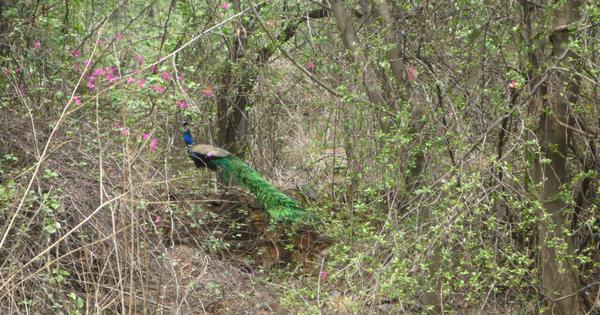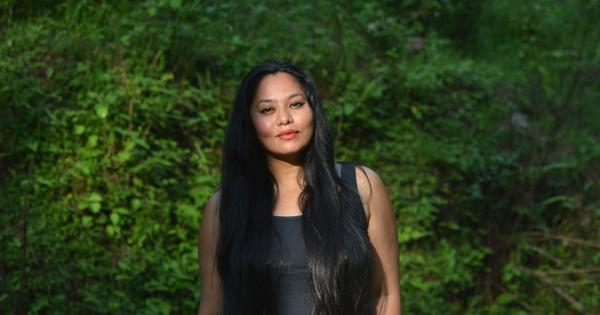
When we think of Delhi, we think of infrastructure, money, and images of the metro snaking through the city. Hives of humans densely populate this ant of a capital with their comings and goings. Yet there is an undeniable expanse of flora and fauna that breathes alongside its people. Against this backdrop, the city is wild for many reasons. Delhi is many things at once.In the late 2000s, biologist Neha Sinha had just graduated and was working as a journalist in Delhi. Five years in, she realised it wasn’t for her, she wanted to work in conservation. “I was focusing too much on negativity,” she said. “I was only reporting what was wrong in the world but I wanted to be part of the solution.”Almost two decades later, she works with the World Wide Fund for Nature (WWF) in New Delhi. Her new book, Wild Capital: Discovering Nature in Delhi, takes on the remarkable task of translating Delhi’s biodiversity to its readers. She writes that she wants to “revel in their non-verbal sense-scape. I must translate what they try to tell me.” What stands out is her awareness that nature has its own agency; she never imposes a rigid meaning upon it, and so her own childhood memories become a tool to resist universality and grant that agency to the natural world. She also democratises the act of birdwatching, making it accessible even to city dwellers who don’t quite know what they’re looking at. Wild Capital begins with a kind of unknowing, a bildungsroman of a little girl deeply tethered to the landscape she grew up in, especially her garden. She takes us on a journey of her escapades in the wild city.Scroll spoke with Sinha while birdwatching in Sanjay Van when the semal trees were in full bloom. Excerpts from the conversation:You write about Delhi as both hostile and nurturing. What does a place like Sanjay Van mean to you?These spaces are layered. There’s an ecological history of species, interactions, and processes that have been unfolding for decades or centuries.At the same time, these places are complicated. When I first started going to Sanjay Van, it didn’t feel safe. Especially as a woman, you’re constantly negotiating your presence. Even now, if you stand by the roadside looking at a tree, people stare. They’re not used to seeing that.So the experience is always bittersweet. You’re aware of the fear, the staring, the interruptions, but you’re also aware of the trees, the birds, the life. And that contradiction is Delhi.And that’s why community matters. Going with friends, building a network of people who share that space with you, that’s how you navigate it.You return often to certain trees like the semal, the palash, as if they anchor your life. What draws you to them?I have rituals around them. Every spring, I go back to check on the semal trees. I count them, I visit them and see how they’re doing. It’s like a pilgrimage. For most people, the calendar is marked by festivals. For me, it’s marked by flowering cycles.There’s something deeply comforting about that. These trees give you continuity. They exist outside your personal upheavals. Even in difficult times like COVID, the palash flowering felt like a kind of reassurance. We need those anchors, something that keeps us going, something that makes sense of the world when everything else doesn’t.The book reads like a memoir. Your life is unfolding through trees and animals. Were you consciously writing yourself into the landscape?I think it happened organically. When you write about nature, you’re also writing about yourself, your memories, your encounters, and your way of seeing.Take something like the papri tree growing out of rock. It’s a chasmophyte and survives in extreme conditions, in cracks where you wouldn’t expect life to persist. When life feels difficult, I think about that tree. Nature gives you these narratives of survival that are not abstract. They’re right there.So yes, I suppose it becomes a kind of natural history of myself, but also of the city. Because you can’t separate the two. The places shape you, and you shape how you remember those places.Your book starts from a point of “unknowing” and that’s probably why it feels so readable. Why is that important?Because certainty is often an illusion.Science itself operates on that principle: this is what we know, this is what we don’t know. And that’s okay.You don’t need to fully understand something to appreciate it. In fact, trying to control everything is harmful. It creates stress, and it disrupts natural systems. People who claim to know everything are far removed from nature, but they are running the world. This is why today we are struggling to explain why the Aravallis are important. We are struggling to explain why ChatGPT, which drinks so much water, should be used sparingly. It is probably only nature that has to prove its “value” over and over again.You return often to childhood, almost as a baseline to measure ecological change. Why is memory so central in your book?Memory is one of the few ways we can understand loss.When I was writing, I kept asking: did I really see these things as a child – fireflies, certain insects or did I imagine them? And if I did see them, are they still here? Sometimes I wasn't sure if it was my mother’s memory or mine. That became a quest. To investigate it and see what remains.And what you realise is that a lot has disappeared. There’s an insect decline globally. Children today may not have seen things that were common in our childhoods like earthworms, slugs, fireflies. That absence shapes us too. Loss is formative.Our childhoods were closer to mud. Mitti (soil) was not dirty. It was just mitti. You played in it, you touched it. Now everything is sanitised. Our sensory experience is mediated through screens.So going back to childhood is not just a way of romanticising. I am also trying to understand what we’ve lost, and what we can reclaim. Even in small ways.
‘The ecological collapse is overwhelming, but observing something alive can counter it’: Neha Sinha
An interview with the author of ‘Wild Capital.’
1,858 words~8 min read