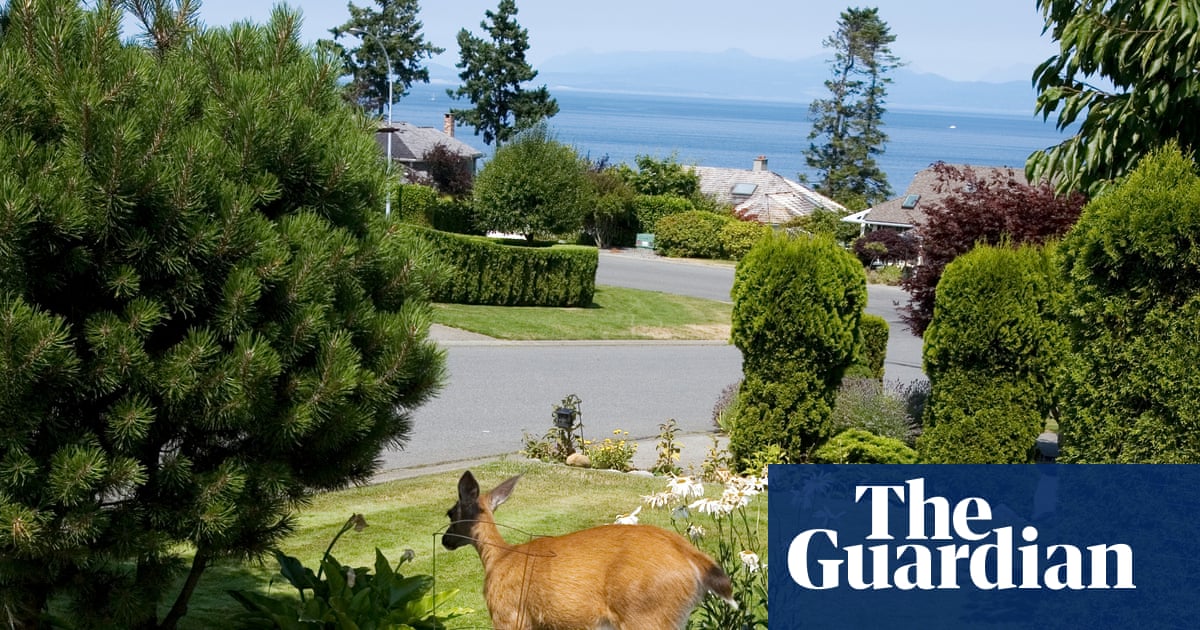
The discovery that affluent neighbourhoods have more diversity of nature has implications for human wellbeing – and sheds light on the structural injustices in cities
F
or a long time, ecology tended to ignore people. It mostly focused on beautiful places far from large-scale human development: deep rainforest or pristine grassland. Then, in the late 1990s, in the desert city of Phoenix, Arizona, scientists shifted their gaze closer to home.
A team of ecologists went out into their own neighbourhood to map the distribution of urban plants in one of the first studies of its kind. Equipped with tape measures and clipboards, they documented trees and shrubs, sometimes getting on all fours to crawl through bushes under the curious watch of local people.
“We had a lot of fun. Little kids loved our measuring wheel,” says Prof Ann Kinzig, from Arizona State University. “It made me look at cities differently.”