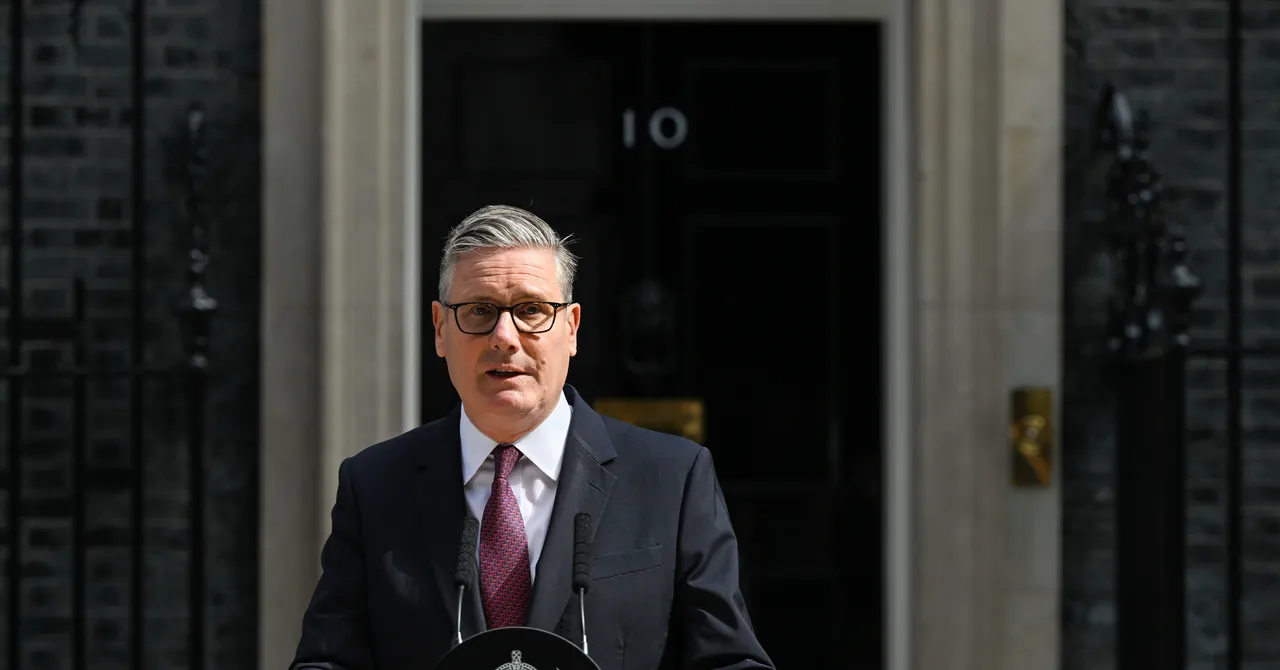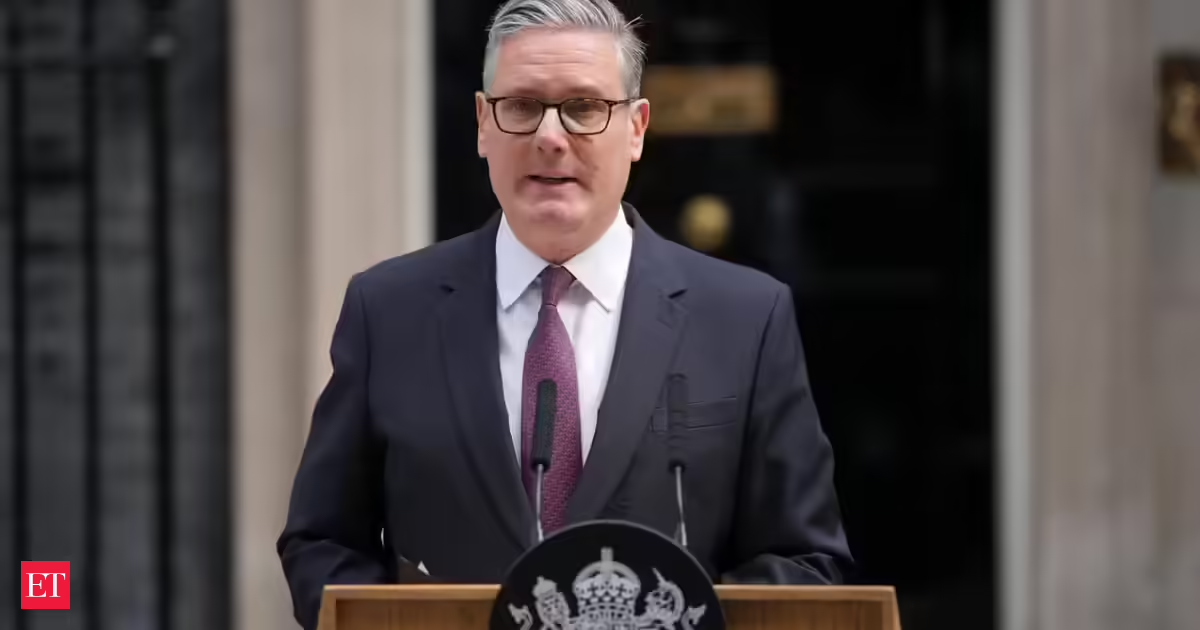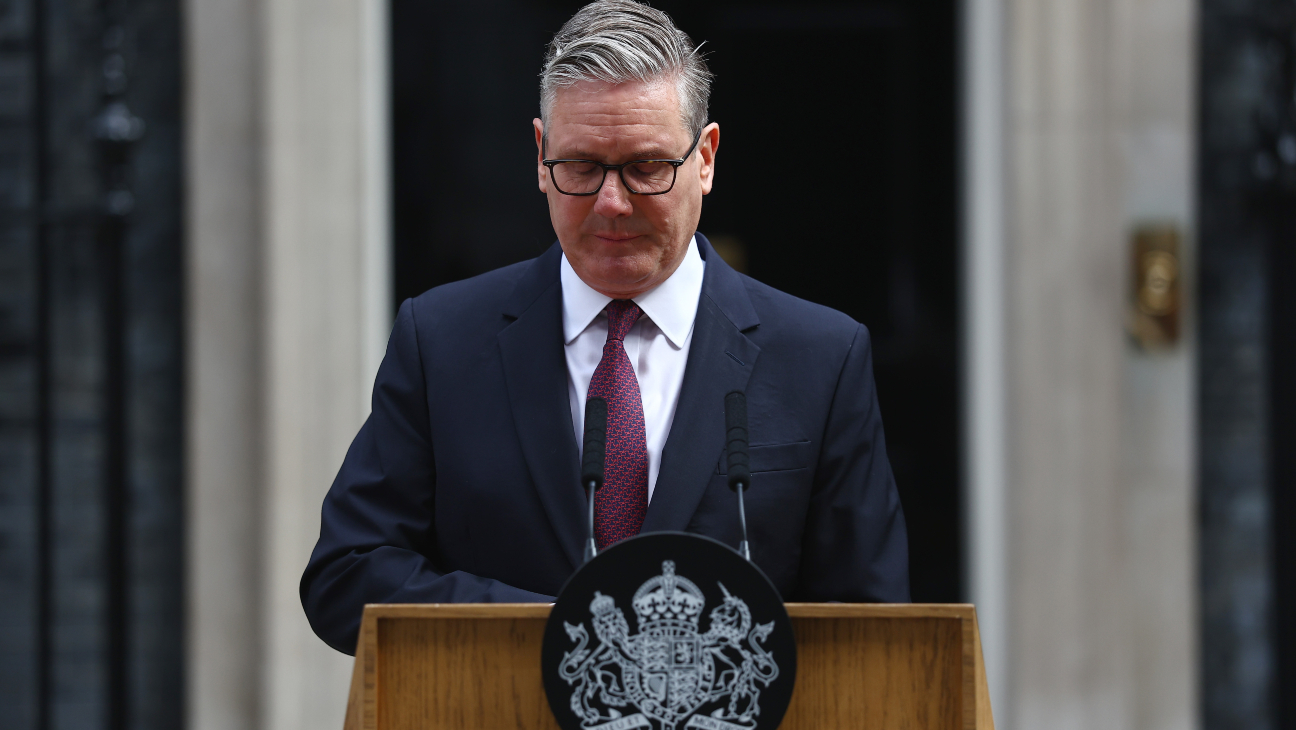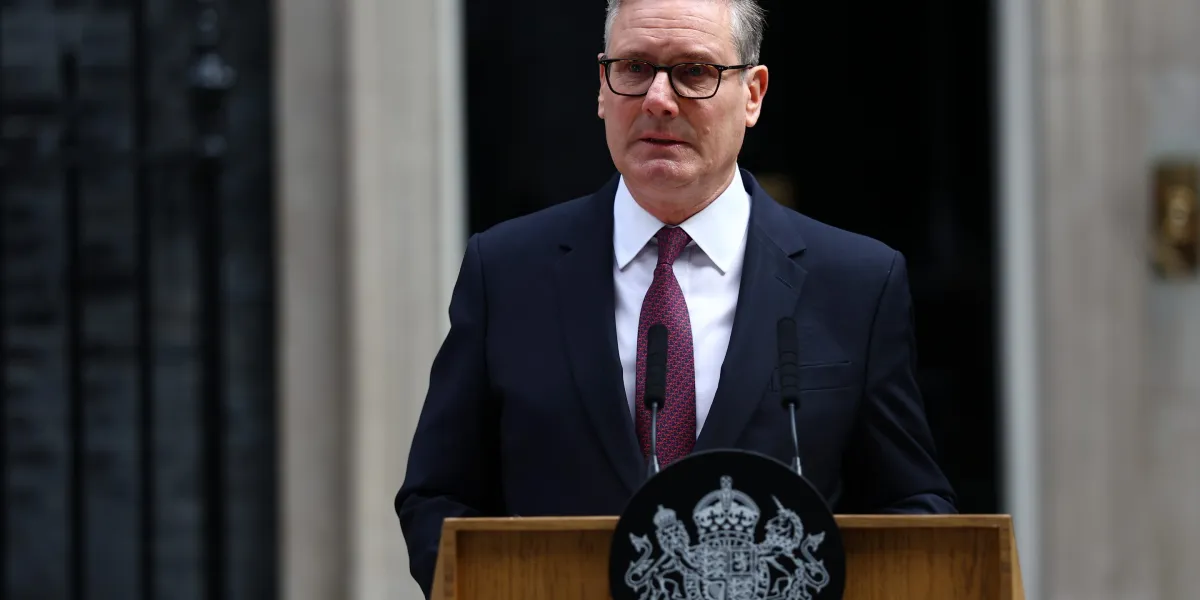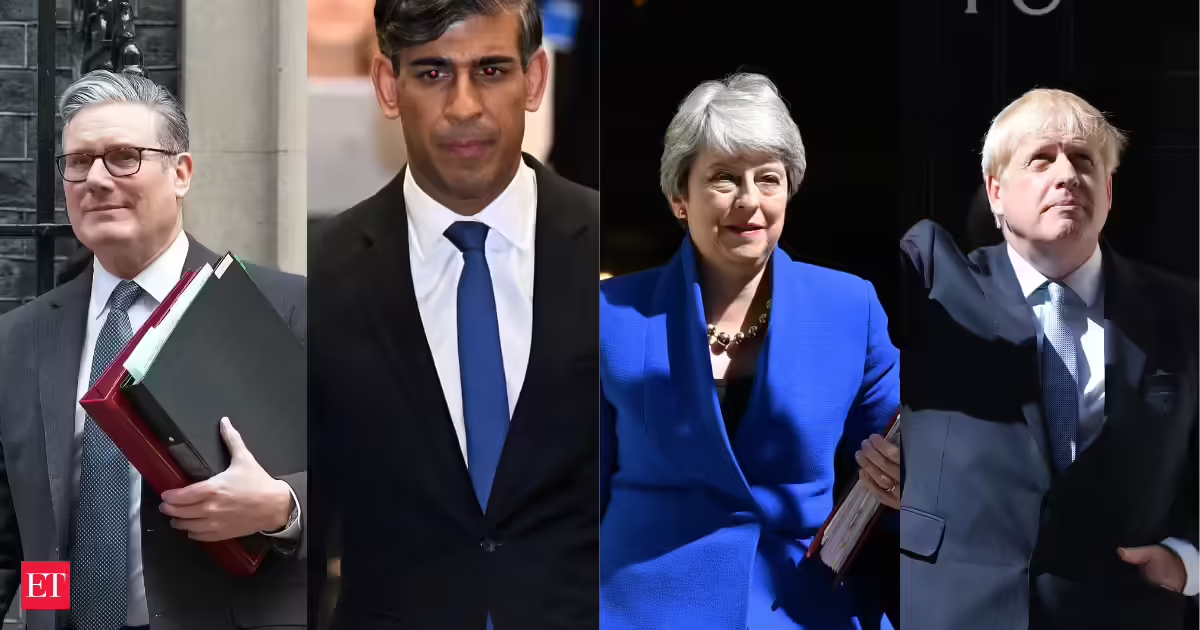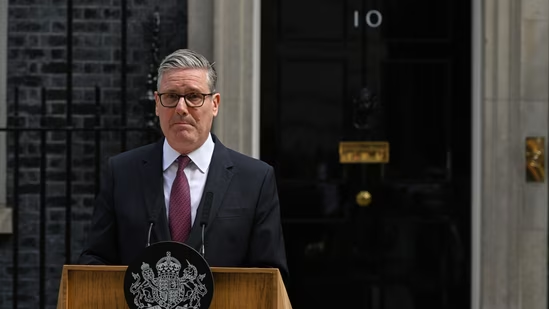
Keir Starmer is the sixth consecutive prime minister in the UK to step down without completing a full-term in the last 10 years. On 23 June 2016, the UK shocked itself by voting in favour of an exit from the European Union in a referendum. Since then, the country has seen the wrong kind of numbers increase . The UK’s economy has stagnated and its politics has mutated. With Keir Starmer becoming the seventh consecutive prime minister to quit office without completing a full term, 10 years since that day—six of the seven quit post-Brexit—the UK faces a reality check like none other in its history. Here are three charts that put things in perspective.Britain's Prime Minister Keir Starmer speaks to the media outside 10 Downing Street to announce his resignation on Monday. (AP)UK continues to count its economic losses, and Prime MinistersBrexit followed UK’s economic shock rather than cause it Brexit is often vilified as the UK shooting itself in the (economic) foot. There is an element of truth to this claim, as the UK, especially London, emerged as a major financial hub cornering a lot of gains from the economic integration of the European Union. In a post-Brexit world, the UK’s white-collared economy has faced much uncertainty and headwinds without its blue-collar economy reaping the expected rewards that pro-exit voices promised. This, however, is only half of the picture. Brexit followed the UK’s economic downfall rather than preceding it. A long-term comparison of the UK’s growth rate with the OECD and European Union shows this clearly. The advanced world has suffered an economic slowdown since the advent of neoliberalism which followed the oil shocks and Reagan-Thatcher victories of the late 1970s. The UK was no exception to this trend and underperformed both the EU and OECD. However, where the UK really stands out poorly is the post-Brexit period, where it has missed even the marginal recovery the EU and OECD could achieve.What Brexit has succeeded at is producing short-lived prime ministers and a broken polityKeir Starmer is the sixth consecutive prime minister in the UK to step down without completing a full-term in these 10 years. And they have served 11 years cumulatively, counting David Cameron’s first year of his second term, which ended soon after in a freak referendum (Gordon Brown, who preceded Cameron, didn’t complete his term either). Their past five predecessors (put together served almost 36 years (Cameron’s first term and Brown’s included). The Tories alone, between Thatcher and her successor John Major served almost 18 years. To be sure, the UK seemed to have overcome its political fragmentation problem when Labour won a landslide victory under Starmer in 2024. What Starmer perhaps did not realise was that the parliamentary majority came on the back of much lower popular support, which resulted from the Tories losing ground and political fragmentaton rather than Labour really breaking new ground.Starmer’s successor will have to save both the country and the partyBy all indications, Starmer will be succeeded by Andy Burnham, the former Mayor of Manchester, who won a by-poll to enter parliament—the prerequisite to challenge the incumbent prime minister’s leadership. Burnham’s job is anything but enviable. He will have to balance the growing guns versus butter schism inside the Labour Party. Its popularity depends on sustaining welfare benefits at a time when all of Europe is reckoning with the cost of filling the growing void left by the US withdrawing its security umbrella from Europe. One of the most damning indictments of Starmer was his defense secretary John Healey resigning over the government’s failure to increase defense spending to 3%. That Labour is being pulled in all directions was crystal clear in the latest local body poll results declared last month when it lost council seats across the political spectrum. Labour’s 28 victories were all previously held seats, but it lost 37. Twenty-Eight of those went to non-right formations while Reform/Tories took another 9. Clearly, Labour’s and the UK’s political travails are far from over.Roshan Kishore is the Data and Political Economy Editor at Hindustan Times. His weekly column for HT Premium Terms of Trade appears every Friday.Number TheoryUnlock a world of Benefits with HT! From insightful newsletters to real-time news alerts and a personalized news feed – it's all here, just a click away! -Login Now!See Less
UK continues to count its economic losses, and Prime Ministers | Number Theory
Keir Starmer is the sixth consecutive prime minister in the UK to step down without completing a full-term in the last 10 years.
720 words~3 min read