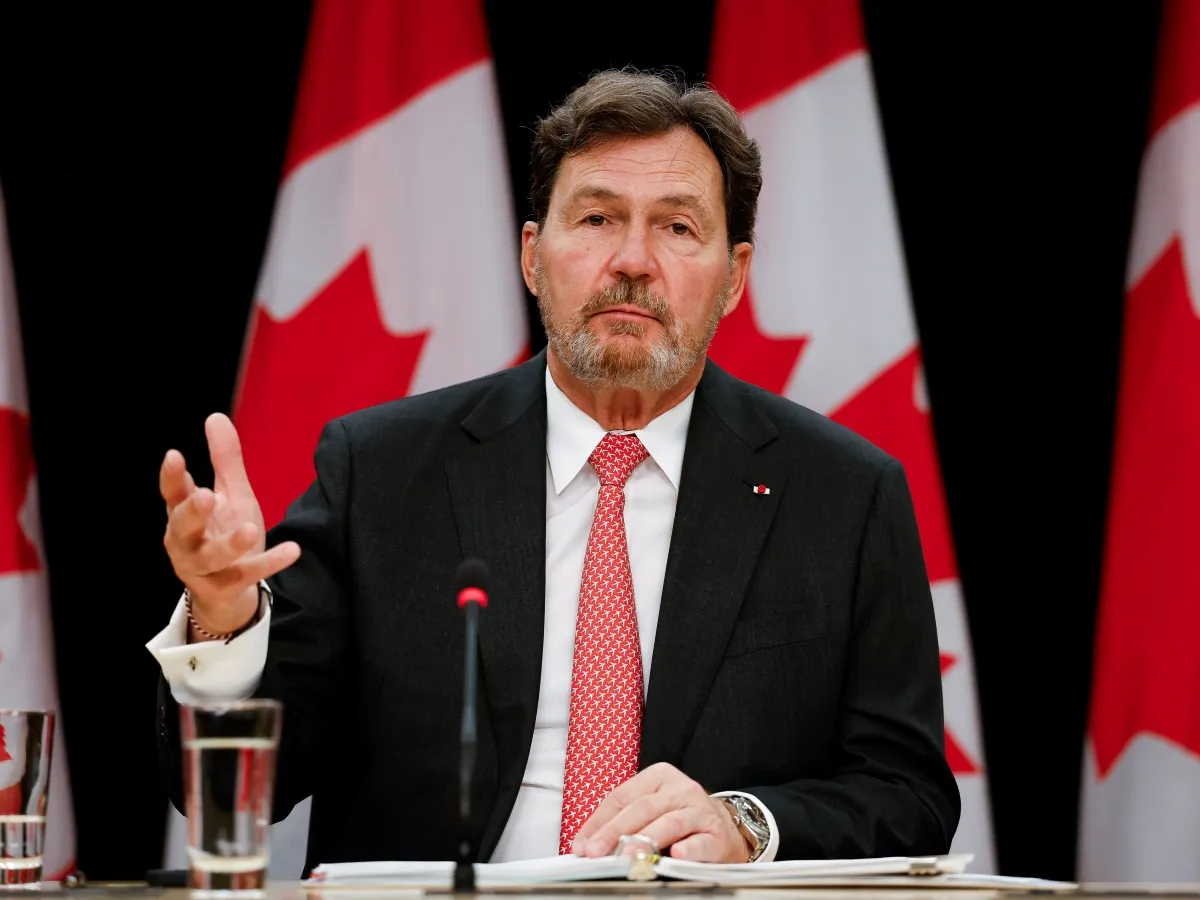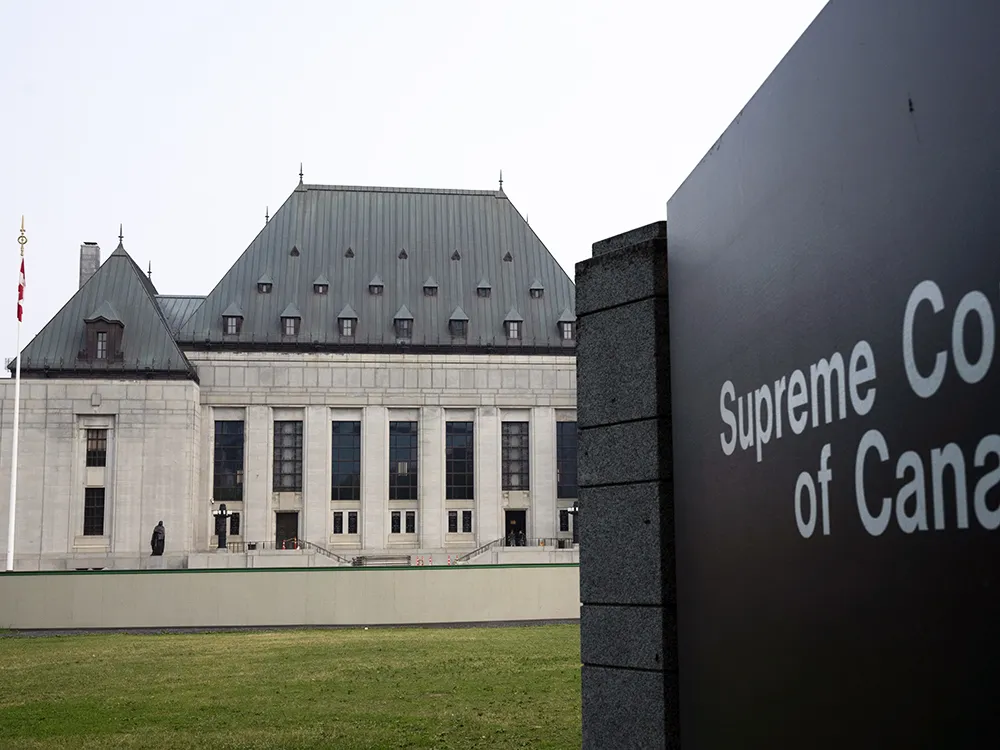
Skip to Content Subscribe Our Offers My Account Manage My Subscriptions FAQ Newsletters Canada Canadian True Crime Canadian Politics Health World Israel & Middle East Financial Post NP Comment Longreads Puzzmo Diversions Comics NP News Quiz New York Times Crossword Horoscopes Life Eating & Drinking Style Sponsored Play for Ontario Travel Travel Canada Travel USA Travel International Cruises Travel Essentials Culture Books Celebrity Movies Music Theatre Television Business Essentials Advice Lives Told Tails Told Shopping Buy Canadian Home Living Outdoor Living Kitchen & Dining Tech Style & Beauty Personal Care Entertainment & Hobbies Gift Guide Travel Guide Amazon Prime Day Deals Savings National Post Store More Sports Hockey Baseball Basketball Football Soccer Golf Tennis Driving Vehicle Research Reviews News Gear Guide Obituaries Place an Obituary Place an In Memoriam Classifieds Place an Ad Celebrations Working Business Ads Archives Healthing Epaper Manage Print Subscription Profile Settings My Subscriptions Saved Articles My Offers Newsletters Customer Service FAQ Newsletters Canada World Financial Post NP Comment Longreads Puzzmo Diversions Life Shopping Epaper Manage Print Subscription HomeNP CommentBen Woodfinden: Finally — new Supreme Court justice doesn't think he's above ParliamentGlenn Joyal has been warning about judicial overreach for decadesLast updated 6 minutes ago You can save this article by registering for free here. Or sign-in if you have an account.Prime Minister Mark Carney has named Manitoba Chief Justice Glenn Joyal to the Supreme Court. Photo by Adrian Wyld/The Canadian Press/FileMark Carney has named Manitoba judge Glenn Joyal to the Supreme Court, and the appointment is good news for a reason that has little to do with how he will rule in specific cases. Joyal is that rare thing on a high court: a judge who thinks judges have become too powerful. He has argued for years, at some professional cost, that the bench has crept into territory belonging to the legislatures, and that the cure is more judicial modesty, not less. That is exactly how a judge ought to think, and is sadly in rare supply on the benches these days. Enjoy the latest local, national and international news.Exclusive articles by Conrad Black, Barbara Kay and others. Plus, special edition NP Platformed and First Reading newsletters and virtual events.Unlimited online access to National Post.National Post ePaper, an electronic replica of the print edition to view on any device, share and comment on.Daily puzzles including the New York Times Crossword.Support local journalism.Enjoy the latest local, national and international news.Exclusive articles by Conrad Black, Barbara Kay and others. Plus, special edition NP Platformed and First Reading newsletters and virtual events.Unlimited online access to National Post.National Post ePaper, an electronic replica of the print edition to view on any device, share and comment on.Daily puzzles including the New York Times Crossword.Support local journalism.Create an account or sign in to continue with your reading experience.Access articles from across Canada with one account.Share your thoughts and join the conversation in the comments.Enjoy additional articles per month.Get email updates from your favourite authors.Create an account or sign in to continue with your reading experience.Access articles from across Canada with one accountShare your thoughts and join the conversation in the commentsEnjoy additional articles per monthGet email updates from your favourite authorsSign In or Create an AccountorThe Chief Justice of Manitoba’s Court of King’s Bench has made his case in the open, not only in his rulings. It goes back to a master’s thesis from the early Charter years with the almost too-perfect title “Traditional Canadian Political Culture Adrift in the Era of the Charter.” His worry about what the Charter did to Canadian self-government is as old as the Charter itself, and has only grown truer since. This newsletter from NP Comment tackles the topics you care about. (Subscriber-exclusive edition on Fridays)By signing up you consent to receive the above newsletter from Postmedia Network Inc.We encountered an issue signing you up. Please try againHis fullest statement is a 2017 keynote to the Law and Freedom Conference. He likened himself to a timid church organist sneaking off to play with subversive jazz musicians, then made his case: the growth of judicial power since 1982 has left the legislative branch in “a diminished and even inferior role.” The Charter’s framers, he argued, deliberately refused the American language of “due process” so that Section 7, which protects the “right to life” and “security of the person” could not become, as one put it, “anything that could attract five votes on the Supreme Court.” Read expansively anyway, Section 7 became “the single most fertile source for the discovery of new rights.” His remedy is not to strip courts of power but to have them discipline themselves, ruling with “principled restraint” rather than appetite. A rare judge, arguing for his own modesty. The proof that this is conviction and not just a pose is that Joyal’s most consequential ruling cuts against even the people who share his diagnosis. In the 2021 Gateway Bible Baptist Church cases, seven churches backed by the Justice Centre for Constitutional Freedoms challenged Manitoba’s pandemic limits on worship as a violation of religious freedom under Section 2 of the Charter. His admirers expected him to strike the orders down as overreach. He upheld them. He deferred to the elected government, writing that courts owe “a requisite judicial humility” and lack the expertise to second-guess decisions taken in real time for public safety. The Court of Appeal agreed; the Supreme Court denied leave. In a companion ruling he refused to invent an unwritten principle that would have let him strike it down for giving too much power to an unelected health officer. And he did so after learning that the head of the group arguing the case had hired a private investigator to tail him, hoping to catch him breaking the rules he was weighing. That intrusion, he said, would not move him, and it did not. A judge chasing his own result would have struck the orders down and called it freedom. Joyal did the harder thing, and left the legislature to its elected role rather than supplant it. This is the part of the question that has drifted out of view. Section 7 was meant to promise only fair procedure before the state takes your life, liberty or security. In the courts’ hands it has become the master key. Judges have invoked it to strike down prostitution laws (Bedford) and the prohibition on assisted death (Carter, then widened four years later by a Quebec judge to reach people who are not dying at all). Courts have used it to order Ottawa to keep a Vancouver drug-injection site open against the government’s wishes. There are numerous other examples. A guarantee of fair procedure has become a roving commission to review the wisdom of policy. The old complaint was that judges were imposing outcomes. The trap too many fell into was to decide the real problem was the outcomes, not the imposing, and the cure being a court that would hand down better ones. That instinct now turns up on every side, including some conservatives, and the same each time: skip the slow work of persuading your fellow citizens and look for a few votes on a court instead.We should want no part of it. South of the border the courts are the main event, a slow-motion war for nine chairs where every loss waits on the next appointment. A court asked to settle every contested question becomes a standing committee of last resort, and its citizens become litigants. We are starting to treat this as a virtue. When the Supreme Court spent four days this spring on the challenge to Quebec’s Bill 21, it heard a record 51 interveners, six attorneys general among them, each given minutes on the notwithstanding clause. But if that is how we now settle such questions, by gathering and weighing submissions from across society, then we already have an institution built for the job. It has elected members, it sits a few hundred metres up the street, and we call it Parliament. The case for restraint was never simply that judges reach bad answers. It is that working a hard question out by persuading the people next door is the substance of democratic life, and in a diverse society the only way to reach settlements most can live with. None of which makes Joyal a reliable vote for anyone, as those hoping for one will be disappointed. He is no law-and-order caricature either: he acquitted three wrongly convicted Indigenous men and apologized from the bench for a miscarriage of justice, because guarding the individual against wrongful conviction is exactly what courts exist for. The philosophy is coherent. Forceful where courts are competent and constitutionally central, humble where they are not. So the country has gained a judge modest about his own authority and generous toward the elected branches he will be tempted to overrule. That is the right disposition for the job, and rarer than it should be. The only honest test of whether you believe in judicial restraint is whether you still want it when the next ruling goes against you. Joyal passed that test years ago, when it cost him. The question is whether the rest of us can. National Post Join the Conversation This website uses cookies to personalize your content (including ads), and allows us to analyze our traffic. Read more about cookies here. By continuing to use our site, you agree to our Terms of Use and Privacy Policy.
Ben Woodfinden: Finally — new Supreme Court justice doesn't think he's above Parliament
Glenn Joyal has been warning about judicial overreach for decades
1,576 words~7 min read