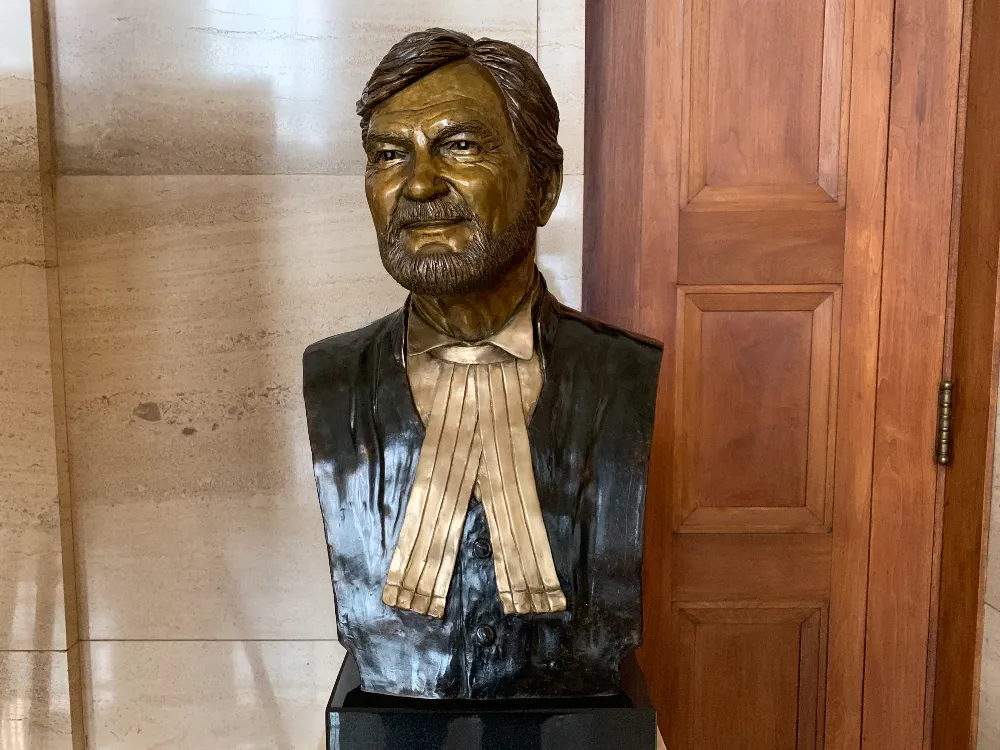
Skip to Content Subscribe Our Offers My Account Manage My Subscriptions FAQ Newsletters Canada Canadian True Crime Canadian Politics Health World Israel & Middle East Financial Post NP Comment Longreads Puzzmo Diversions Comics NP News Quiz New York Times Crossword Horoscopes Life Eating & Drinking Style Sponsored Play for Ontario Travel Travel Canada Travel USA Travel International Cruises Travel Essentials Culture Books Celebrity Movies Music Theatre Television Business Essentials Advice Lives Told Tails Told Shopping Buy Canadian Home Living Outdoor Living Kitchen & Dining Tech Style & Beauty Personal Care Entertainment & Hobbies Gift Guide Travel Guide Amazon Prime Day Deals Savings National Post Store More Sports Hockey Baseball Basketball Football Soccer Golf Tennis Driving Vehicle Research Reviews News Gear Guide Obituaries Place an Obituary Place an In Memoriam Classifieds Place an Ad Celebrations Working Business Ads Archives Healthing Epaper Manage Print Subscription Profile Settings My Subscriptions Saved Articles My Offers Newsletters Customer Service FAQ Newsletters Canada World Financial Post NP Comment Longreads Puzzmo Diversions Life Shopping Epaper Manage Print Subscription HomeNP CommentBen Woodfinden: Chief Justice Richard Wagner is disappointed in CanadaHe is only one undermining the rule of lawLast updated 13 hours ago You can save this article by registering for free here. Or sign-in if you have an account.Bust of Chief Justice Wagner in the Supreme Court of Canada's Grand Entrance Hall in Ottawa. Photo by Christopher Nardi /National PostEach June, Chief Justice Richard Wagner holds a news conference, and each one tells you a little more about how he understands his job at the apex of the Supreme Court. This year’s brought the now-familiar themes, amongst them a warning that criticizing court decisions risks casting judges as “partisan actors” or as “obstacles to the will of the people.” A non-partisan judiciary, he said, one “sheltered from all politicization,” is essential to the rule of law. Enjoy the latest local, national and international news.Exclusive articles by Conrad Black, Barbara Kay and others. Plus, special edition NP Platformed and First Reading newsletters and virtual events.Unlimited online access to National Post.National Post ePaper, an electronic replica of the print edition to view on any device, share and comment on.Daily puzzles including the New York Times Crossword.Support local journalism.Enjoy the latest local, national and international news.Exclusive articles by Conrad Black, Barbara Kay and others. Plus, special edition NP Platformed and First Reading newsletters and virtual events.Unlimited online access to National Post.National Post ePaper, an electronic replica of the print edition to view on any device, share and comment on.Daily puzzles including the New York Times Crossword.Support local journalism.Create an account or sign in to continue with your reading experience.Access articles from across Canada with one account.Share your thoughts and join the conversation in the comments.Enjoy additional articles per month.Get email updates from your favourite authors.Create an account or sign in to continue with your reading experience.Access articles from across Canada with one accountShare your thoughts and join the conversation in the commentsEnjoy additional articles per monthGet email updates from your favourite authorsSign In or Create an AccountorHe’s at least right that about the second part, but he has spent his tenure undermining the rule of law he claims to venerate. If the judiciary wants to be sheltered from all politicization, perhaps its chief justice ought not spend his Junes wading into political debate. You cannot appoint yourself a public commentator and then claim immunity from public comment. This newsletter from NP Comment tackles the topics you care about. (Subscriber-exclusive edition on Fridays)By signing up you consent to receive the above newsletter from Postmedia Network Inc.We encountered an issue signing you up. Please try againThis is not a one-off. Early in his tenure, Wagner told reporters the chief justice has “an obligation to speak to the people,” to be discharged “by our presence, by our speeches.” In 2024 he told critics, elected leaders included, to read the rulings before complaining. The result is the most publicly visible chief justice in living memory, who casts himself as liberal democracy’s sentinel. Then there is the bust. A bronze likeness of the sitting chief justice now stands in the Supreme Court’s entrance, paid for by a donor the court won’t name, at a cost it won’t disclose, which Wagner, who posed for the sculptor, says he cannot identify. A man whose mission is transparency cannot see the problem with a secretly funded monument to himself. All of this would be unbecoming if it stopped at vanity. It does not. In the spring of 2022, Wagner told Le Devoir the Freedom Convoy was “the beginning of anarchy” and said some protesters had set out to “take other citizens hostage.” Strong words. And, four years on, a problem, because the appeal over Ottawa’s use of the Emergencies Act is now before his court, and Wagner won’t step aside. His comments, he insists, had “nothing to do with the issues on appeal.” The test for recusal has never turned on what a judge privately believes he can set aside. It turns on how a failure to recuse looks to a reasonable, informed observer. “Justice should not only be done,” as Lord Hewart put it a century ago, “but should manifestly and undoubtedly be seen to be done.” Hard to see how a chief justice who called the convoy an act of anarchy can be seen to approach an appeal about it with an open mind. And the appearance problem is not new. Lawyers raised it in 2022, in a complaint to the Canadian Judicial Council, the body that oversees the conduct of federally appointed judges, which Wagner himself chairs. The Council dismissed it, reasoning that with no Emergencies Act case yet before the court, the worry was merely hypothetical. Well, it is not hypothetical now. He said the quiet part aloud, in print, with his name on it, and the warning the council waved away as premature has arrived right on schedule. There are reasons judges are increasingly viewed as obstacles to the popular will: Canadians have watched the Supreme Court override Parliament on the questions they care about most. Wagner himself wrote the unanimous 2022 ruling in Bissonnette, striking down the law that let judges stack parole ineligibility for multiple murderers, so that the man who murdered six worshippers at a Quebec City mosque is eligible for parole at 25 years, not the 40 his sentencing judge imposed. Last autumn, in Senneville, a five-to-four majority struck down the one-year mandatory minimum for possessing and accessing child pornography, reasoning not from the men in the dock, who between them had hoarded hundreds of images of small children being abused, but from an imagined 18-year-old who keeps a friend’s forwarded photo of a 17-year-old girlfriend. A year inside would be too harsh for him, so the minimum fell for everyone. The court will call this constitutional review, not legislation, and the imagined offender a tool judges have long used. Perhaps. But when the hypothetical bears no resemblance to the actual criminal, and reliably yields lighter sentences for the gravest crimes in the code, you can see why people think the judges are writing the sentencing policy they prefer and calling it the Constitution. The backlash crossed party lines, from a Liberal justice minister to a New Democrat premier who said such offenders should be buried under the prison. It’s worth noting that Wagner dissented in Senneville. He could have upheld it, warning against voiding Parliament’s choices on rare hypotheticals. He wrote the law-striking ruling in Bissonnette and co-wrote the law-sparing dissent in Senneville, which tells you the problem was never simply his jurisprudence. It is that the Chief Justice reserves to himself the right to say his court has overreached, in a signed opinion, whilst a premier or a columnist who reaches the same conclusion is cast as a threat to judicial independence. Wagner is not obliged to retire until 2032, so there will be more Junes like this one. But he keeps missing the lesson buried in his own complaint. The harder a chief justice works to defend his court’s legitimacy in public, the more he advertises a doubt that it can stand on its own. A confident judiciary does not need a yearly press conference, or a bronze bust, or a running commentary on the health of our constitutional democracy. It lets the work speak. The defensiveness is the tell. So by all means, let the chief justice keep talking. Canadians have every right to object when courts conjure rights found nowhere in the constitutional text, or legislate from the bench, or when the man at the top mistakes himself for the conscience of the nation. He invited the conversation. He does not also get to set its terms. National Post Join the Conversation This website uses cookies to personalize your content (including ads), and allows us to analyze our traffic. Read more about cookies here. By continuing to use our site, you agree to our Terms of Use and Privacy Policy.
Ben Woodfinden: Chief Justice Richard Wagner is disappointed in Canada
He is the only one undermining the rule of law
1,495 words~7 min read