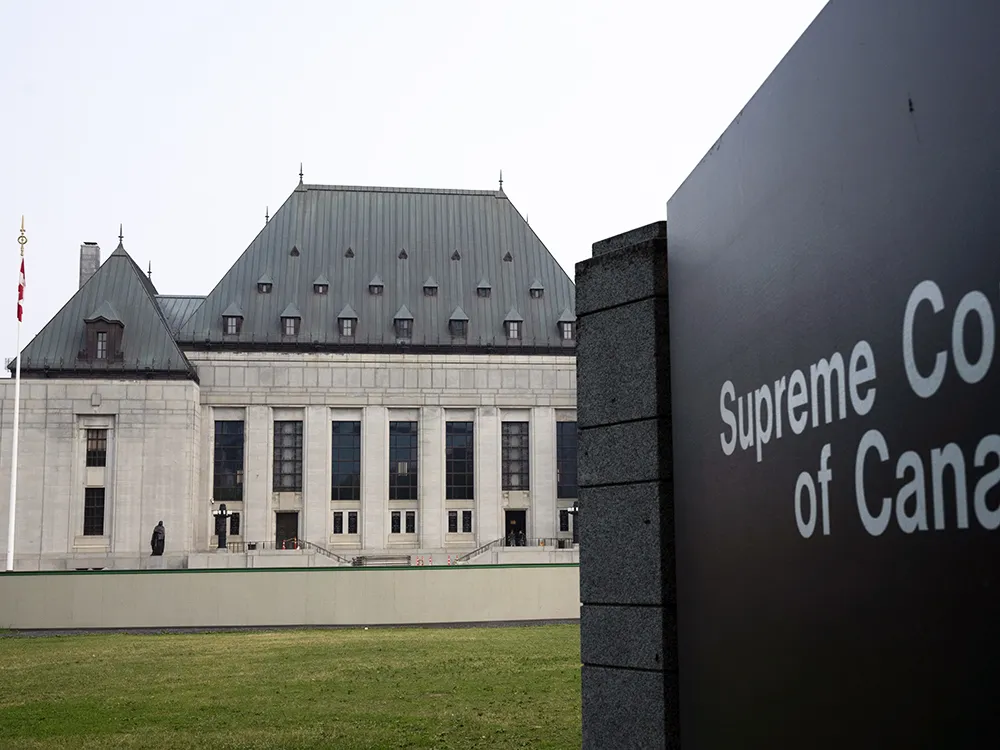
Skip to Content Subscribe Our Offers My Account Manage My Subscriptions FAQ Newsletters Canada Canadian True Crime Canadian Politics Health World Israel & Middle East Financial Post NP Comment Longreads Puzzmo Diversions Comics NP News Quiz New York Times Crossword Horoscopes Life Eating & Drinking Style Sponsored Play for Ontario Travel Travel Canada Travel USA Travel International Cruises Travel Essentials Culture Books Celebrity Movies Music Theatre Television Business Essentials Advice Lives Told Tails Told Shopping Buy Canadian Home Living Outdoor Living Kitchen & Dining Tech Style & Beauty Personal Care Entertainment & Hobbies Gift Guide Travel Guide Amazon Prime Day Deals Savings National Post Store More Sports Hockey Baseball Basketball Football Soccer Golf Tennis Driving Vehicle Research Reviews News Gear Guide Obituaries Place an Obituary Place an In Memoriam Classifieds Place an Ad Celebrations Working Business Ads Archives Healthing Epaper Manage Print Subscription Profile Settings My Subscriptions Saved Articles My Offers Newsletters Customer Service FAQ Newsletters Canada World Financial Post NP Comment Longreads Puzzmo Diversions Life Shopping Epaper Manage Print Subscription HomeNP CommentJack C. Major: Supreme Court’s Charter rulings erode parliamentary democracyFormer justice warns that judicial expansion has upset Canada’s constitutional balance and says legislatures must push backLast updated 0 minutes ago You can save this article by registering for free here. Or sign-in if you have an account.Supreme Court of Canada in Ottawa March 4, 2026. Photo by Blair Gable/PostmediaThe 1982 enactment of the Charter of Rights and Freedoms was seen as a pivotal moment in our nation’s history. Yet, even at the time of its adoption, some voices in the legal profession and legal academy argued it would weaken Canada’s tradition of parliamentary democracy inherited from the United Kingdom.Enjoy the latest local, national and international news.Exclusive articles by Conrad Black, Barbara Kay and others. Plus, special edition NP Platformed and First Reading newsletters and virtual events.Unlimited online access to National Post.National Post ePaper, an electronic replica of the print edition to view on any device, share and comment on.Daily puzzles including the New York Times Crossword.Support local journalism.Enjoy the latest local, national and international news.Exclusive articles by Conrad Black, Barbara Kay and others. Plus, special edition NP Platformed and First Reading newsletters and virtual events.Unlimited online access to National Post.National Post ePaper, an electronic replica of the print edition to view on any device, share and comment on.Daily puzzles including the New York Times Crossword.Support local journalism.Create an account or sign in to continue with your reading experience.Access articles from across Canada with one account.Share your thoughts and join the conversation in the comments.Enjoy additional articles per month.Get email updates from your favourite authors.Create an account or sign in to continue with your reading experience.Access articles from across Canada with one accountShare your thoughts and join the conversation in the commentsEnjoy additional articles per monthGet email updates from your favourite authorsSign In or Create an AccountorIt appears that some of these warnings may have been vindicated by recent decisions of the Supreme Court of Canada. As a recent Macdonald Laurier-Institute paper by legal scholars Geoff Sigalet, Kerry Sun and Yuan Yi Zhu suggests, the expansion of judicial power under the Charter has unsettled the balance between political and judicial authority. Given the potentially serious consequences of this disruption to our constitutional equilibrium, I agreed to author a foreword to their paper.Canada’s Westminster system of parliamentary democracy — named after London’s Palace of Westminster, and established as our system of government even before Confederation in 1867 — has endowed Canadians with an arrangement for responsible government: our elected representatives, acting in the legislature, have the primary responsibility for deliberating upon policy, changing the law and setting the course of our nation.This newsletter from NP Comment tackles the topics you care about. (Subscriber-exclusive edition on Fridays)By signing up you consent to receive the above newsletter from Postmedia Network Inc.We encountered an issue signing you up. Please try againHowever, over the past several decades, there has been a gradual, but decisive, increase in the scope of powers the Charter initially entrusted to the judiciary. Both preceding and following the Charter’s adoption, critics warned of this prospect. They cited early 20th-century developments in the United States, where courts struck down social policies enacted for the public good. These Canadian commentators cautioned that our courts might similarly overreach into the realm of public policy.Through exhaustive research, Sigalet, Sun, and Zhu describe how this has occurred. They track the gradual accumulation of jurisprudential developments that departed not only from the 1867 constitutional settlement, but even the choices made by the framers of the Charter and Constitution Act, 1982.In some cases these apparent departures are unsupported by compelling reasons. In other cases, they aren’t supported by any reasons at all. The paper’s authors are particularly critical of the “living tree” approach to constitutional interpretation, contending it has narrowed the scope for democratic decision-making in areas once left to political compromise, such as the field of labour relations.As the authors also identify, the Supreme Court has adopted an expansive interpretation of the Charter’s section 7, which guarantees “the right to life, liberty and security of the person.” This has led courts deeper into the realm of socioeconomic policy-making. Consequently, litigation has shaped policy issues from drug addiction treatment to climate change and urban planning.The authors identify several more aspects of potential judicial overreach. In their view, these are not isolated instances — rather, they are symptomatic of structural problems with the way in which the law has been judicially interpreted over time. The result of these developments, they conclude, has been an informal modification of the Canadian constitution. Authority has shifted away from the legislatures and toward the courts. Most concerning, it appears that the Supreme Court is undertaking this shift without the input of Parliament or the provinces, as required by the Constitution’s amending formula.This trend of potential court overreach is concerning because it risks creating conflict between the courts and legislatures, while eroding the role of elected bodies in enacting laws that protect Charter rights. In Canada’s constitutional system, the responsibility to govern rests primarily with legislatures and executives, not the judiciary.It remains possible that the recent actions of the Supreme Court of Canada have been misunderstood and that its judicial statements have been read as suggesting a broader role in the parliamentary process than was intended.If, however, Canadian courts have in fact arrogated an expansive power to weigh into the realm of policymaking, then responses of a more decisive character are required. As the authors point out, the growing tide of judicial power will likely require both judicial and political action to correct.To this end, the paper proposes several steps that legislatures and the executive can take to restore balance. This includes reasserting legislative freedom by using section 33 of the Charter — known as the notwithstanding clause or parliamentary supremacy clause — with greater frequency.The scarcity of scholarship of this level in the Canadian legal academy is regrettable. So too is the lack of vigilance by the legal community at large, and equally the Canadian political arm has remained silent. If this state of affairs has resulted in overreach, it can and should be addressed.National PostJack C. Major served as a Supreme Court of Canada justice from 1992 to 2005. Join the Conversation This website uses cookies to personalize your content (including ads), and allows us to analyze our traffic. Read more about cookies here. By continuing to use our site, you agree to our Terms of Use and Privacy Policy.
Jack C. Major: Supreme Court’s Charter rulings erode parliamentary democracy
Former justice warns that judicial expansion has upset Canada’s constitutional balance and says legislatures must push back
1,249 words~6 min read