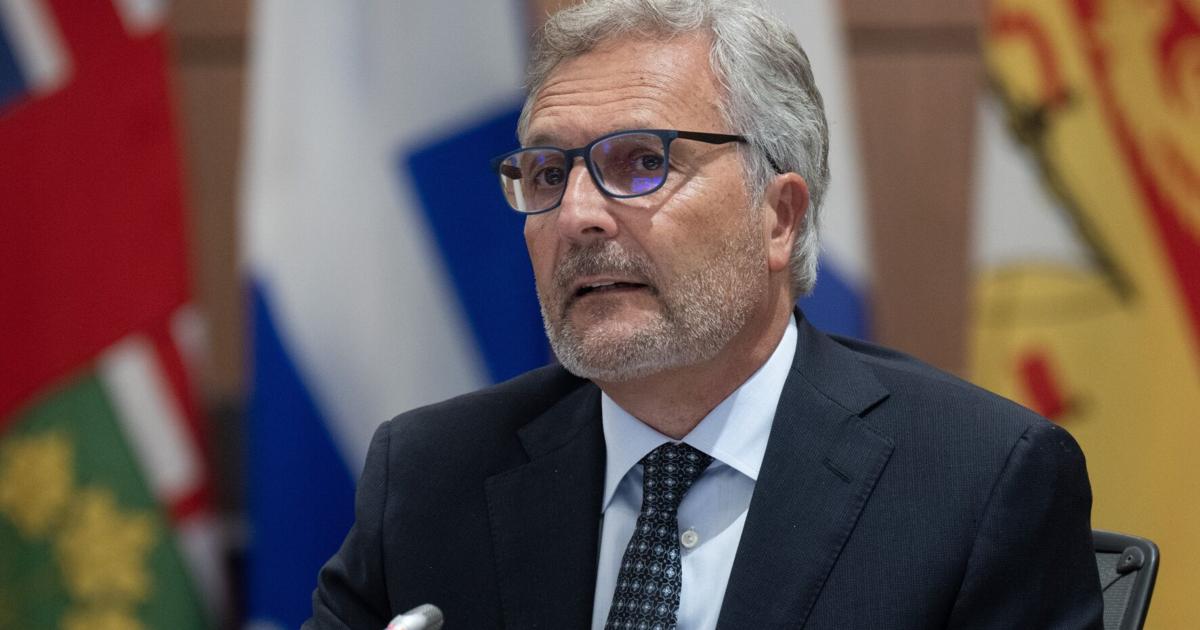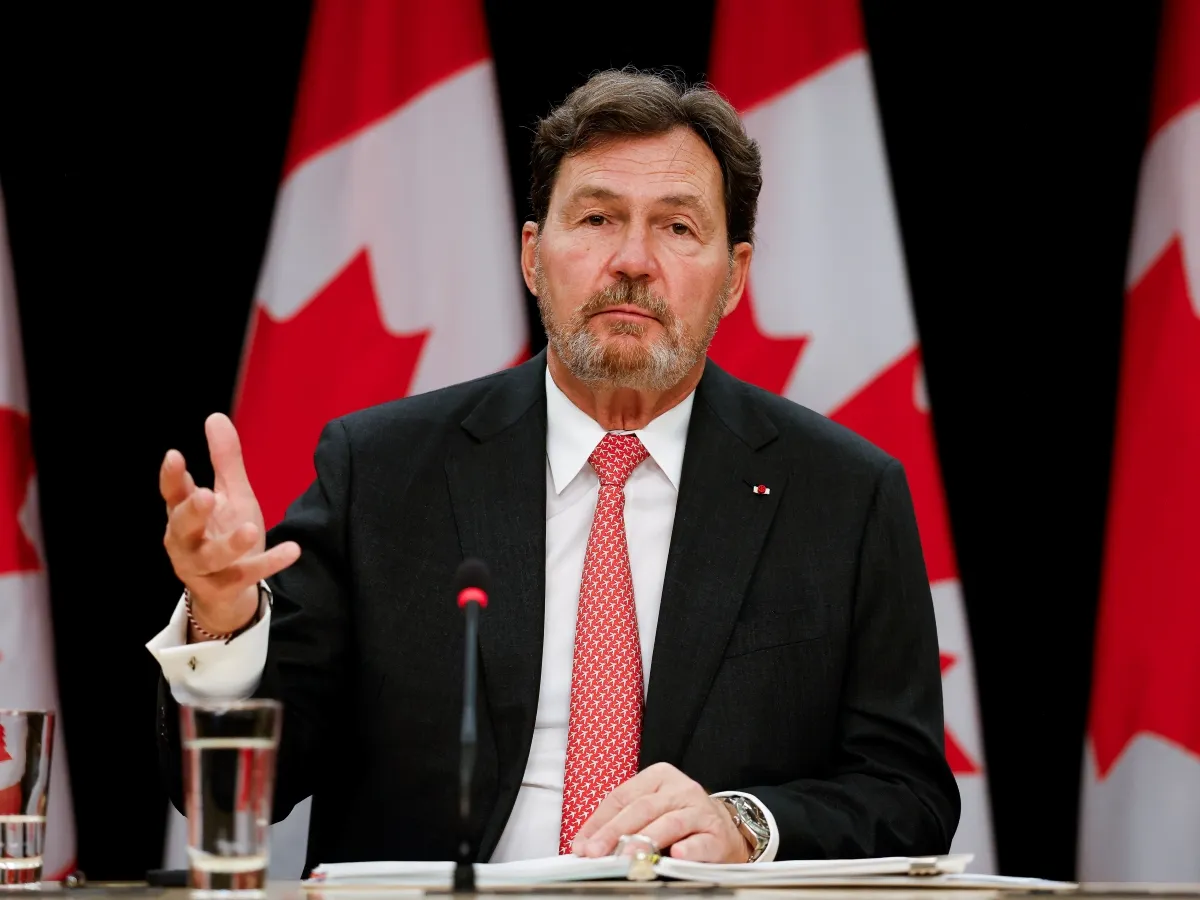
Skip to Content Subscribe Our Offers My Account Manage My Subscriptions FAQ Newsletters Canada Canadian True Crime Canadian Politics Health World Israel & Middle East Financial Post NP Comment Longreads Puzzmo Diversions Comics NP News Quiz New York Times Crossword Horoscopes Life Eating & Drinking Style Sponsored Play for Ontario Travel Travel Canada Travel USA Travel International Cruises Travel Essentials Culture Books Celebrity Movies Music Theatre Television Business Essentials Advice Lives Told Tails Told Shopping Buy Canadian Home Living Outdoor Living Kitchen & Dining Tech Style & Beauty Personal Care Entertainment & Hobbies Gift Guide Travel Guide Amazon Prime Day Deals Savings National Post Store More Sports Hockey Baseball Basketball Football Soccer Golf Tennis Driving Vehicle Research Reviews News Gear Guide Obituaries Place an Obituary Place an In Memoriam Classifieds Place an Ad Celebrations Working Business Ads Archives Healthing Epaper Manage Print Subscription Profile Settings My Subscriptions Saved Articles My Offers Newsletters Customer Service FAQ Newsletters Canada World Financial Post NP Comment Longreads Puzzmo Diversions Life Shopping Epaper Manage Print Subscription HomeNP CommentFIRST READING: Even the new 'conservative' Supreme Court justice has a weakness for identity politicsGlenn Joyal compelled Manitoba lawyers to state their pronouns in court, and seeks a 'tri-jural' system where Indigenous law is co-equal with Canadian law You can save this article by registering for free here. Or sign-in if you have an account.Chief Justice Glenn Joyal of the Court of Queen's Bench of Manitoba. Photo by Kevin King /Winnipeg SunFirst Reading is a Canadian politics newsletter curated by the National Post’s own Tristin Hopper. To get an early version sent directly to your inbox, sign up here.Enjoy the latest local, national and international news.Exclusive articles by Conrad Black, Barbara Kay and others. Plus, special edition NP Platformed and First Reading newsletters and virtual events.Unlimited online access to National Post.National Post ePaper, an electronic replica of the print edition to view on any device, share and comment on.Daily puzzles including the New York Times Crossword.Support local journalism.Enjoy the latest local, national and international news.Exclusive articles by Conrad Black, Barbara Kay and others. Plus, special edition NP Platformed and First Reading newsletters and virtual events.Unlimited online access to National Post.National Post ePaper, an electronic replica of the print edition to view on any device, share and comment on.Daily puzzles including the New York Times Crossword.Support local journalism.Create an account or sign in to continue with your reading experience.Access articles from across Canada with one account.Share your thoughts and join the conversation in the comments.Enjoy additional articles per month.Get email updates from your favourite authors.Create an account or sign in to continue with your reading experience.Access articles from across Canada with one accountShare your thoughts and join the conversation in the commentsEnjoy additional articles per monthGet email updates from your favourite authorsSign In or Create an AccountorThe appointment of Manitoba Court of King’s Bench Chief Justice Glenn Joyal to the Supreme Court of Canada this week was greeted with near-universal praise from conservative circles, who saw him as a bulwark against Canada’s increasingly activist top court.Legal scholar Yuan Yi Zhu, a fierce critic of the current Supreme Court, called Joyal an “excellent jurist” with a “nuanced understanding of the judicial role” in a social media post.This newsletter from NP Comment tackles the topics you care about. (Subscriber-exclusive edition on Fridays)By signing up you consent to receive the above newsletter from Postmedia Network Inc.We encountered an issue signing you up. Please try againBen Woodfinden, a former communication director for Conservative Leader Pierre Poilievre, praised Joyal in the National Post as “a judge who thinks judges have become too powerful.”But even this unusually restrained Canadian judge has a track record of embracing identity politics in law, including levying a mandatory pronoun policy on Manitoba lawyers and seeking to make Canada a “tri-jural” system in which Indigenous practices are treated as co-equal with Canadian civil and criminal law.In 2021, Joyal made Manitoba one of the first provinces requiring lawyers to employ pronouns while introducing themselves or a client to a court.“At the beginning of any in-person or virtual proceeding when parties or counsel are introducing themselves, their client, a witness, or another person, they should provide the judge or justice with each person’s name, title (e.g. ‘Mr./Ms./Mx./Counsel Jones’) and the correct pronouns to be used in the proceeding,” reads a 2021 order signed by Joyal.The order further states that if a lawyer refuses to specify the pronouns of themselves or a client, “they will be prompted by the court clerk to provide this information.”In Joyal’s submitted questionnaire to the body tasked with reviewing new Supreme Court justices, he cited this measure as proof of his “considerable” efforts to “promote gender equality and a broader diversity of peoples in our justice system and in our courts.”“Under my leadership and that of the other Manitoba chiefs, we were amongst the first courts to formalize a gender inclusive pronoun policy for all court proceedings and practice,” he wrote.But it’s on the issue of Indigenous reconciliation where Joyal has been explicit in the view that the Canadian court system should accord special treatment to Indigenous people, and “make space” for Indigenous legal norms to overrule Canadian ones.Starting in 2019, Joyal oversaw the introduction of Indigenous cultural practices into Manitoba courtrooms, including Métis jig dances and smudging, the burning of herbs to create a purifying smoke.In a podcast interview last year with the Canadian Bar Association, Joyal acknowledged this as an “asymmetrical” policy, as no other Manitoba litigants had special dispensation to perform cultural rituals in the courtroom.But he justified their continuance as “unique and special and deserving of an asymmetrical approach when it comes to Indigenous law and traditions.”In that same interview, Joyal said Canadian courts must “make space for Indigenous law and legal orders,” and not let “liberal neutrality” get in the way.“If we are moving, as I believe we are and should, to a tri-jural system, it’s not fair, and it’s not rational to try to compare so literally and so symmetrically the arguments about liberal neutrality with respect to what we owe our Indigenous community,” he said.In a 2024 speech, Joyal told a meeting of First Nations leaders at Manitoba’s Building Safer Communities conference that courts were not acknowledging the “lived realities” of Indigenous people, and called for their powers to be increasingly devolved to First Nations communities.“Many would argue the courts are not using the discretionary powers to apply a greater sensibility and understanding of the lived realities of Indigenous Manitobans, and I think that is a fair statement,” he said.In that same speech, Joyal would outline the province’s outsized rates of Indigenous incarceration, framing them not as a downstream effect of higher criminality, but as the result of system failure and a lack of trust between First Nations people and the legal system.“The solutions really lie with a greater assumption of control and jurisdiction in your communities,” he said, while urging courts to incorporate a “greater appreciation and use of Indigenous legal orders, legal practices in communities, and legal knowledge.”Joyal has been most praised in conservative circles for his oft-expressed view that Canadian judges are exceeding their mandate, and increasingly ruling on issues best left to legislatures.This view reportedly got Joyal rejected as a potential Supreme Court pick in 2019, despite being recommended by then justice minister Jody-Wilson Raybould.Sources told The Canadian Press at the time that prime minister Justin Trudeau objected to a speech given by Joyal in which the judge had decried “the ‘constitutionalizing’ of more and more political and social issues into fundamental rights.”But in his 2025 podcast interview with the Canadian Bar Association, Joyal came out against the idea of judges remaining neutral or impartial when it came to Indigenous issues.“If we’re seen as too passive, too remote, too detached, for example, on the issue of judicial reconciliation, we risk the very public confidence that those judges who want to retain their impartiality and judicial independence are trying to protect,” he said.Prime Minister Mark Carney’s condo “bailout” could well prove to be the most unpopular thing he has done to date, with the decision drawing fire everywhere from the hardline new leader of the B.C. Conservatives to one of the more left-wing members of the NDP.Last week, Carney announced the launch of the Canada-British Columbia Partnership on Condo Conversion, a federal program to buy up more than 2,000 tiny condos built at the peak of the real estate bubble that now aren’t selling due to a depressed market.In a press conference, Carney stated flatly that the program would prevent developers from having to accept lower market rates.“With higher interest rates (and) weaker investment demand, developers are stuck. They don’t want to sell at a loss,” he said.Kerry-Lynne Findlay, the new leader of the opposition B.C. Conservatives, accused Carney of literally assisting organized crime.“Instead of addressing the money laundering that has distorted our housing market and funded organized crime, Ottawa and the NDP are once again propping up the system that benefits criminals while families struggle to buy homes,” she wrote in a statement posted to Facebook.The gist was similar in a lengthy statement published by Jenny Kwan, the NDP MP for Vancouver East, the riding containing the city’s Downtown Eastside.“For years, housing prices soared while developers, speculators, and wealthy investors accumulated enormous profits. Renters were pushed out through renovictions and demovictions,” she wrote, adding “now that overpriced condos are not selling, governments appear prepared to step in with billions of taxpayer dollars to rescue the very industry that profited from the crisis.” Speaking of bailouts, a Twitter user named MBryant75 found a clip from 2011 in which Mark Carney, then the governor of the Bank of Canada, pledged “no bailouts” in an interview with CBC’s George Stroumboulopoulos. The interview was given just a few years after the end of the Great Recession, an event defined by massive, government-sponsored bailouts for floundering companies, particularly in the United States. Carney had just been named to a new international agency known as the Financial Stability Board, and he told Stroumboulopoulos it would reject the doctrine of “too big to fail.” “If a big global bank fails … that company goes away,” he said. Pictured above is Carney in 2011.First Reading is a Canadian politics newsletter curated by the National Post’s own Tristin Hopper. To get an early version sent directly to your inbox, sign up here. Join the Conversation This website uses cookies to personalize your content (including ads), and allows us to analyze our traffic. Read more about cookies here. By continuing to use our site, you agree to our Terms of Use and Privacy Policy.
FIRST READING: Even the new 'conservative' Supreme Court justice has a weakness for identity politics
Glenn Joyal compelled lawyers to state pronouns in court, and seeks a “tri-jural” system where Indigenous law is co-equal with Canadian law
1,767 words~8 min read